The Jewish lawyer and polyglot was hardly your typical baseball star. But that was nowhere near the strangest thing about Moe Berg, sometime secret agent and trivia buff

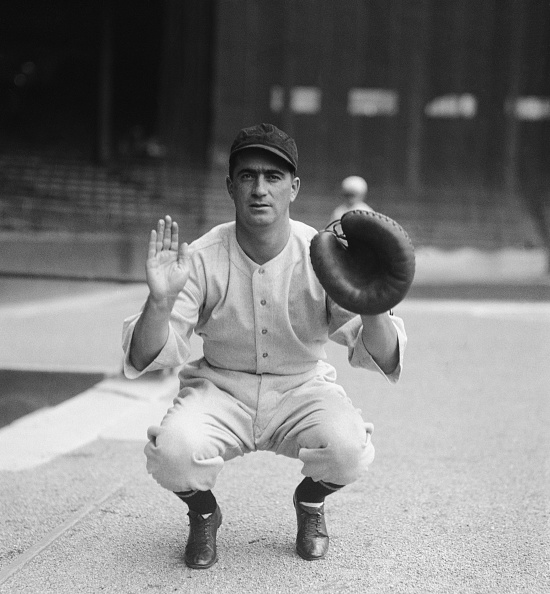
Baseball legend Moe (Maurice) Berg spoke seven languages, the joke went, but couldn’t hit the ball in any of them. It was only a slight exaggeration. Berg was one of the most curious figures in baseball history. His sixteen-year career, Ivy League education (Princeton, Columbia Law School), knowledge of languages ancient and modern, and voracious reading all set him apart, as did his occasional Secret Service missions – and his Jewishness.
On the Sidelines
Morris Berg was born in New York in 1902. There was nothing remotely Jewish about his upbringing – except that his parents sometimes spoke to each other in Yiddish, or even in Hebrew. He grew up in gentrified Newark, among very few other Jewish families. Berg was likewise one of the only Jews in his high school – where he discovered baseball – and at Princeton, still a distinctly religious college when he was there.
The shy youngster’s academic abilities – and more important, baseball prowess – won him considerable popularity. His Jewish identity always singled him out, though. It was mentioned in his yearbook and surfaced periodically in bureaucratic and social contexts. Being Jewish even affected his early baseball career: Two New York teams vied for him – not so much for his playing as in the hope that he’d draw Jews to games. In the end, Berg signed with the Brooklyn Dodgers, best known at the time for their devoted fans – including many Jewish immigrants.
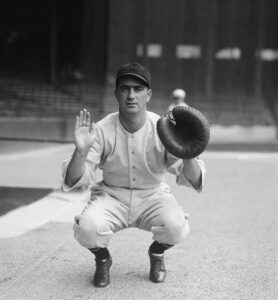
Berg initially played shortstop but soon switched to catcher, directing the team’s defense and communicating with pitchers. He also passed on in-game decisions from the team’s manager to his fellow-players. In a few years, Berg had become one of the league’s most valued catchers, though he was usually a poor hitter. But the greatest advantage he brought to the game was his ability to read the field and come up with winning strategies.
Throughout his career, Berg played with teams from Brooklyn, Chicago, Cleveland, Washington and Boston – all of which had a slew of Jewish supporters. Whenever his fans wanted to hold special events and rallies in his honor, or award him expensive gifts, he declined. An introvert, he shrank from making his Jewishness a “thing.” Though he never denied or hid it, and certainly wasn’t ashamed of it, he also asked not to be judged by it, whether for better or worse.
Between the two world wars, racial slurs and name-calling around baseball games, the major leagues included, were hardly surprising. Unlike some of his more famous Jewish colleagues, however, Berg never responded or discussed the matter, nor did he ever have to resort to violence or even verbal abuse to defend his honor.
Not yet a Segula subscriber?
Access our full archive online, have print issues delivered to your door, and moreFeel free to share