
Among the many immigrants to the U.S. who went west to seek their fortunes, most Jews struck gold selling dry goods rather than prospecting. Once settled, these pioneers built towns, communities – and a surprising variety of synagogues

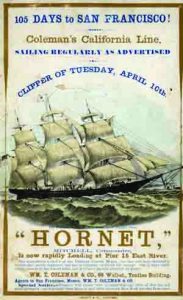
The Jews who pioneered the wide-open spaces of America were not just the stereotypical peddlers and bankers. Gold prospectors, cowboys, lawmen, ranchers, and entertainers, this hardy lot went west on horseback and by covered wagon; some took the long, roundabout southern route by ship, braving the treacherous waters of Cape Horn or crossing the Isthmus of Panama, where they fell prey to malaria and hostile tribes before sailing back up the Pacific coast.
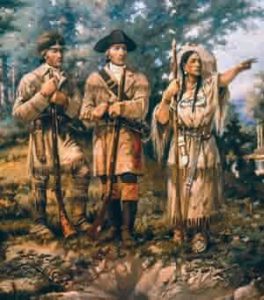
Just where and when was the Wild West? After U.S. president Thomas Jefferson completed the Louisiana Purchase in 1803, adding the vast territories of the former French colony to the sixteen United States, he commissioned his secretary, Meriwether Lewis, to explore the unknown areas west of the Mississippi River. In 1804, Lewis and draftsman William Clark set out from St. Louis, Missouri – then the U.S.’s westernmost big city (pop. 1,200) – at the head of an expedition seeking a practical route to the Pacific Ocean. Beyond St. Louis lay the vast prairies, mountains, and rivers that Lewis and Clark’s mission would map and document – the Wild West. This term came to designate not just the constantly expanding western frontier, but an era in which – after Lewis and Clark’s return in 1806 – the U.S. government aggressively encouraged the settling of these territories by gifting parcels of land to anyone willing to improve them. The Wild West lasted until 1912, when Arizona became the last west-of-the-Mississippi state to join the Union and life “out west” calmed down.
Jewish tradesmen were crucial to western expansion, as their businesses were often the catalyst that turned a remote crossroads with little more than a bar and stable into a thriving town. “So successful were the Jewish pioneers that by 1900, there wasn’t a single settlement west of the Mississippi of any significance which had not had a Jewish mayor. This includes Deadwood, Dodge City, and Tombstone,” affirmed historian Kenneth Libo, coauthor of We Lived There Too, an illustrated collection of first-person accounts by Jewish pioneers.
Colorful Character
In 1848, the first synagogue west of the Mississippi was established in St. Louis. Less than half a mile from the huge river, the United Hebrew Congregation wasn’t very far west. The 1848 California Gold Rush kick-started towns such as Sacramento, Stockton, and San Francisco, however – where the West’s next four synagogues were founded between 1852 and 1854.
One community builder on the west coast was colorful Leon Dyer. Born in Germany, he immigrated with his parents to Baltimore. Dyer was self-educated and worked in his father’s butcher shop, which he expanded into a beef-packing business (the first such concern in America, and kosher no doubt). When bread riots broke out in 1834, the mayor was out of town, so Dyer took command and soon restored order. Later, visiting New Orleans on business, he was appointed quartermaster-general of the Louisiana State Militia. After the massacre of Texan settlers by the Mexican army at the Alamo, he led reinforcements from New Orleans to fight for Texas’ independence.
Becoming a major in the Texas forces, Dyer was instrumental in clearing bands of plundering Mexican troops from West Texas. He even escorted captured Mexican general Santa Anna to Washington. The Dyers still treasure the letter of appreciation sent by the general to their famous ancestor. In 1848, Colonel Dyer crossed the mountains and plains to California, where in 1849–50 he helped organize the first High Holy Day services in San Francisco’s Kearny Street Congregation.

Not yet a Segula subscriber?
Access our full archive online, have print issues delivered to your door, and moreFeel free to share