
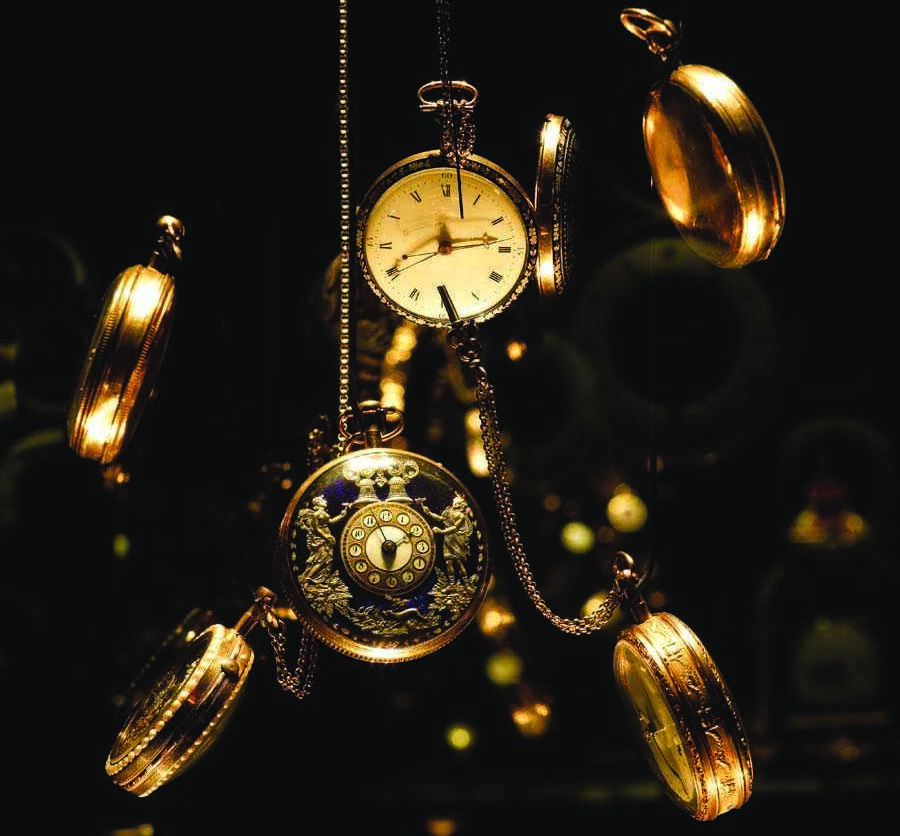
The precious clocks in Jerusalem’s L. A. Mayer Museum for Islamic Art chronicle Europe’s fascination with timekeeping, making it portable, beautiful, fanciful, even political – but above all, precise

L. A. Mayer Museum for Islamic Art
Clock Collection
Jerusalem
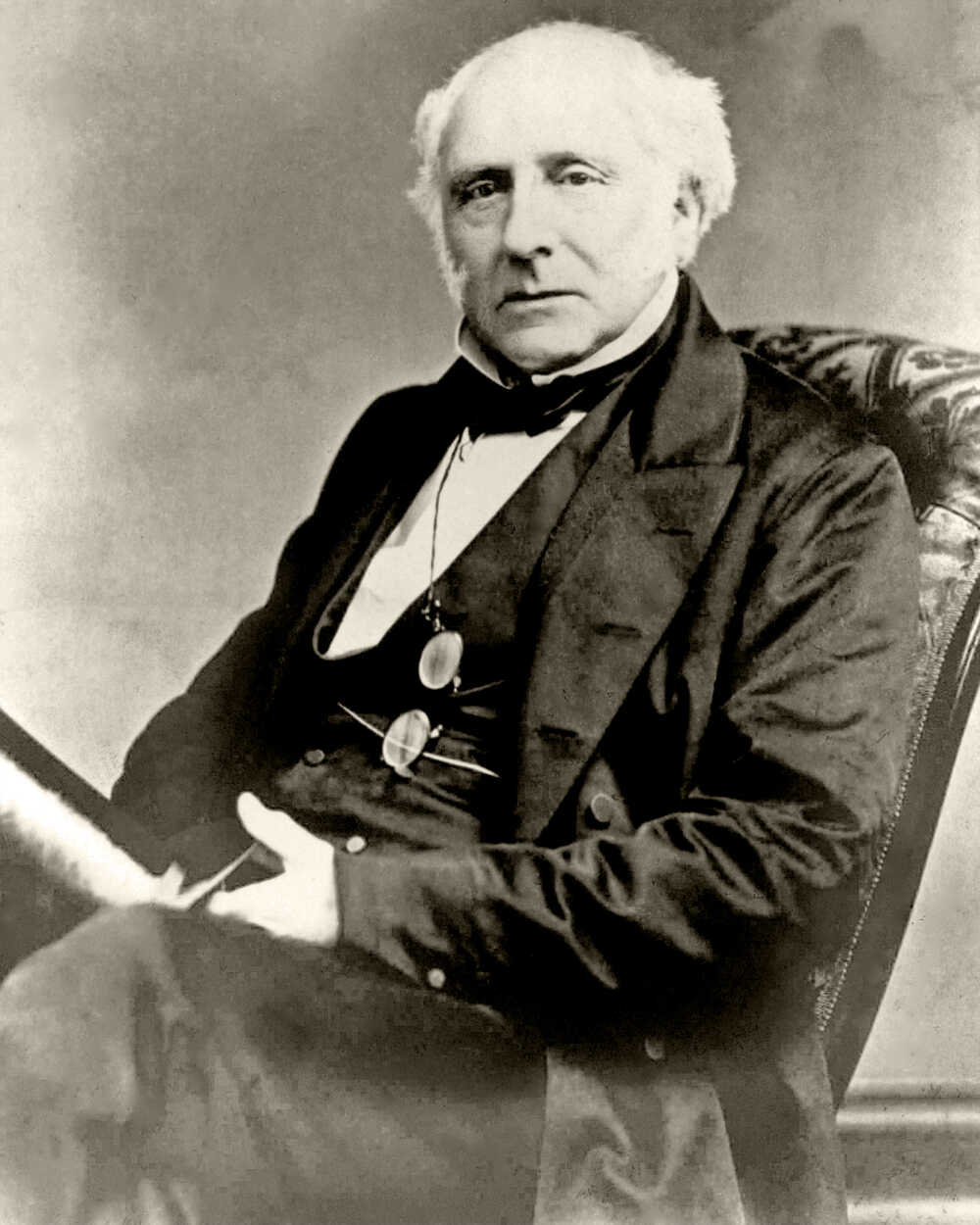
Photo: Owner of the largest known collection of Breguet timepieces. Sir David Lionel Salomons
Though Jerusalem’s L. A. Mayer Museum for Islamic Art is devoted mainly to exhibitions befitting its title, it also boasts a spectacular clock collection that belonged to founder Vera Bryce Salomons’ late father, Sir David Lionel Salomons. (In 1851, Salomons’ uncle – also David Salomons – became the first Jew elected to parliament, though his refusal to take the Christian oath of allegiance cost him his seat.)
Housed in the museum basement, the collection hit the headlines in 1983, when a hundred of the rarest pieces were stolen. Their whereabouts remained a mystery until 2008, when the robber’s widow attempted to sell some of the loot. The clocks were too well known to be easily disposed of, so Naaman Deeler – later dubbed “the kibbutznik burglar” – had dismantled the complex mechanisms and stashed them in safe deposit boxes (thankfully along with reassembly instructions). One dealer his widow approached after his death alerted the museum, and the collection was located and restored. Today it’s once again on display, albeit with tighter security.
Measuring the Imperceptible
If anyone in history has put his finger on man’s fascination with timekeeping, it’s Augustine of Hippo (354–430), the Christian theologian from Algeria, in his Confessions. Discussing the ephemeral nature of time and its relationship with God’s eternity, Augustine notes that although we constantly mention time, we can’t quite describe it:
What in speaking do we refer to more familiarly and knowingly than time? And certainly we understand when we speak of it; What, then, is time? If no one asks me, I know; if I wish to explain to him who asks, I know not.
(Augustine, Confessions, ed. and trans. J. G. Pilkington, book XI, ch. XIV)
Augustine’s conundrum lies in the slippery nature of past and future; the first is already beyond our grasp, the second has yet to come.
Past times, which now are not, or future times, which as yet are not, who can measure them? No one will dare to say that they can measure that which is not. When, therefore, time is passing, it can be perceived and measured; but when it has passed, it cannot, since it is not. (ibid., ch. XVI)
Though Augustine was alluding to a philosophical problem, he was also acknowledging the difficulty of conceptualizing the passage of time. Whereas the sun’s movements can be tracked from sunrise to sunset and in the progress of the seasons, time itself is made up of myriad, indefinable moments. To measure its elapse, people have used the sun’s journey across the sky, the dripping of water, the melting of a candle, and the burning away of incense. All these became obsolete with the invention of the mechanical clock – and many vital stages in its development are reflected in Sir David Salomons’ collection.
Mechanical Chimes
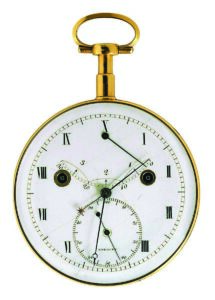
In the Middle Ages, clocks driven by springs or weights began to appear, with the oscillation of components representing a measure of time. Salomons’ oldest timepieces were 16th-century pocket watches, known as “Nuremberg eggs” after the German town that produced them. Their single hand was moved by the gradual unwinding of a metal spring, which had to be wound twice a day and lost so much time that the watch tracked only hours, not minutes.
Wall clocks, by contrast, including those in the collection, generally rely on pendulums. In 1602, Galileo discovered that a pendulum’s movements remain more or less constant regardless of the amplitude of its swing. The result was Galileo’s escapement, although this pendulum-based mechanism was incoporated in a clock only after his death, by Dutchman Christiaan Huygens in 1656.
Most of Salomons’ clocks originated in the 18th or 19th century, when timepieces gradually went from luxury items to essentials.
Yet the exhibit’s ornamental showpieces were clearly status symbols. Each is a work of art gleaming with precious metals, pearls, and diamonds, and many include music boxes. A good number are built into other objects – penknives, fans, bracelets, even a toy pistol. These timepieces were commissioned by aristocrats and often engraved with religious symbols, their names or family crests. European clocks often played hymns on the hour, while the Ottoman variety incorporated such Islamic flourishes as Kaaba miniatures.
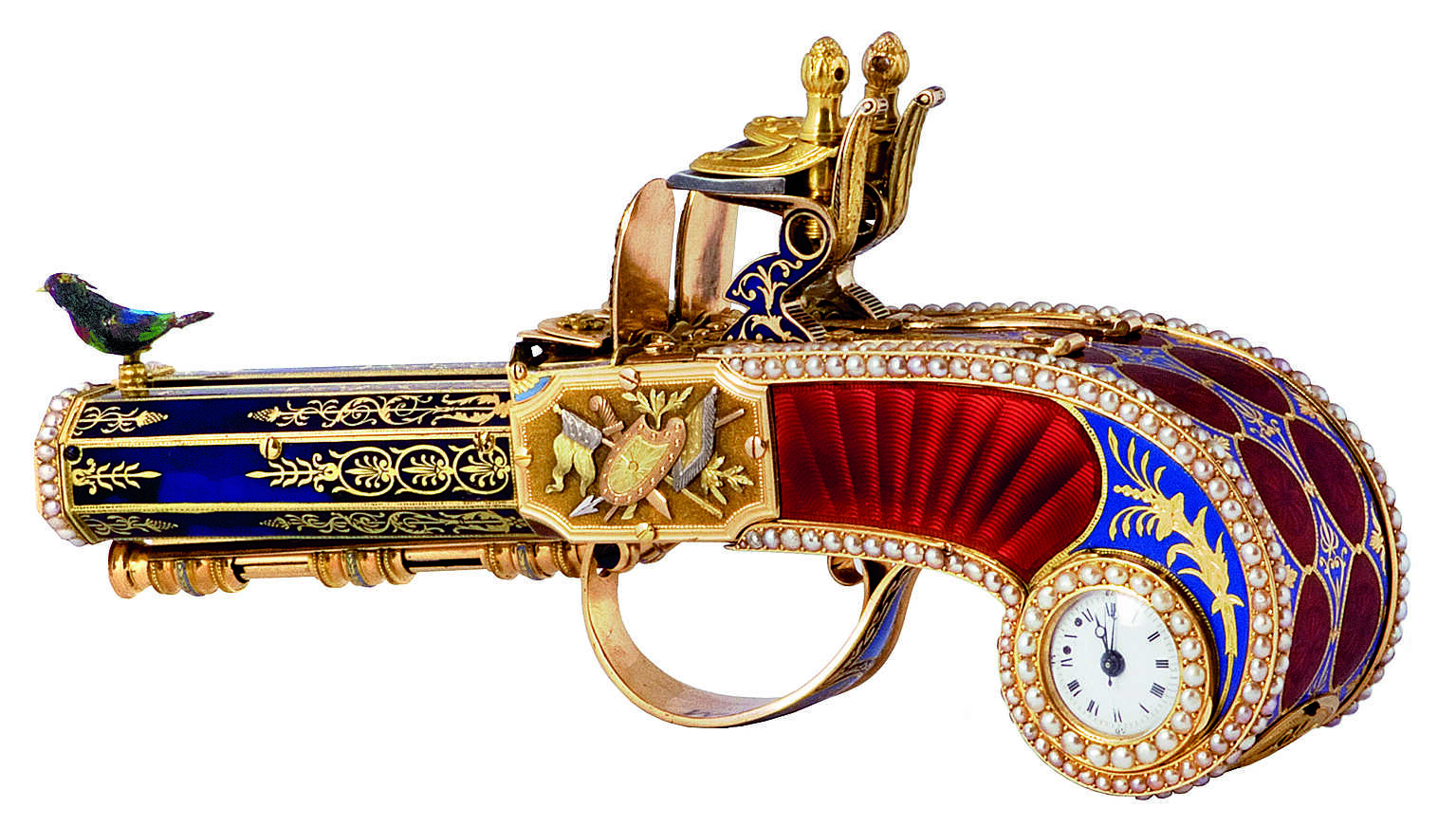
Clocks were toys for the rich. This ornate pistol is in fact a music box with a clock set in its hilt. Switzerland, early 19th century

Clock set in the base of a painted fan, Switzerland, circa 1820
Not yet a Segula subscriber?
Access our full archive online, have print issues delivered to your door, and moreFeel free to share