

Dissolving the Ghetto
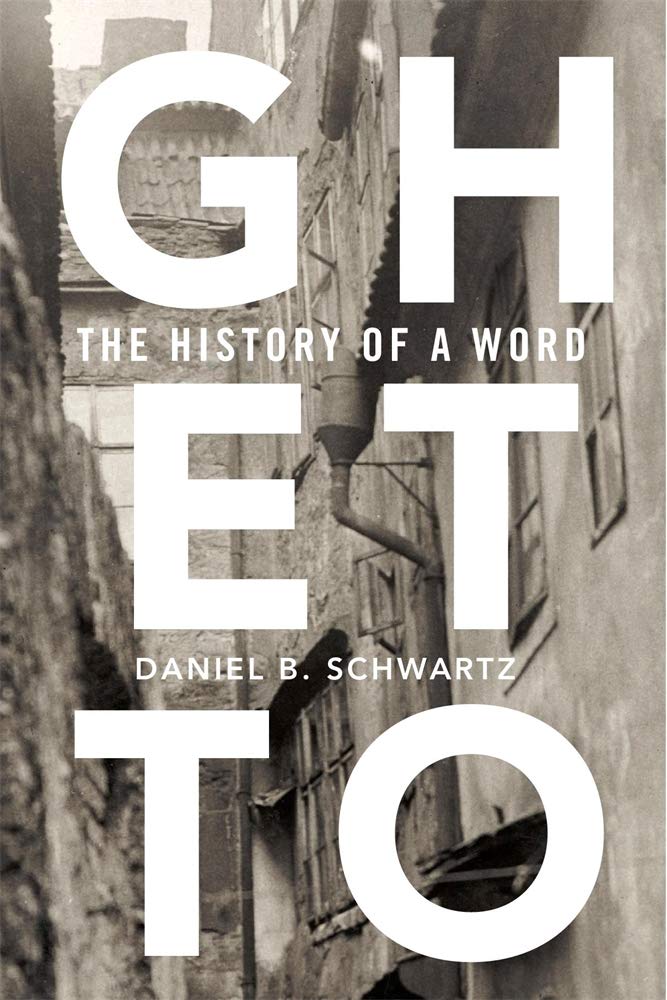
Ghetto: The History of a Word
Daniel B. Schwartz
Harvard University Press, 2019
268 pages
In 1516, the Jews of Venice were ordered into the city’s small Ghetto Nuovo district, dominated by a copper foundry. The word “ghetto” thus probably derives from the Venetian verb gettare, meaning “cast” or “throw,” because that was the work of the foundry. Yet ”ghetto” quickly developed other connotations. In a new study, Daniel B. Schwartz follows the evolution of this term.
Does a ghetto always forcibly confine its inhabitants, or can they congregate there voluntarily? Must it even refer to a particular location, or can it be simply a locus of control? And when was the term first applied to concentrations of ethnic groups other than Jews?
Schwartz explains that “all definitions of ‘ghetto’ tend to draw on some combination of the following: compulsion, homogeneity, spatial segregation, immobility, and socioeconomic deprivation. Yet they do not always incorporate every feature, nor do they agree over how these traits should be ranked in importance or understood” (pp. 3–4). The very breadth of this definition is his book’s central argument – and weakness.
Schwartz traces ghettos through early modern Europe to World War II and America’s inner cities. He covers this ground ably and with great nuance. Yet he concludes by pondering whether the entire State of Israel might be considered a ghetto, and whether its Arab areas also qualify as such.
Ghetto expertly demonstrates the fluidity of a loaded word but never really explains why it matters whether a particular location is called a ghetto, a quarter, or a slum. Schwartz may be suggesting that confinement of Jews is not sui generis and that we should share the term “ghetto.” Drained of its sinister implications, however, the word denotes nothing more than a poor, ethnically homogenous neighborhood, and the history of the term becomes irrelevant.
Turning the Page
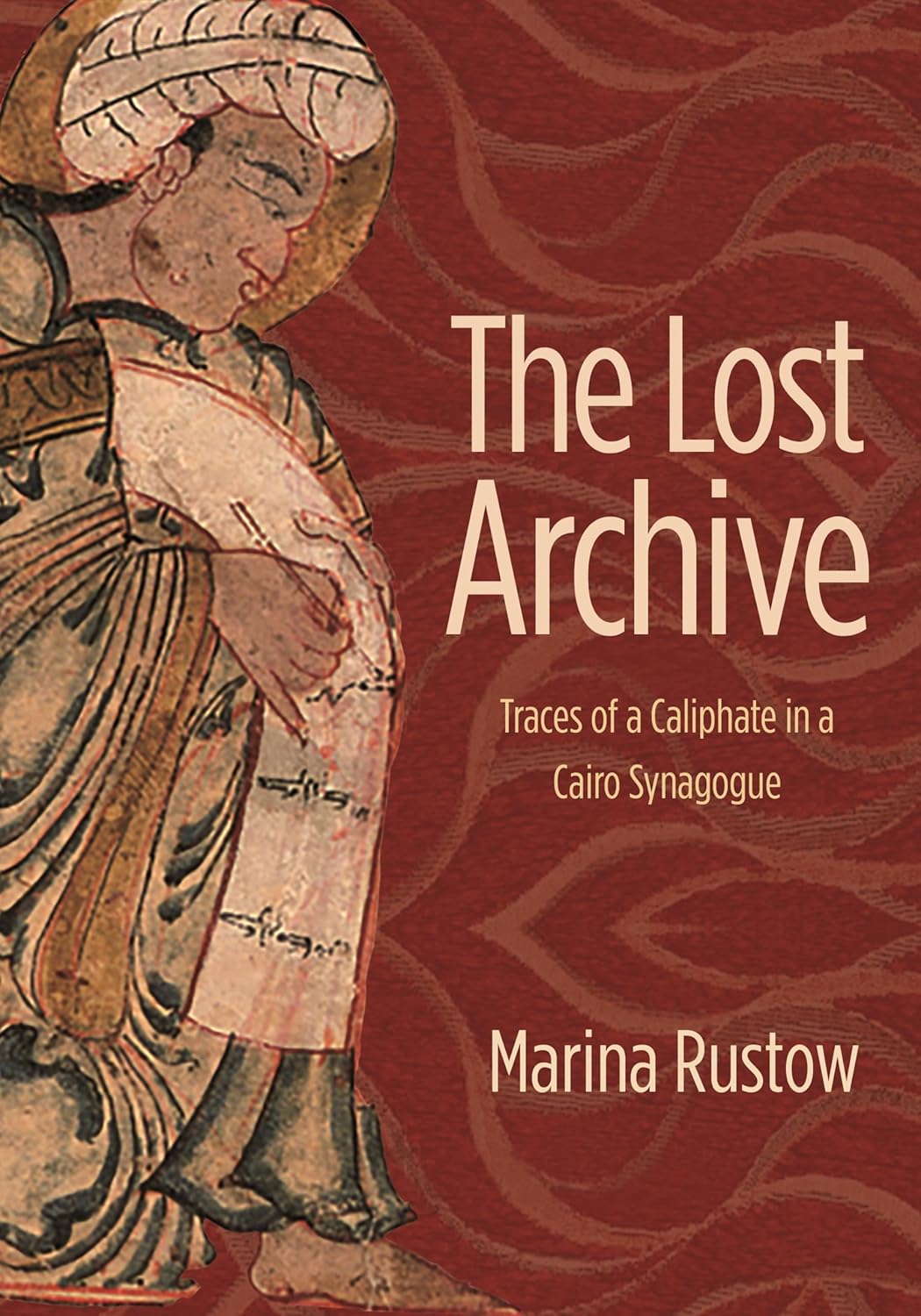
The Lost Archive: Traces of a Caliphate in a Cairo Synagogue
Marina Rustow
Princeton University Press, 2020
624 pages
Could there really be more to say about the Cairo Geniza, the famous cache of mostly medieval documents unearthed in the 19th century in the attic of a synagogue in Fustat? Most scholars have approached this treasure trove head-on, translating the contents and using them to reconstruct the society in which they were produced.
The Lost Archive finds a new angle.
Ignoring the literature, biblical and rabbinic texts, and personal letters found here, author Marina Rustow focuses on the paper trail of the Shi’ite Fatimid Caliphate, which ruled Egypt from 969 to 1171. “Arabic documents of state make up 4 percent of the whole documentary hoard – a surprisingly high percentage given that the geniza was a repository for worn manuscripts in Hebrew script” (p. 7.) Contrary to the myth of the Oriental despot generating little documentation, the Fatimid caliphs (and other Muslim rulers) actually produced a great deal of paperwork, from legislation to petitions and more.
At first, many of the geniza’s Fatimid documents were dismissed by researchers as “illegible scribbles” (p. 40). Such pages were frequently reused, perhaps to save paper, or to indicate that they no longer served any official purpose.
Challenging the accepted notion that paper was scarce in the Middle Ages, Rustow reads S. D. Goiten’s classic work on the geniza closely enough to notice that “every time a trader complains of a shortage of paper, he is writing from India [rather than from Egypt]” (p. 414). Nonetheless, paper was a mark of wealth. The large spaces between lines on some documents reflect the conspicuous consumption of a powerful state rich in resources (p. 143).
But what were Fatimid documents doing in a geniza? Why these particular papers, and why in this condition? What does their presence say about the culture of the government and its place in Cairo Jewish life?
Nineteenth-century European researchers sought geniza manuscripts, biblical or otherwise, chiefly for comparative redaction of literary texts (p. 44). These scholars were less interested in politics, considering them mostly background to the human figures revealed in the geniza. Rustow, however, treats the geniza as an entity in itself, evaluating these government documents on their own terms. The author even suggests looking outside the geniza for more Fatimid material, though she doesn’t say where.
A handsome volume with compelling illustrations, The Lost Archive marries the close study of text and textual fragments with larger considerations regarding artifacts in general and their role in the study of history.
Rustow concludes rather daringly: “We should, then, probably say good-bye to the illusion that documents are supposed to serve us by surviving for posterity. It’s our duty to serve them, and one way to do that is to understand their genesis, function, purpose, and afterlives. Only when we can think with their logic can we figure out where they must be hiding and what they must be hiding” (p. 448).
This magisterial study is a must for anyone interested in the geniza but also for anyone considering how we relate to the texts of our predecessors and what we hope to leave to those who follow.
Not yet a Segula subscriber?
Access our full archive online, have print issues delivered to your door, and moreFeel free to share