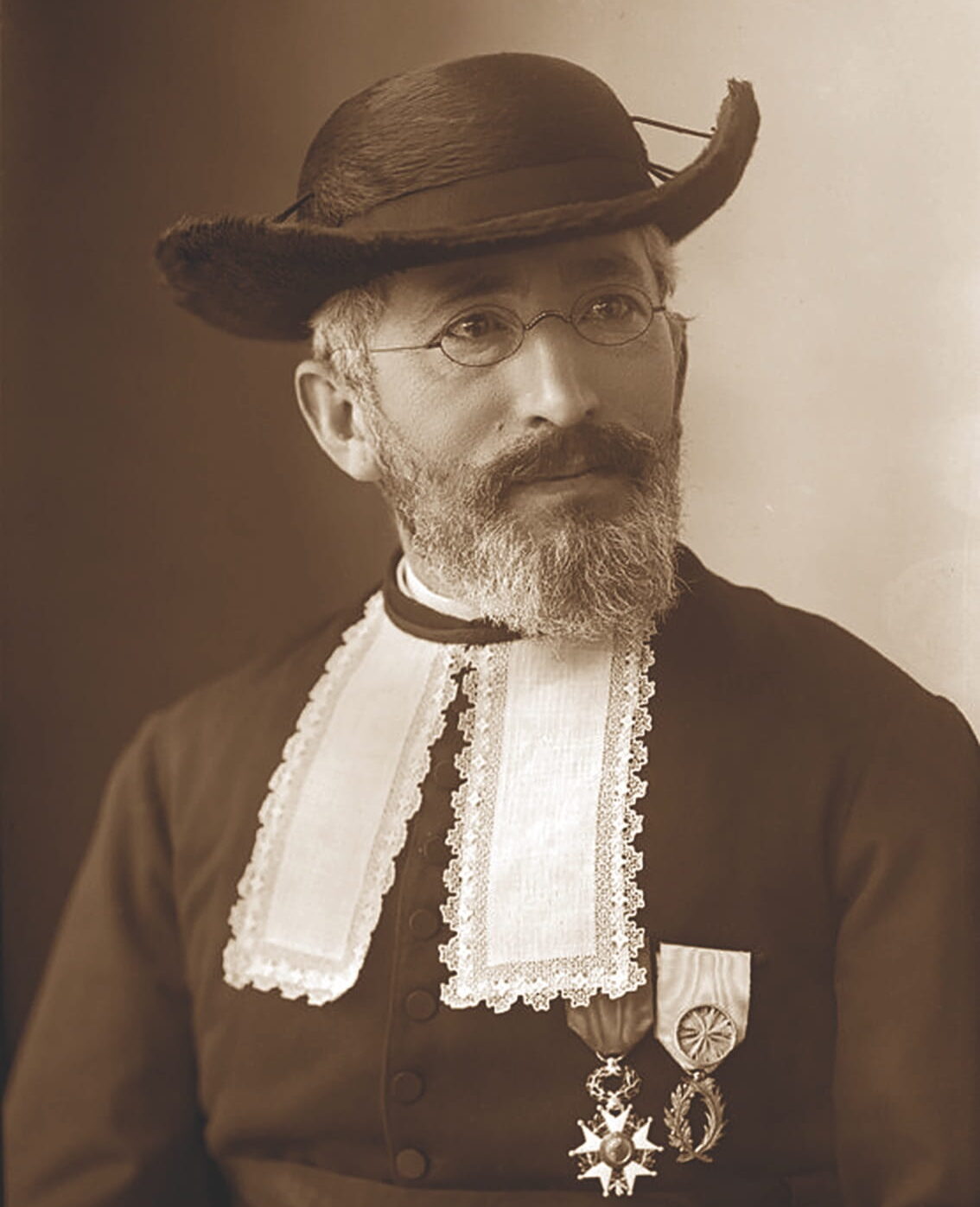
Rabbi Zadoc Kahn stood firm against the rising tide of French anti-Semitism following the Dreyfus trial. Accomplished philosopher and fearless Zionist, Kahn was proud to count among his friends not only Baron Rothschild, but France’s most notorious “traitor”

Rabbi Zadoc Kahn was born February 18 (4 Adar), 1839, in Mommenheim, a small town in Alsace, in northeastern France. The modest local synagogue still stands, having survived Nazi occupation, and testifies to the small Jewish community (fewer than two hundred) that existed here in the 19th century.
Kahn’s family was extremely religious. His mother descended from a French rabbinic dynasty; her father, Rabbi Jacob Meyer, served as chief rabbi of the Lower Rhine Valley and sat on Napoleon’s Grand Sanhedrin (see “Napoleon’s Jewish Court,” Segula 29). Great expectations therefore surrounded Zadoc, who was sent at the tender age of eleven to study with Rabbi Itzig Baer in the nearby village of Bischheim. The young genius quickly moved on to the town of Brumath, where Rabbi Salomon Lévy prepared him to qualify for the rabbinical school in Metz. At age nineteen, he relocated to Paris together with the school.
Ahead of His Time
Kahn’s career track was extraordinarily speedy. Ordained at age twenty-three, he was snapped up to educate the cream of French religious youth, heading his rabbinic institute’s Talmud Torah. Four years later he was appointed deputy chief rabbi of Paris. He taught and researched Talmudic literature, publishing an outstanding paper – translated into English and Hebrew – on slavery in Judaism.. His erudition and oratory earned him the position of chief rabbi of Paris when Rabbi Lazare (Eliezer) David Isidor stepped down in 1867. The appointment required a special dispensation, as Kahn was not yet thirty.
Rabbi Zadoc was soon as famous for his charity work as for his learning. Pogroms in southwest Russia (mostly in today’s Ukraine) in the 1880s resulted in a flood of Jewish immigrants to Germany and France. The new chief rabbi responded by setting up an orphanage and agricultural school for boys from poor families and a shelter for young women. In 1879, these initiatives won him France’s highest accolade, the French Legion of Honor Award.
Politician Adolphe Crémieux (1796–1880) was the acknowledged leader of the French Jewish community in this era. Founder of the Alliance Israélite Universelle Jewish solidarity organization, Crémieux also served as French minister of justice, combatting anti-Jewish discrimination. His achievements showed just how deeply France’s revolutionary emancipation of its Jews had penetrated. Crémieux labored tirelessly for his coreligionists, representing them faithfully on many levels, but after his death, he had no heir – he had been totally secular, and his sons had converted to Christianity.
Rabbi Kahn stepped unhesitatingly into Crémieux’s shoes, establishing the Society for Jewish Studies and producing its first journal, Revue des Études Juives (Jewish Studies Review), in 1880. (Still published every six months, the Revue is one of the oldest active journals of Jewish scholarship and remains a respected resource.)
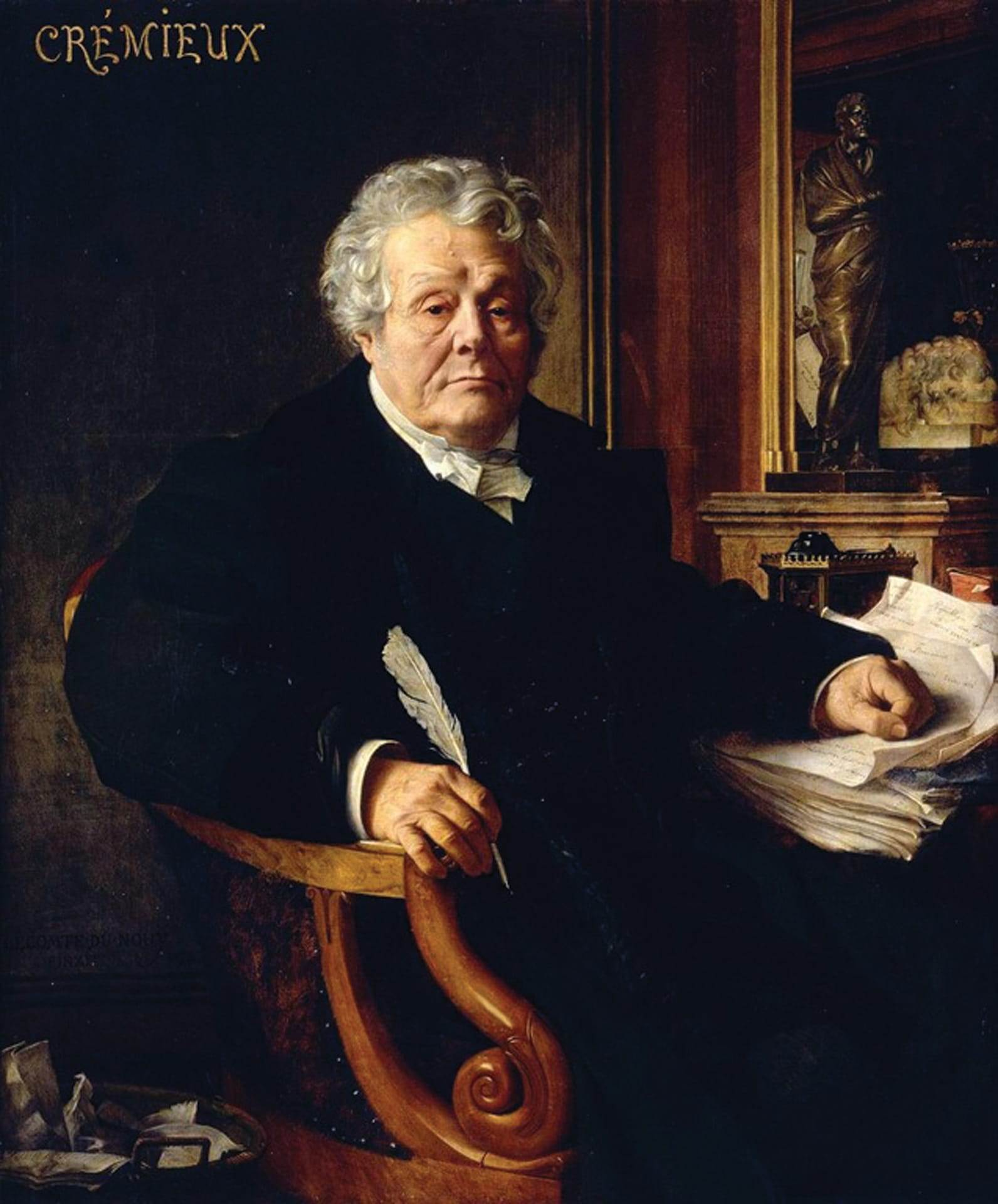
Jean-Jules Antoine Lecomte du Nouÿ, oil on canvas, 1878

Flyleaf of Slavery, the treatise that established Rabbi Kahn’s reputation
Not yet a Segula subscriber?
Access our full archive online, have print issues delivered to your door, and moreFeel free to share