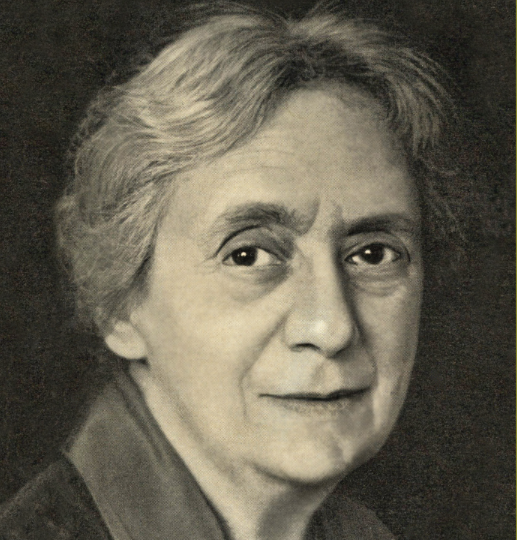
From teaching immigrants to setting up a country-wide social work system, from founding Hadassah to saving thousands of young people through Youth Aliya, nothing seems to have been beyond Henrietta Szold. How did a nonpartisan American pacifist become a pre-state Zionist leader? Because whenever Jews called, Henrietta came

“Perhaps we should ask Henrietta Szold,” Chaim Weizmann suggested to fellow Zionist leader Arthur Ruppin after an exhausting and worrisome meeting. The tension in the room suddenly abated. “Of course! Why didn’t we think of that earlier!”
It was 1933. Jewish parents in Germany were anxious to get their children out of the country, and the World Zionist Organization Executive was gearing up for what would later be known as Youth Aliya.
Weizmann and Ruppin had good reason to choose Henrietta Szold to oversee this operation. The welfare of the Jewish people was her life’s work. Time after time, she had rallied to the cause, tirelessly turning pipe dreams into effective, trustworthy organizations. Although everything in pre-state Israel ran on partisan lines, Szold belonged to no party and had never run for office. Jewish leaders just called her, and she came.
Daddy’s Girl
Henrietta Szold was born in Baltimore in 1860, the eldest daughter of Sophie and Benjamin, an Orthodox rabbi and recent immigrant from Hungary. She was raised in a warm, loving Jewish home, one of eight sisters, three of whom died in infancy. Arriving just before the mass Jewish immigration from Europe, the family settled easily into life in the New World.
The American Civil War broke out when Henrietta was about a year old, and Benjamin Szold, an abolitionist, was a staunch supporter of Abraham Lincoln and the Union. In 1865, shortly after the war, President Lincoln was assassinated, and memories of the funeral procession and her father’s pain were etched in Henrietta’s mind.
Deeply attached to her father, Szold studied with him and even wrote his letters and edited his writings. He taught her to be an attentive listener with an ear for others’ problems. “So what do you think, Henrietta?” her father would ask when she sought his advice, training her to find the answer within.
Henrietta was often to be found in the family’s small garden, surrounded by history books. After finishing the local Jewish elementary school, her father encouraged her to enroll in public high school, where she was the first Jewish student, and from which she graduated with distinction in 1877. Academic institutions in the U.S. were not yet open to women, so she became a teacher.
In 1882, American Jewish tranquility was shattered as waves of Jewish refugees fleeing pogroms in Russia flooded the shores of the U.S. Accompanying her father to the port to welcome the newcomers, Henrietta was proud of her country for accepting these hungry mouths and giving them a new start. Rabbi Szold invited the new immigrants to his home, where they sat until the wee hours of the morning, describing their recent horrors, wondering at the fate of the Jewish people, and discussing Auto-Emancipation, an inspiring new pamphlet by an Orthodox Jew named Judah Leib Pinsker. They founded a small chapter of his Lovers of Zion movement in Baltimore, and Henrietta and her father joined. Szold later attributed her Zionism not to any deep, intellectual conviction, but to the glimmer of hope the movement sparked in the eyes of these new immigrants.

Welfare Work
But politics was far from the refugees’ main concern; they had to make ends meet and find homes. At age twenty-two, Henrietta was already a pragmatist determined to help others help themselves. If you’re going to lend a hand, she would say, don’t just stick on a band-aid; treat the cause of the problem. In addition to her regular teaching, she spent her evenings giving night-classes in English in an attic crowded with immigrants young and old. “I eat, drink and sleep Russians,” she wrote to a friend (Jewish Women’s Archive website, Women of Valor: Henrietta Szold).
Economic hardship tore many immigrant families apart. Desperate to find work, many gave up Sabbath observance and quickly assimilated. The American Jewish community realized something had to be done. Diametrically opposed to Reform attempts to keep immigrants Jewishly affiliated by redefining Judaism, the Jewish Publication Society of America (JPS) was founded in 1888 to foster Jewish identity by translating seminal works of Jewish history and philosophy into English. Henrietta quickly volunteered her services, and her thoroughness and broad education soon made her indispensable. In 1893, at age thirty-three, she became the chief editor. Her sisters had all married, and now she too left the nest for New York, taking up the post she would fill for the next twenty-five years. Yet she traveled to Baltimore on several extended visits to care for her ailing father. Benjamin Szold died in 1902, and Henrietta’s mother moved to New York to be close to her. Szold found some consolation studying at the Conservative Jewish Theological Seminary (JTS). As the first female student, she was breaking new ground there, although she was accepted only after promising not to seek rabbinic ordination.
The turmoil of the late 19thand early 20th centuries ushered in profound changes worldwide. Workers striving for equality sparked socialist and communist revolutions in Eastern Europe, while in America, similar energies aimed to ensure the rights of the individual worker and equal opportunity for all. Jews played a pivotal role in these movements.

Szold and her friends dreamt of a society based on goodwill, mutual assistance, and honesty. In contrast to the corrupt capitalism then rampant in America, the Progressives denounced this social Darwinism – survival of the fittest rather than the finest. Government intervention was the way forward, they felt, with the latest scientific discoveries improving life for everyone.
In this spirit, numerous women’s social welfare organizations were founded. Henrietta Szold belonged to Daughters of Zion, a small group of women who, in addition to their charity work, met regularly to read contemporary articles on Judaism and Zionism.
Visiting the Promised Land
At JTS, Szold, now almost fifty, formed a close friendship with Prof. Louis Ginzberg, who was more than ten years her junior. She helped research his Legends of the Jews, and the two frequently strolled around the campus, engrossed in deep conversation. Henrietta hoped their relationship would lead to marriage, but Ginzberg became engaged to a younger woman. Unable to bear her daughter’s unhappiness, Sophie Szold persuaded Henrietta to take a leave of absence and accompany her to Europe to visit relatives.
Meanwhile the Jewish Publication Society rewarded her years of outstanding dedication with a substantial bonus. Henrietta decided to use the money to extend her vacation and visit Palestine.
Szold and her mother were determined to see everything – biblical landscapes and traditional Jerusalem neighborhoods as well as pioneering settlements and socialist farmers. It was 1909, and the mostly Russian second wave of Jewish immigrants to the land of Israel was still struggling. No socialist, Henrietta was deeply moved nonetheless by the pioneers’ dedication and self-sacrifice.
Wherever they went, the Szolds were appalled by the number of children disfigured and even blinded by trachoma. Visiting the Hovevei Tziyon girls’ school in Jaffa, however, they realized that in-school-examinations and treatment could make the problem soluble. As they left the school, Sophie could no longer contain herself. “That is what your group ought to do! What is the use of reading papers and arranging festivals? You should do practical work in Palestine.”
From these simple words sprang Hadassah, today the largest Zionist organization in the U.S.

Hadassah
In 1910, the mismanaged Zionist Organization of America (ZOA) suffered a financial crisis. Henrietta was appointed secretary to put things right. Slowly but surely she began implementing the idea her mother had proposed in Jaffa, and on February 24, 1912 she convened the first meeting of what would later become Hadassah. Thirty-eight women gathered at New York’s Temple Emanu-El, and Henrietta outlined a Zionist agenda. Why not campaign to improve public health in the Holy Land, she argued, just as they worked for better conditions in the U.S.? Such activity would also strengthen American Jewry’s Zionist identity. The movement, founded close to the date of Purim, was named for Queen Esther, whose Hebrew name was Hadassah.
The women began raising funds to send nurses to the Jewish homeland. Their brief was to improve local health and hygiene by education, particularly in prenatal and postnatal care. This was not philanthropy, Szold insisted (quoting Herzl), but policy – because it targeted an entire nation. Just as she had approached refugee welfare years earlier, Henrietta aimed to solve the problem at its root – by laying the groundwork for preventive medicine in the Holy Land. Hadassah branches spread throughout the U.S., and Henrietta’s association with the organization worked wonders for recruitment. In 1913, thanks to a donation from Jewish American philanthropist and Zionist activist Nathan Strauss, two nurses – Rachel Landy and Rose Kaplan – set out for the land of Israel with the blessing of hundreds of American women.
The nurses settled opposite Jerusalem’s Batei Ungarin (Me’ah She’arim) quarter. They attended births, advised young mothers, and taught hygiene in schools. About a year later, however, World War I broke out. Medical conditions deteriorated, overseas funding was cut off, and the few doctors on hand were mostly either deported or drafted. The Ottoman authorities requisitioned the few existing hospitals, and starvation took a heavy toll. During the three years of war, 28,000 Jews died in the Holy Land – roughly a third of its Jewish population.
Zionist leaders in America dispatched much needed medical staff and supplies. The ZOA called on Henrietta Szold and Hadassah, already numbering some two thousand women, to quarterback the massive operation. Henrietta worked around the clock to send state-of-the art medical equipment and life-saving tests as well as huge crates of medications. Although debilitating diseases such as malaria were rampant in the Holy Land, Henrietta never lost sight of the big picture, tapping dentists as well as nurses trained in child welfare to take care of basic health needs.
The end of the war and the British conquest of Palestine made access to the country easier, and the American Zionist Medical Unit (amzu) soon arrived with medical equipment worth $25,000 – a huge sum at that time – and a generous budget. The equipment included ambulances, delousing treatments, mobile laboratories, and X-ray machines. Doctors and nurses as well as administrative staff dispersed throughout the country, opening clinics and renovating hospitals, bringing with them a sense of hope and progress.
Although she longed to be in Palestine, Henrietta followed events from America, where she directed the ZOA’s educational efforts. But when the delegation ran into problems, again all eyes turned to her. So in 1920, the sixty-year-old Henrietta set sail for the land of Israel with an open-ended ticket. amzu became an independent body directly accountable to Hadassah, renaming it the Hadassah Medical Organization.
While every political party in Palestine had its own medical services, Hadassah remained stubbornly nonpartisan, attending to Jews and Arabs alike. Whereas Europeans dismissed nurses as glorified doctors’ assistants, the Hadassah nursing school in Jerusalem taught nursing as a profession in its own right. Its first class of twenty-two nurses graduated in 1921. In addition to hospitals in Tel Aviv and Haifa, the organization also ran post-natal clinics, known as Tipat Halav (a drop of milk) after their mule-delivered milk service for needy families.
As a pacifist, humanist member of Judah Magnes’ Brit Shalom movement, Szold was something of a rare bird among pre-state leaders. Arab aspirations for independence reminded her of the blacks’ struggle against slavery in the U.S. Ben-Gurion insisted on including her in the Jewish National Council (JNC) Executive nonetheless. He respected the honesty and integrity that lay behind her selfless dedication.
Yet her greatest challenge still lay ahead.
Youth Aliya
It is 1932: An early riser, Henrietta sits in her office, deep in contemplation. On the desk before her lies a letter from a German woman, Recha Freier. Anti-Semitism is on the rise and Jewish youngsters in the Reich roam the streets, denied education and employment. In Palestine there is work and a shortage of young people, writes Freier, and German Jewish teens desperately need hope and direction. Why not send them to high school in Palestine? They might even stay for good.
Henrietta mulled over the few boarding schools she knew of, and how much it would cost to support all these youngsters, then shook her head sadly. As head of the JNC’s Social Welfare Department, she could not accede to this request. But Recha Freier was not so easily deterred; perhaps the tragic circumstances spurred her on. The Nazis had risen to power, Jews were being openly persecuted, and Jewish youngsters clamored to leave Germany for Palestine. Parents initially objected, but as the situation deteriorated, they were soon pushing their children out of the country. Yet there was no funding.
Representatives of the German Zionist Federation turned to Chaim Weizmann and Arthur Ruppin. Could an organization be set up for these children, just for two or three years?
Weizmann and Ruppin asked the British for immigration certificates for the youngsters. The authorities wanted to know whether there were suitable conditions for their absorption: money for schooling, room in school, and a responsible umbrella organization. The answer was no.
Ruppin had only one way out – Henrietta Szold. She alone could handle both the organizational and educational aspects of such an undertaking. But Szold was not about to take on mission impossible.
Ruppin suggested that Henrietta travel to Germany and see the situation firsthand, hoping she would change her mind. It was 1933, and Henrietta was seventy-three. She was ready to return to America, spend time with her extended family, retire, and grow old in peace. Instead, she set out on an intensive, month-long tour of Europe, looking for funding in London and meeting community leaders in Germany. She sat with Recha Freier, with the heads of the Zionist movements, and with Jewish youth and their anxious parents. Szold’s warm heart went out to the parents. She, who would have traded everything for one child of her own, listened to their concerns and understood their need to get their children out of harm’s way without abandoning them.
Back in Palestine, Henrietta threw herself heart and soul into her new assignment. Between 1933 and 1948, when the State of Israel was established, Youth Aliya brought some thirty thousand boys and girls to Israel – and they were all her children.
The complexity of organizing aliya for all these youth was unprecedented. Europe was a time bomb, yet sometimes the danger seemed exaggerated. Communication became increasingly difficult. Henrietta divided up the tasks: the German office handled contact with the families who wished to evacuate their children, ensuring they had the necessary documentation, while the Israeli office dealt with immigration certificates from the British and school enrollment. Her work involved continuous and frustrating negotiation with British Mandate officials, all the while seeing to it that the JNC provided the budget. She raised funds to expand boarding facilities at existing schools and establish new ones, contacting agricultural settlements about taking in youngsters, recruiting educational staff and youth leaders, and solving innumerable problems.
Youth Aliya groups continued arriving in Palestine until 1941, at first only from Germany, then from Poland, Czechoslovakia, Austria, and elsewhere. With Nazi occupation, contact was severed and the groups stopped coming. Germany disappeared behind a wall of uncertainty. Their parents lost to them, their letters returned unanswered, the refugees were left to Henrietta’s loving care. While war raged, Youth Aliya turned to the home front, sheltering local children from distressed backgrounds. In 1943, the Tehran Children arrived. This first group of children scathed by the Holocaust had escaped to the Soviet Union, then Iran, before reaching Palestine. Henceforth, Youth Aliya focused on these and other war orphans.

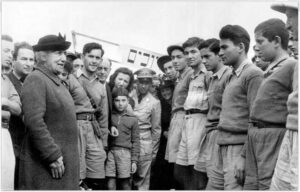
Henrietta met each group of children off the boat. She shook hands with every child, asked his name, and told him to contact her anytime. Her office received thousands of letters. “I’m unhappy. I want to change schools,” wrote one boy, while a girl asked: “I’d like to learn a musical instrument. Can it be arranged?” Henrietta replied warmly to every letter, trying her hardest to attend to the special needs of each.
She often accompanied groups to their destinations, spending the first few days with them to cushion their landing in their new home. At first Szold objected to sending refugees to kibbutzim, fearing culture shock, but as more and more housing became necessary, she had no choice but to concede. She fought tooth and nail for appropriate conditions, though. When Kibbutz Ein Harod offered her accommodations in tents, she declined, proposing instead to raise money for a building. Did they have running water? she would ask, as if inquiring about a hotel, not a kibbutz in the 1930s. Mosquito screens and bookshelves were also on Henrietta’s list. The kibbutz members complained but eventually complied. In Ein Harod, they even moved into tents so the Youth Aliya children could sleep under a real roof. Henrietta insisted on a proper curriculum, since these youngsters would soon have to make a living, and made sure the collectives didn’t exploit the children as cheap labor at the expense of their schooling.
When the riots of 1936 broke out and the roads became hazardous, she made certain that boys and girls did not travel alone. Her concern for each child shines through in a letter sent to one youth leader:
Concerning Ruth Binyamin’s wish to travel to Na’ana [Kibbutz Na’an], I must inform you that I will agree to such a journey only if you can arrange for an escort. Please inform me of her travel plans and of her safe return. You must ensure that you are informed of her arrival in Na’an. (Dvora Hakohen, Children of the Time: Youth Aliya, 1933–1948 [Yad Yitzhak Ben-Zvi Press], p. 104 [Hebrew])
Henrietta’s high standards were sometimes criticized by those who believed youngsters should be rescued from Europe at all costs. Yet she saw no point in transplanting people from one disaster to another. She took a long-term view of the rescue operation, not realizing that the alternative was death.
The thousands of teenagers who came to Palestine through Youth Aliya went on to become an integral part of the country’s economy. Despite their difficult childhoods, they built strong, stable families and contributed to all aspects of the State of Israel – testimony to the power and success of the extraordinary operation that brought them there. If not for Henrietta’s love, faith, and educational convictions, and her capacity to oversee dozens of institutions all over the country and plan for the future, Youth Aliya could easily have become a displaced persons camp for orphans.
Over time, Youth Aliyah expanded and undertook new assignments. Henrietta still headed the organization on her eightieth birthday, which she celebrated by traveling the length and breadth of Israel to visit her children. She always preferred a skeleton staff, and in her last years, her faithful assistant, Hans Beit, did much of the traveling for her.
Henrietta Szold died on 30 Shevat, 1945, at age eighty-five. That date later became the Israeli Mother’s Day, a sign of the Jewish people’s enormous appreciation for “the Mother of Youth Aliyah.”
Chronology
1860
Born in Baltimore
1877
Graduated from high school with distinction
1883
Organized night school for eastern European Jewish immigrants
1893
Named editor of Jewish Publication Society
1910
Appointed secretary of the Zionist Federation of America
1912
Founded Hadassah Women and served as first president
1918
Elected director of education of Zionist Organization of America
1920
Immigrated to Palestine and directed Hadassah activity
1927
Elected to the Zionist Executive; held the health and education portfolios
1931
Elected to the Jewish National Council Executive; established the Social Welfare Department
1933
Active on behalf of German Jewry; established Youth Aliya
1935
Hadassah Nursing School and Kibbutz Kfar Szold named for her
1939
Founded the Tel Mond Youth Village for abandoned youth
1941
Initiated, planned, and financed the Institute for Children and Youth
1943
Dedicated herself to absorbing the Tehran Children
1945
Died in Hadassah Hospital on Mount Scopus and was buried on the Mount of Olives
Further reading:
Bracha Habas, Henrietta Szold: Her Life and Personality (Massada, 1960) [Hebrew]; Dvora Hakohen, Children of the Time: Youth Aliya, 1933–1948 (Yad Yitzhak Ben-Zvi and Ben-Gurion Research Institute for the Study of Israel and Zionism, 5772 [2012]) [Hebrew]; Ester Ziv Inbar, Always Be Yourself : The Story of Henrietta Szold (Yad Yitzhak Ben-Zvi and Am Oved, 1996) [Hebrew]; Mira Katzburg-Yungman, Zionist Women in America: Hadassah and the Reestablishment of Israel (Ben-Gurion Research Institute for the Study of Israel and Zionism, 2008) [Hebrew].
Feel free to share