Though there’s no evidence outside the Bible for the Jewish people’s sojourn in Egypt, historical and archaeological finds from the end of the late Bronze Age in the land of Israel indicate that Egyptian domination of Canaan ended around the time of the Exodus. Could there be a connection?

For millennia, Egypt dominated cultural development in the ancient Near East. Yet despite ample historical and archaeological evidence of Egyptian rule in Canaan, the Bible never mentions it. Intriguingly, the Israelites’ Egyptian bondage is described in the biblical text as lasting 430 years, almost the same duration as the archaeological and historical record of Egypt’s dominion in Canaan.
Egyptian influence peaked in the late Bronze Age, beginning in the 15th century bce, when Egypt extended its rule into Canaan. The resulting contact with Egyptian culture left a clear impression on Canaan’s own, with numerous Canaanite artifacts bearing an unmistakably Egyptian mark. This impact ended when a series of severe crises afflicted Egypt and the entire region in the 12th century bce, culminating in the empire’s retreat from Canaan after four hundred years.
The beginning of the late Bronze Age was pivotal in Egyptian history. The Hyksos dynasty was expelled, ushering in a new era. The name Hyksos, often mistranslated as “shepherd kings,” in fact means “rulers of foreign lands.” Originating in Canaan, the dynasty controlled Egypt for over a century. Around 1550 bce, Pharaoh Ahmose I, ruler of Upper Egypt and founder of the pharaonic Eighteenth Dynasty, attacked the Hyksos capital, Avaris, and drove these conquerors of Lower Egypt (which included the Nile Delta) back to Canaan. This triumph launched Egypt’s New Kingdom, which reunited the country’s upper and lower regions, then expanded north into Canaan and beyond. Thutmose III completed this conquest, and from the 15th century bce until the end of the 12th, Egypt ruled Canaan. These military achievements were maintained by a complex system of city-states, forts, and army bases scattered throughout the territory.
The best-known historical source from this period is the el-Amarna Letters – correspondence between Canaanite vassal kings and their Egyptian overlords – but there are also royal inscriptions erected as victory stelae or etched on the walls of monumental royal buildings. Excavations all over Israel have exposed many typically Egyptian relics as well as traces of cultural connections between Egypt and Canaan.

Canaanite Complaints
The el-Amarna archive, named after the site of its discovery in Egypt, surfaced in 1887. Its contents have illuminated the relationship between Egypt and Canaan in the mid-14th century bce, from which these letters date. They’re all addressed to pharaohs of the Eighteenth Dynasty: Amenhotep III, Amenhotep IV (known as Akhenaten), and boy-king Tutankhamun. Among the remains unearthed in el-Amarna are the ruins of Akhenaten’s capital, Akhetaten.
Written in Akkadian (a language used for international communications in the ancient Near East), in cuneiform on clay tablets, the letters sometimes incorporate Canaanite expressions. Some correspondence reveals ties between Canaan’s Egyptian administration and rulers from more northern regional superpowers, such as Babylonia, Assyria, Mitanni, and Hattusa, home of the Hittites. Most of the letters, however, were sent to Egyptian authorities by the heads of Canaanite city-states, making their dependence on Egypt abundantly clear. Requests for armed reinforcements against internal rivals often shed light on power struggles between cities.
While providing direct evidence of Egyptian dominion over Canaan, the correspondence also reflects a region verging on anarchy as the late Bronze Age concluded. For example, Abdi-Heba, ruler of Jerusalem, wrote to Akhenaten seeking aid against an enemy alliance in the coastal plain:
May the [kin]g know (that) all the lands are [at] peace (with one another), but I am at war. May the king provide for his land. Consider the lands of Gazru, Ašqaluna, and L [akis]i. They have given them food, oils, and any other requirement. So may the king provide for archers and send the archers against men that commit crimes against the king, my lord. […] Consider Jerusalem! This neither my father nor m[y] mother gave to me. The [str]ong hand [of the king] gave [it] to me. (EA 287, retrieved from https://en.wikipedia.org/wiki/Amarna_letter_EA_287)
The Egyptians communicated with Canaanite leaders, demanding tribute in exchange for protection. The Canaanites responded by emphasizing their undying loyalty to Egypt, hoping for recognition and military backing from the empire’s home base across the desert. The letters are full of flattery and promises of gifts. For instance, Biridiya, king of Megiddo, wrote to Pharaoh Akhenaten:
Say to the king, my lord and my Sun; Message of Biridiya, the ruler of
Magidda, the loyal servant of the king. I prostrate myself at the feet of
the king, my lord and my Sun, 7 times and 7 times. I herewith give what the king, my lord, requested: 30 oxen, [x sheep and goats, x birds …]. [And indeed, the cities of my lord the king] are at peace, but I am at war. (The Amarna Letters, ed. and trans. William L. Moran [Johns Hopkins University Press, 1992], EA 242, p. 297)
Egypt’s tributaries in Canaan paid heavy taxes collected by Egyptian governors and other officials stationed in Canaanite urban centers. Egyptian forts and garrisons enforced order. Sophisticated use of local resources and the political structure of rival city-states allowed for control of extensive territories. In addition to the el-Amarna Letters, considerable evidence from the late Bronze Age at archaeological sites in Israel confirms a significant Egyptian presence.

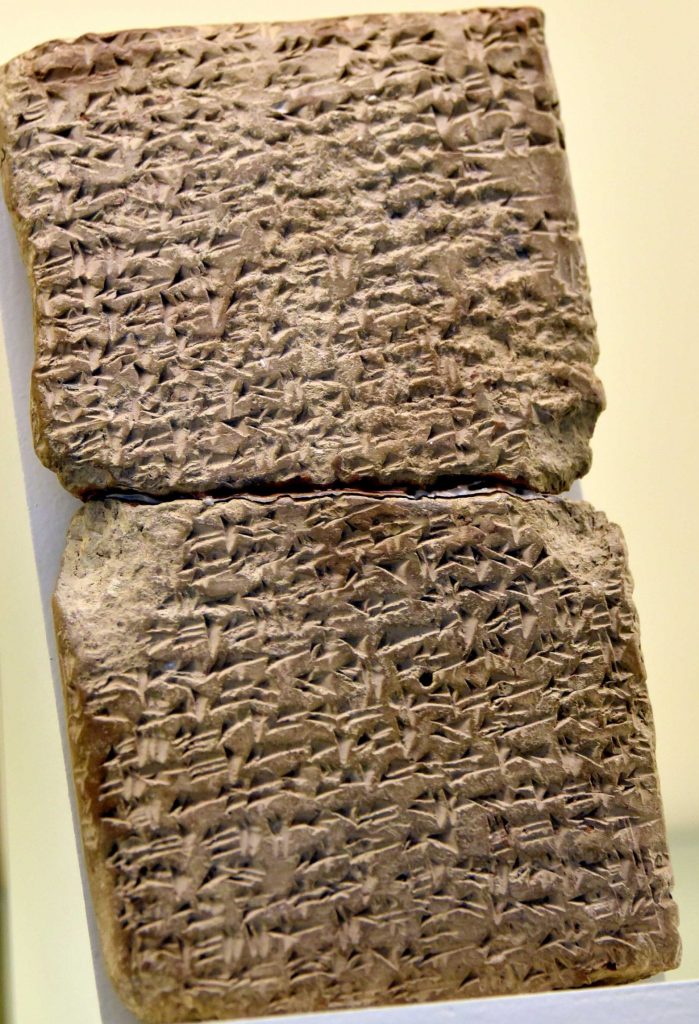
Photo: Osama Shukir Muhammed Amin
Map of the el-Amarna archaeological site, from Histoire de l’art Égyptien, 1879, and a letter from Abdi-Heba to Pharaoh Amenhotep III, in the Berlin Museum of the Middle East
Build Like an Egyptian
One indicator of cultural influence is the style of building. Excavations at Tel Lakhish have uncovered the remains of broad, distinctly Egyptian pillars in what was evidently a temple. At Tel Sera, near the Negev town of Rahat, a square structure also looks Egyptian (and bowls found here are inscribed with Egyptian writing). Tel Afek, Tel Jemmeh (in the western Negev), Tel el-Hesi (in the coastal lowlands), and Tel Masos (in the northern Negev) all contain seemingly Egyptian buildings too.
An Egyptian presence is particularly noticeable among the coastal settlements and in the valleys (as opposed to Israel’s central ridge). Beth She’an excavations include what appears to have been a governor’s palace, its carved lintels inscribed with hieroglyphics. Large stone capitals from its pillars are shaped like the papyrus plant – another classic Egyptian element. Archaeologists assume these structures were part of an Egyptian administrative center. Beth She’an is indeed listed among Thutmose III’s conquests during his Canaanite campaign in the 15th century bce, and the town remained subject to Egypt until the empire withdrew under Ramesses III.
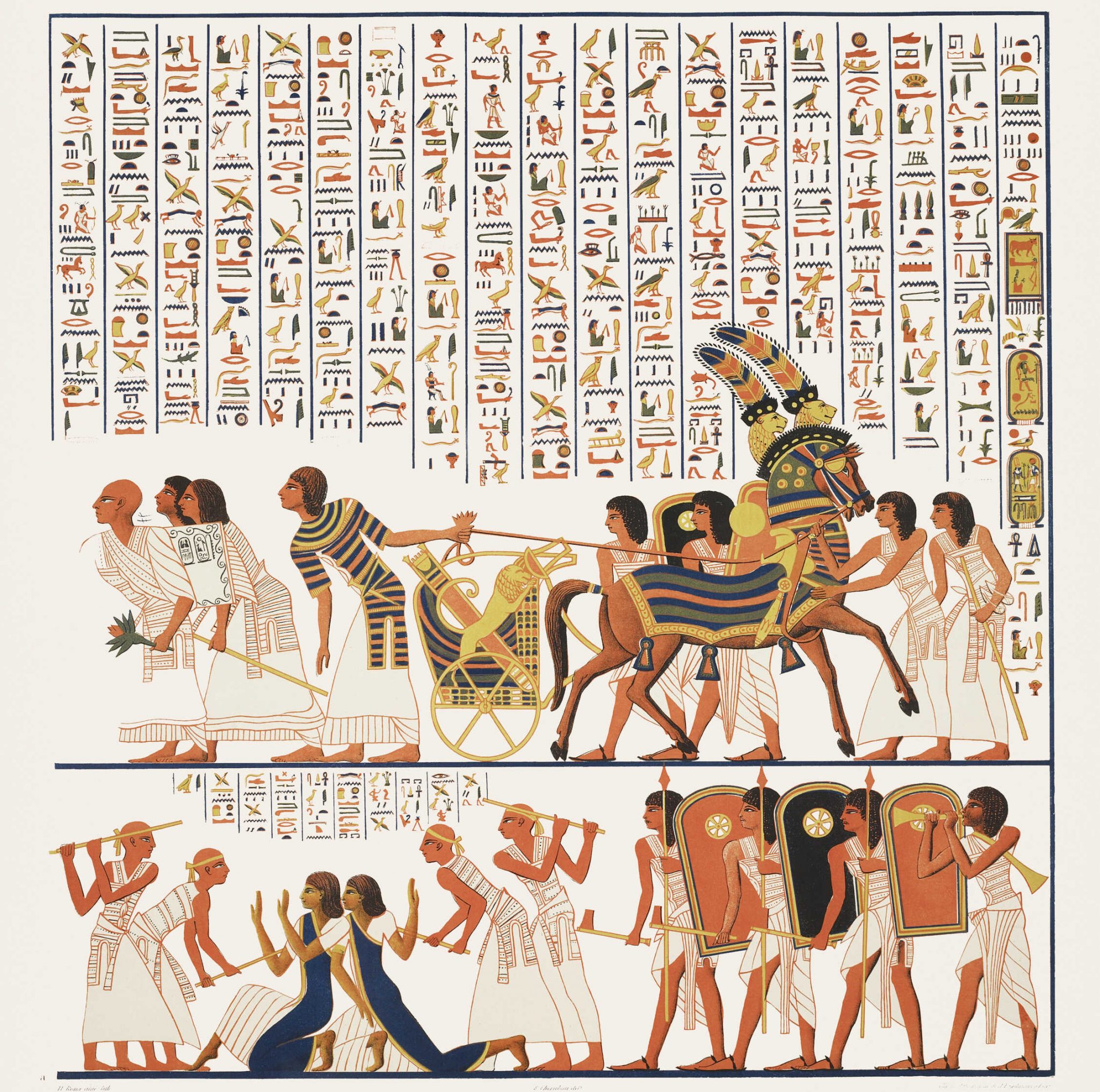
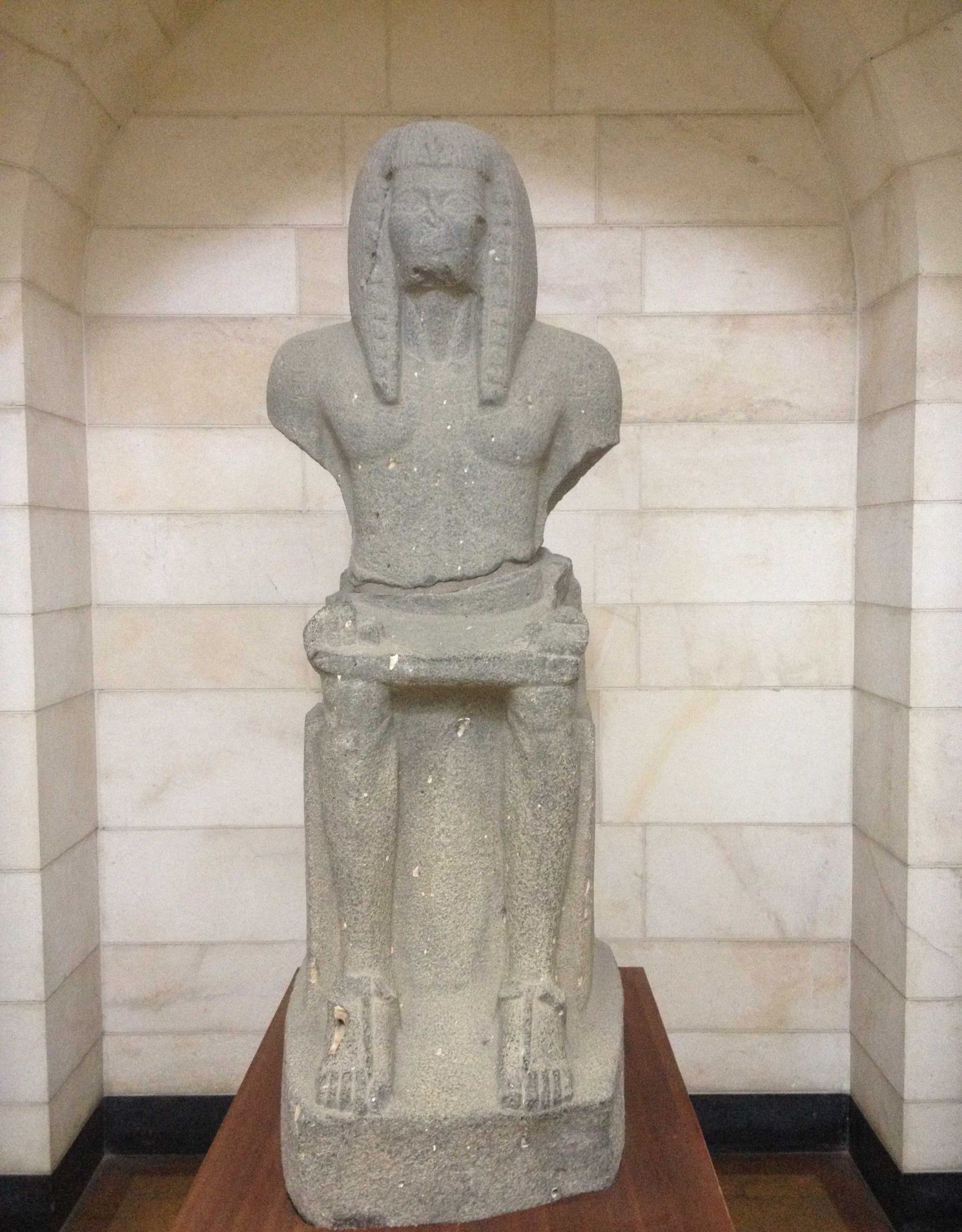
Two victory inscriptions, also discovered in Beth She’an on stone stelae, date from the reign of Seti I, in the late 14th century bce. They describe how his campaign in Canaan stabilized the region. A life-size statue of Ramesses III from the 12th century bce was unearthed in the same area, along with a massive, stone lintel inscribed with his name. These finds mark the end of Canaan’s Egyptian era, when Egypt fought off Sea Peoples (see below) such as the Philistines while grappling with economic decline.
Like many other ancient elites, Canaan’s preferred Egyptian culture to its own. Canaanite archaeology thus includes Egyptian luxury imports plus local imitations. Together with their leaders’ sycophantic letters begging for Egyptian protection, these artifacts suggest great cultural dependence. It’s unclear whether Canaan’s ruling class saw itself as part of Egyptian society or just aspired to be. In any case, Canaanite artists manufactured Egyptian-style ivory goods; archaeologists have also uncovered Egyptian pottery as well as seals bearing pharaohs’ names and other Egyptian motifs.
Scarabs are a major emblem of this period. Carefully crafted stone seals were shaped like dung beetles, especially the sacred scarab variety (Scarabaeus sacer), representing the rising sun renewed each day by the sun god, Ra. The scarab’s back was rounded like the beetle’s, and its flat underside was inscribed with hieroglyphics depicting concepts, symbols, or names.
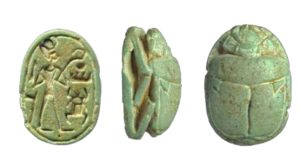
Egypt also influenced the Canaanite diet; goose bones excavated at Tel Lakhish indicate that Canaan shared Egypt’s taste for waterfowl.
Despite regional turbulence and the infighting lamented in their letters to Egypt, Canaan’s rulers lived it up – by taxing and enslaving satellite villages. One dispatch from Amenhotep III to Milkilu, governor of Gezer, reflects a slave trade:
To Milkilu, the ruler of Gazru: Thus the king. He herewith dispatches you this tablet, saying to you, He herewith sends to you Hanya, the stable (overseer) of archers, along with everything for the acquisition of beautiful female cupbearers […]. Total: 40 female cupbearers. 40 (shekels of) silver being the price of a female cupbearer. Send extremely beautiful female cupbearers in whom there is no defect, so the king, your lord, will say to you, “This is excellent […].” (ibid., EA 369, p. 366)

Changing of the Guard
The end of the 12th century bce witnessed the implosion of the region’s great empires (including that of the Hittites) as well as the city-states of Canaan and Syria. Most scholars blame the Sea Peoples, warrior clans from today’s Greek mainland and nearby islands. Attacking the Mediterranean’s eastern shores, they caused enormous political upheaval. Ramesses III’s inscriptions describe fierce battles to repel these invaders, who failed to conquer Egypt itself but certainly weakened its domination farther afield.
Alternatively, some trace the shift in power to economic damage wrought by drought, famine, and plagues. Climate research indicates significant variations in temperature around this time, disrupting agricultural productivity as well as social stability throughout the region.
Others assume that unbridled exploitation of the lower classes eventually led to uprisings against local leaders, culminating in the downfall of their Egyptian overlords.
Actually, a combination of factors seems to have undermined Egyptian rule, driving Egypt’s soldiers out of Canaan and back to the Nile Delta.
The Egyptians’ gradual retreat from the region transformed Canaan politically, socially, and culturally. In the 13th and 12th centuries bce, the void enabled two previously unknown entities to gain a toehold there. One was the Philistines, who came from the Mediterranean and settled along Canaan’s southern coast. The other, encamped in the hills along the central mountainous ridge, was known as Israel.
Excavations in Luxor in 1896 revealed a black, basalt stele chronicling the conquests of Pharaoh Merneptah in 1208 bce. One such was “Israel,” referring to an ethnic group dwelling in Canaan. As the stele boasts, “Israel is laid waste; it has no offspring.”
The first Egyptian inscription mentioning the Philistines was found in the temple at Medinet Habu, on the west bank of the Nile. Dated to about 1170 bce, this text recounts that Ramesses III defeated the Philistines (Peleset), driving them back up the coast to Canaan’s southern shores.
Israel Antiquities Authority

Oren Rosen
Egypt was here. Statue of Ramesses III and stone stele of Seti I, both from Beth She’an
Whose Exodus?
The biblical narrative of the exodus from Egypt is one of the most fundamental to human culture. Its powerful account of divine revelation, liberation, and the creation of a unique national identity has reverberated throughout centuries of Western culture. This tradition seems to parallel events of the later Bronze Age, 1300–1150 bce.
According to the Bible, the Children of Israel left Egypt after 430 years. Though there’s no Egyptian record of their stay, it does dovetail with Egypt’s well-documented, four-century rule in Canaan. Myriad Egyptian sources as well as some elements of the biblical text reflect this reality. But while the Bible speaks of Israel’s servitude to the Egyptians in Egypt, Egyptian sources depict Egypt’s domination of Canaan.
Both the Bible and Egyptian sources identify two main actors in Canaan from the end of this period – Israel and the Philistines. This corroboration alone is fascinating, as it suggests that the biblical and Egyptian cultures drew on the same information. So could there be a connection between the traditions of Israel’s exodus from Egypt and Egypt’s from Canaan?
One school of thought supposes that the Israelite account of a miraculous exodus was actually based on the Egyptian retreat from Canaan. Over the years, the tradition morphed into a national narrative reversing the direction of movement.

Alternatively, the description of the Israelite exodus may indeed have been linked to a Semitic migration from Egypt as a result of dramatic changes occurring there, whereupon these peoples settled in and around Canaan.
Whichever approach is correct, the collective memory of the Exodus has certainly developed over many generations. Events at the close of the late Bronze Age, including Egypt’s retreat from Canaan, likely helped shape that memory. Neither the archaeological record nor ancient texts confirm the biblical tale, but both lend context to the processes that shaped Jewish historical tradition, deepening our knowledge of how national narratives – including that of the Exodus – evolve.
Feel free to share