
Guidelines for the Jewish housewife in the War of Independence placed an emphasis on meat substitutes and avoiding the black market

Once again, the kitchen has become one of the front’s many battle stations, and one must think twice before planning a menu. And once again, just as we did during the war, we’ve produced this booklet to help you cook and create menus even as items vanish from stock.
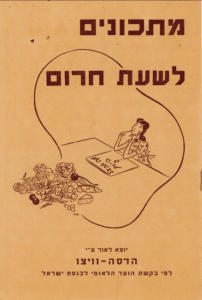
So began “Emergency Recipes,” published by the National Council (forerunner of the Knesset) early in 1948, at the beginning of Israel’s War of Independence. Produced in cooperation with WIZO and Hadassah, who were experienced in helping housewives cope with national emergencies, the booklet aimed to assist families facing shortages of basic staples, particularly meat.
Rationing during and after World War II was still fresh in the minds of many living in the Holy Land. Local meat production couldn’t keep up with the growing Jewish population, so fowl was brought in from neighboring Arab countries – but at astronomical prices.
At the end of 1947, the National Council decided to take action. Unregulated meat merchandise was outlawed, and a new body supervised imports of discount kosher flesh from distant overseas slaughterhouses. As a result, chicken and beef became rare commodities.
Meatless Menu
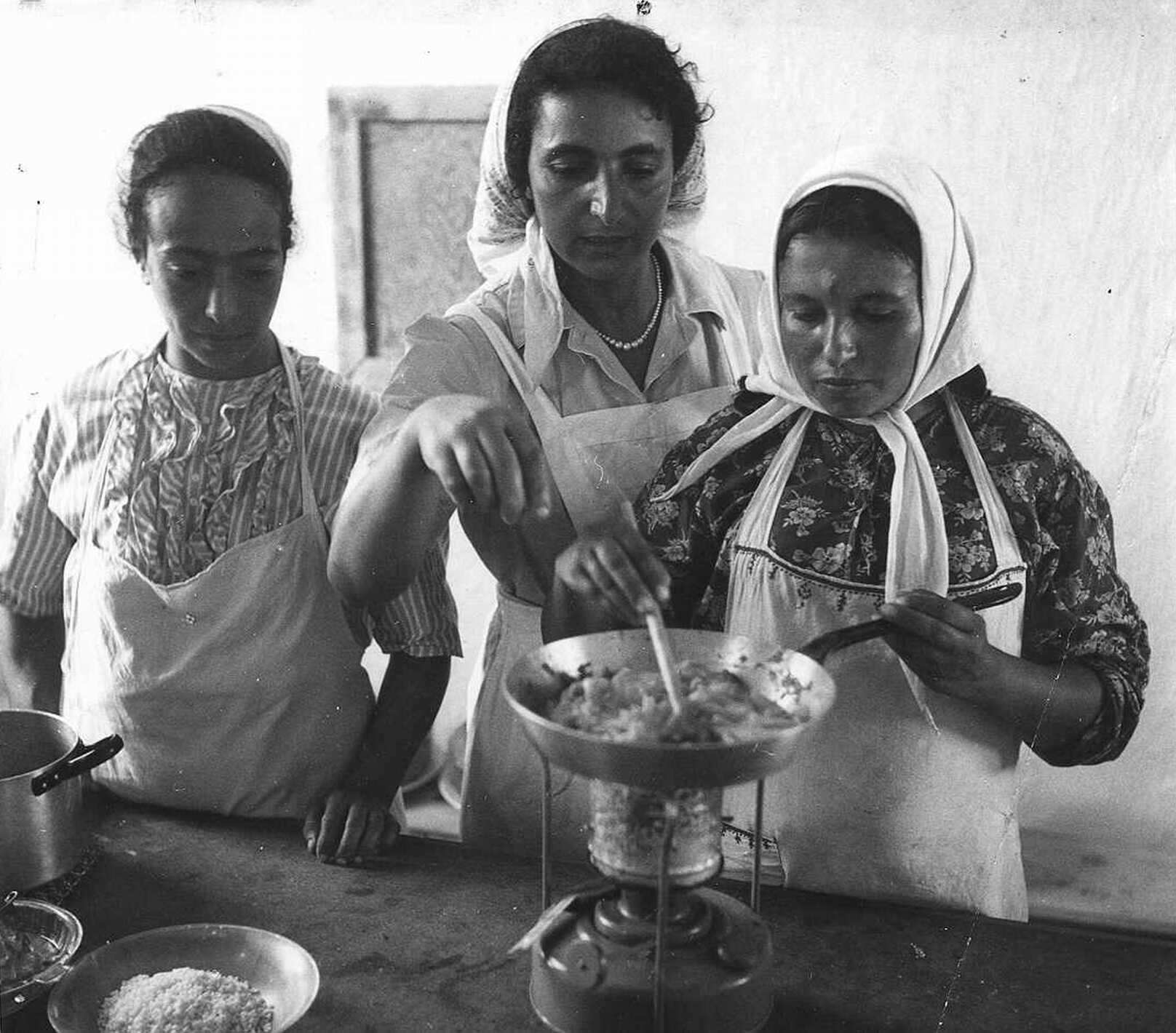
The pre-state Jewish community considered poultry a staple, particularly for children. The National Council therefore invested heavily in propaganda discouraging the purchase of black-market fowl and promoting alternative sources of nourishment. Copies of “Emergency Recipes” were distributed all over the country in conjunction with food fairs run by the women’s organizations. Targeting housewives, the fairs demonstrated how to cook economically with products available in wartime. In addition, Kol Yisrael (the Voice of Israel) broadcast a radio program devoted to home economics and answering listeners’ queries on the topic. The entire campaign was orchestrated by the Food Comptroller.
“Emergency Recipes” presented fourteen different lunch menus, including a festive Sabbath option with various stand-ins for meat. The publication also listed a host of practical suggestions for cooking during shortages.
Women were advised to prepare the week’s dishes in advance, ensuring that every meal contained protein, included a variety of colors and flavors, and was tastefully served. Aesthetics were more important than ever, the ladies were told. Another tip: double the recipe you’re cooking to provide meals for successive days, and use the water in which the vegetables were cooked in soups and sauces, saving precious cooking time.
The recipes were generally simple and required very few ingredients, all readily available, such as fish, eggs, milk, cheese, and lentils. Meat recipes were adapted for the meatless menu, such as shepherd’s pie made with fish, bean-filled sausages, vegetarian cholent, and “imitation meat gravy.”
Housewives were urged to take national economic considerations into account:
It’s your civic duty to respond to the needs of the hour by maintaining your household modestly, remembering that the black market – which exists only because you make use of it – interferes with healthy economic development.
Not yet a Segula subscriber?
Access our full archive online, have print issues delivered to your door, and moreFeel free to share