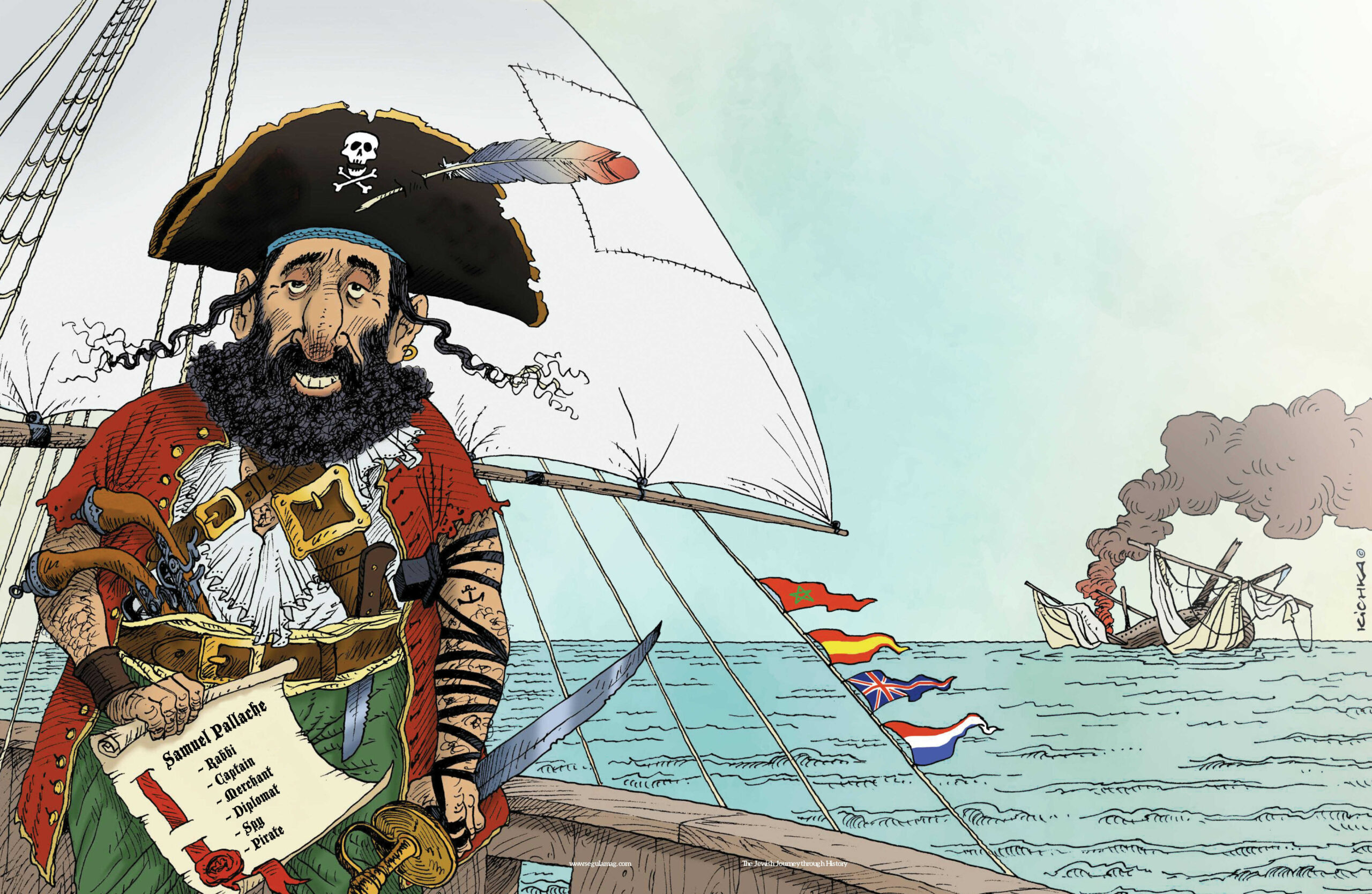
Few rabbis have lived as colorful a life as Samuel Pallache. Merchant, diplomat, and emissary to the king of Morocco, Pallache even resorted to piracy to exact his people׳s revenge on the Spanish fleet

A summer’s day in 1611. The sun beat down on Morocco’s pristine beaches, and the port was abustle. Stevedores carried heavy loads of food and supplies down into the cavernous depths of the mighty ships as they rode at anchor, their masts thrusting high into the sky. The breeze rustled their giant sails, its whispers mingling with the rasp of swords sharpened by the sailors on deck. Though no slaves huddled miserably in the hold of these ships, and they harbored no African treasures, no ivory, gold, or spices bound for Europe, theirs was no innocent voyage. These vessels were fast, manned by professional privateers, and set to hunt down Spanish ships laden with the golden bounty of the Americas. Skillfully maneuvered, they were hard to escape.
As the Middle Ages drew to a close, such scenes typified ports up and down the North African coast. The Mediterranean was crawling with pirates – whether licensed privateers furthering the interests of their various governments, or ruffians out for themselves. The main difference, as far as any captured crew and passengers were concerned, was that these last were more likely to sell them on the nearest slave market. But this ship was different, for at its helm stood no Captain James Hook or Jack Sparrow but a recent graduate of the rabbinical seminary of the Mellah, the Jewish quarter of Fez. Young Samuel Pallache proudly descended from prominent Spanish exiles, and his commandeering of a pirate ship was just one of the many twists and turns of his exceptional life.

Yiddishe Pirates
Plying the seas from Jaffa to the Caribbean islands, Jewish sailors were not above the occasional robbery
Though Yiddish-speaking pirates may seem far-fetched today, Jews have played their part in virtually every sociological scourge in history, from gambling and gang warfare to prostitution. Jewish communities never existed in a vacuum, so they were subject to the same historical processes as their neighbors.
Piracy was common in the Middle Ages – in the Mediterranean and the Red Sea, off the African coast, and in the Caribbean islands – but started much earlier, as soon as sea voyages became common enough to make it profitable. Jewish piracy goes back to the first century. According to Josephus’ Wars of the Jews, during the Great Judean Revolt in 67, Jewish refugees who’d escaped to Jaffa robbed ships from Syria to Egypt, making coastal voyages almost impossible. Judean piracy seems to have started exactly when historical chronicles report widespread piracy in the Mediterranean, practiced by scoundrels from many lands.
The number of Jewish pirates (but probably Ladino-speaking ones) did pick up after the expulsion from Spain, perhaps because Jews sought revenge on their Spanish and Portuguese persecutors, who dominated the seas. Yet the main reason was probably economic; after all, most of the Jewish exiles had lost everything and needed income. Jews served in various capacities on board, from simple sailors to captains and even fleet commanders. One of the most famous Jewish pirates was Sinan Reis, who presided over the Ottoman fleet of Khayr ad-Din Barbarossa, notorious among pirate chiefs. “The Great Jewish Pirate,” Sinan led a fleet of over a hundred ships to wrest Tunis from Spanish rule in 1534. Four years later, he and his forces all but destroyed the Spanish navy at the Battle of Preveza off the Greek coast.
In the wake of the Spanish and Portuguese treasure ships at the end of the 16th century, the New World was also fair game for Jewish pirates. Though their exploits were perhaps the best-known cases of piracy, they certainly weren’t the majority. Antonio Carvajal was a Jew of Portuguese extraction who arrived in England from the Canary Islands. He advised Oliver Cromwell prior to and during the British fleet’s rag-tag expedition of May 1655, which gave England one of its few victories over Spain that century, conquering Jamaica. A few months later, a grateful Cromwell granted honorary British citizenship to Carvajal and his two sons, the first Jews welcomed back to Britain since Edward I expelled them in 1290. Carvajal’s family continued to defend British interests in the Caribbean after the restoration of the British monarchy.
A pair of Jewish brothers served Britain in a similar capacity in the same area, mostly through piracy, in the late 16th century. Abraham and Moses (Henriques) Cohen were born in Amsterdam but moved to Brazil and then Jamaica when the island was home to over a hundred converso families. The Cohens plundered Spanish gold and purportedly even found Christopher Columbus’ fabled lost gold mine.
Jewish piracy continued during the American Revolution, when wealthy Jewish shipowners lent the rebels a hand by capturing more than six hundred British vessels, seizing merchandise worth over eighteen million dollars.
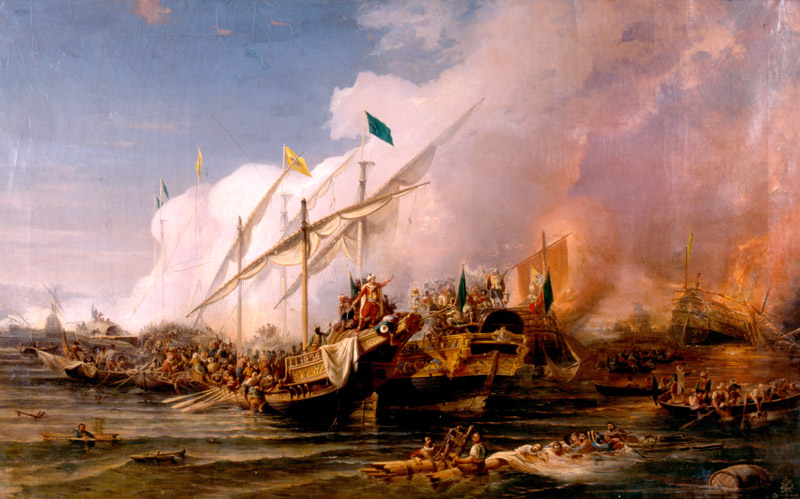
Barbarossa׳s fleet defeats the Spanish navy in the Battle of Preveza, 1538. Jewish pirate Sinan׳s leadership was crucial to the Ottoman victory. Ohannes Umed Behzad, oil on canvas, 1866
Not yet a Segula subscriber?
Access our full archive online, have print issues delivered to your door, and moreFeel free to share