

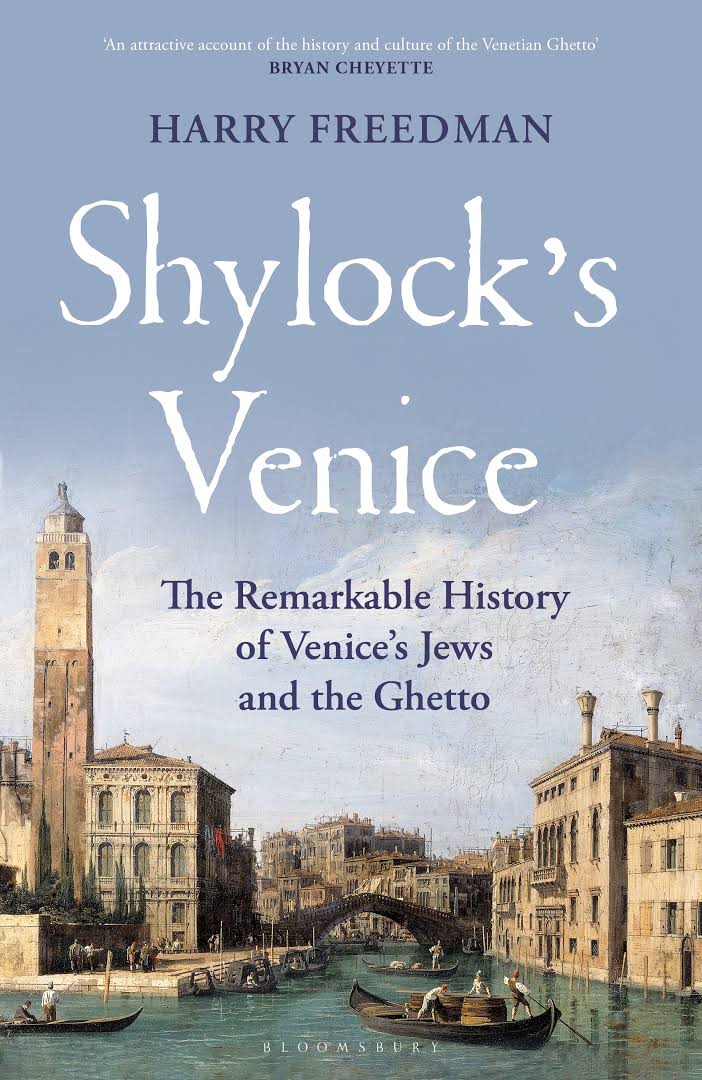
Shylock’s Venice
Harry Freedman
Bloomsbury, 2024
247 pages
Major strands of Jewish history were woven together in Venice. At once maritime empire and small town defined by its many interlocking waterways, Venice was also an early experimenter in democracy and commerce and as such maintained an uneasy symbiosis with its Jewish population.
The city hosted such outstanding Jewish visitors as Don Isaac Abarbanel, Donna Gracia Mendes, and Joseph Nasi, who are viewed here from a Venetian perspective rather than the more familiar Jewish one. Other, lesser known Jewish figures introduced by Freedman rarely ventured beyond the city. To name two: Anselmo de Banco, one of the first Jews wealthy enough to stand up for Jewish rights, and Leon Modena, the flawed but brilliant rabbi whose sermons drew listeners into the ghetto from all walks of Venetian life.
An unfortunate slip describing Joseph Nasi as Donna Gracia’s son rather than son-in-law is but a minor kink in this scholarly tapestry, which combines the literary output of Venetian Jews such as historian Eliyahu Capsali and philosopher David de Pomis with the Venetian senate’s meticulous Jewish records. (There are also no few English historical asides – the author is after all a British Jew, and the title invokes the infamous Shakespearean villain.) The result is a fascinating interplay of Venetian and Jewish interests, of which Daniel Bomberg’s printshop is a prime example.
Not yet a Segula subscriber?
Access our full archive online, have print issues delivered to your door, and moreFeel free to share