Meeting place from which the biblical Israelites set out for battle
Where? On the outskirts of Ramallah, near the Atarot industrial zone and the Arab village of Qalandiya
When? Iron Age II, Israelite settlement period, First Temple, Hasmonean era

Then all Israel from Dan to Beersheba and from the land of Gilead came together as one and assembled before the Lord in Mizpah. (Judges 20:1)
From almost the very beginning of the Israelite settlement of Canaan until roughly the fourth century BCE, Mizpah was a major biblical city in the tribal territory of Benjamin. This pre-battle gathering point figures in several Bible stories, most notably that of the civil war targeting the Benjamites at the end of Judges. Mizpah was also where the prophet Samuel resigned and crowned Saul king (I Samuel 10:17–25), and King Asa of the northern kingdom of Israel later fortified the city (I Kings 15:22). The final chapters of Kings describe how, after Jerusalem fell to the Babylonians and most Judeans were exiled, Gedaliah son of Amikam was appointed governor at Mizpah over those remaining. A rival assassinated him there:
In the seventh month, however, Ishmael son of Nethaniah […] came with ten men and assassinated Gedaliah and also the men of Judah and the Babylonians who were with him at Mizpah. At this, all the people from the least to the greatest, together with the army officers, fled to Egypt for fear of the Babylonians. (II Kings 25:25–6)
Jews still fast on 3 Tishrei (the “seventh month” of the biblical calendar, which starts from Nisan) in memory of this event, which temporarily suspended Jewish settlement and sovereignty in the Holy Land.
Mizpah was also where the men of Judea massed in preparation for Judah Maccabee’s decisive victory over the Seleucid general Gorgias in 166 BCE – the first clear step toward restored Judean independence.
Wherefore the Israelites assembled themselves together, and came to Maspha [Mizpah], over against Jerusalem; for in Maspha was the place where they prayed aforetime in Israel.
(1 Maccabees 3:46)
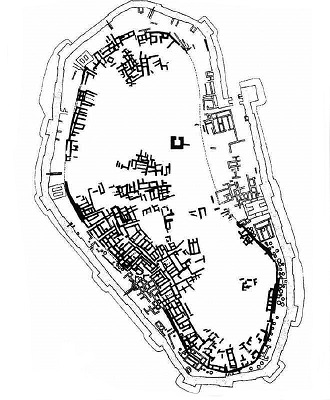
The tel of ancient Mizpah was located and most of it excavated in the 1920s and 1930s. Impressive fortifications from the Israelite period, along with a network of streets and housing remains, revealed a fairly sophisticated city. One interesting artifact was a bulla (clay seal) bearing the name “Jaazaniah servant of the king” and a cockerel emblem. “Jaazaniah son of the Maakathite” is indeed listed in Kings among Gedaliah’s followers (II Kings 25:23), creating a tantalizing connection between the biblical record and the archaeological site.
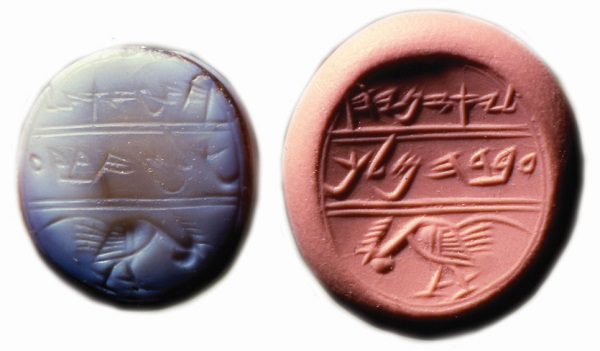
Seal of Jaazaniah, servant of the king, and (above) its impression in clay | Courtesy of the Israel Museum, Jerusalem
Not yet a Segula subscriber?
Access our full archive online, have print issues delivered to your door, and moreFeel free to share