
In a daring smuggling operation right out of Hollywood, four bombers arrived in Israel just in time to make a crucial contribution to its War of Independence. There was even a script featuring a seasoned Jewish pilot and a New Zealand beauty

Twenty-five years have passed since the Israeli Air Force Museum opened in the blazing sun over the Hatzerim air base, not far from Beersheba. Hundreds of models of retired warplanes are arrayed there, alongside enemy aircraft knocked out of the sky by Israeli soldiers. Bold-lettered signs proudly proclaim such riddles as “Mirage 3, Shahak 159, 13 downed”; anti-aircraft guns and an outstanding exhibition on the work of the army’s Airborne Rescue and Evacuation Unit round out the display.
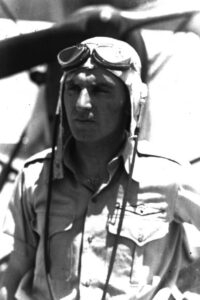
Wandering among the exhibits takes you back to the beginning of the air force, and the crazy adventures involved in acquiring planes to defend the beleaguered State of Israel in the throes of the War of Independence. The main hero of the story was Emanuel Zurr, who masterminded an airplane-running operation from Britain in 1948.
Baby Air Force
Galician flight instructor Emanuel Zuckerberg arrived in Mandate Palestine in the 1930s. Unable to find employment, he worked for a few years as a mechanical engineer. Then he took a job at Aviron, a flight company owned (like nearly all going concerns in Palestine’s Jewish economy) by the Histadrut national trade union. Aside from serving as the firm’s engineer, and foreman, he flew passenger trips to and from Europe, Syria, and Egypt and built connections through the company’s office in Paris. Zuckerberg was also the country’s first (and only) licensed flight instructor, training pilots for the Hagana (the Jewish home guard), then for the Palmah, its full-time branch.
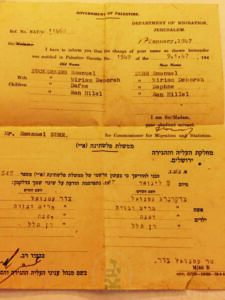
Immediately after approving the partition of Palestine in November 1947, the United Nations imposed an arms embargo throughout the Middle East. A prestate air force barely existed, and the prospect of fighting Egypt, Jordan, Syria, and Lebanon with just ten single-engine Piper planes was unthinkable. David Ben-Gurion, soon to be prime minister, called Zuckerberg. After insisting that the flight coach exchange his Diaspora-style name for the more Israeli-sounding Zurr (literally, “rock”), Ben-Gurion appointed him national aeronautical acquisitions emissary to Europe.
Over the next few months, using his extensive professional contacts, Zurr cobbled together a small force of Czech light aircraft from obscure global locations, but it was nowhere near enough. War broke out with the declaration of the State of Israel in May 1948, and the Egyptians started bombing Jewish villages in the Negev from the air. Without help from heaven, in both senses of the word, the young state was in peril.
The Bristol Beaufighters
In June 1948, word reached Zurr that a London aviation aficionado had purchased twelve World War II Bristol Beaufighter bombers as scrap from the British Royal Air Force. The Beaufighter was an excellent double-engine aircraft with four guns and a worthy record.
Already known to Scotland Yard as a plane smuggler, Zurr couldn’t risk entering the United Kingdom, so he sent a British acquaintance to check out the merchandise. His protégé reported that the planes were in bad shape, but the London collector – an ex-RAF general specializing in aircraft repairs – offered to sell them for only fifteen hundred pounds sterling apiece, including refurbishment.
Zurr had to view the planes himself before deciding to buy, so he flew to France, hired a light aircraft designed for short distances and capable of slipping in under British radar, and landed secretly outside London. Devastated by the planes’ condition, he was about to fly straight home, but the desperate seller slashed his price and swore he’d have the Beaufighters up and running in two to three weeks.
After much persuasion, Zurr agreed to acquire only half the aircraft – those he considered salvageable. But who would fly them? And how to sneak them out of England without the entire Royal Air Force in hot pursuit?
Not yet a Segula subscriber?
Access our full archive online, have print issues delivered to your door, and moreFeel free to share