Which Jerusalem synagogue is located in the “Valley of Giants,” what’s beneath the synagogue’s glass floor, and why is a drawer built into the ark?

Where To?
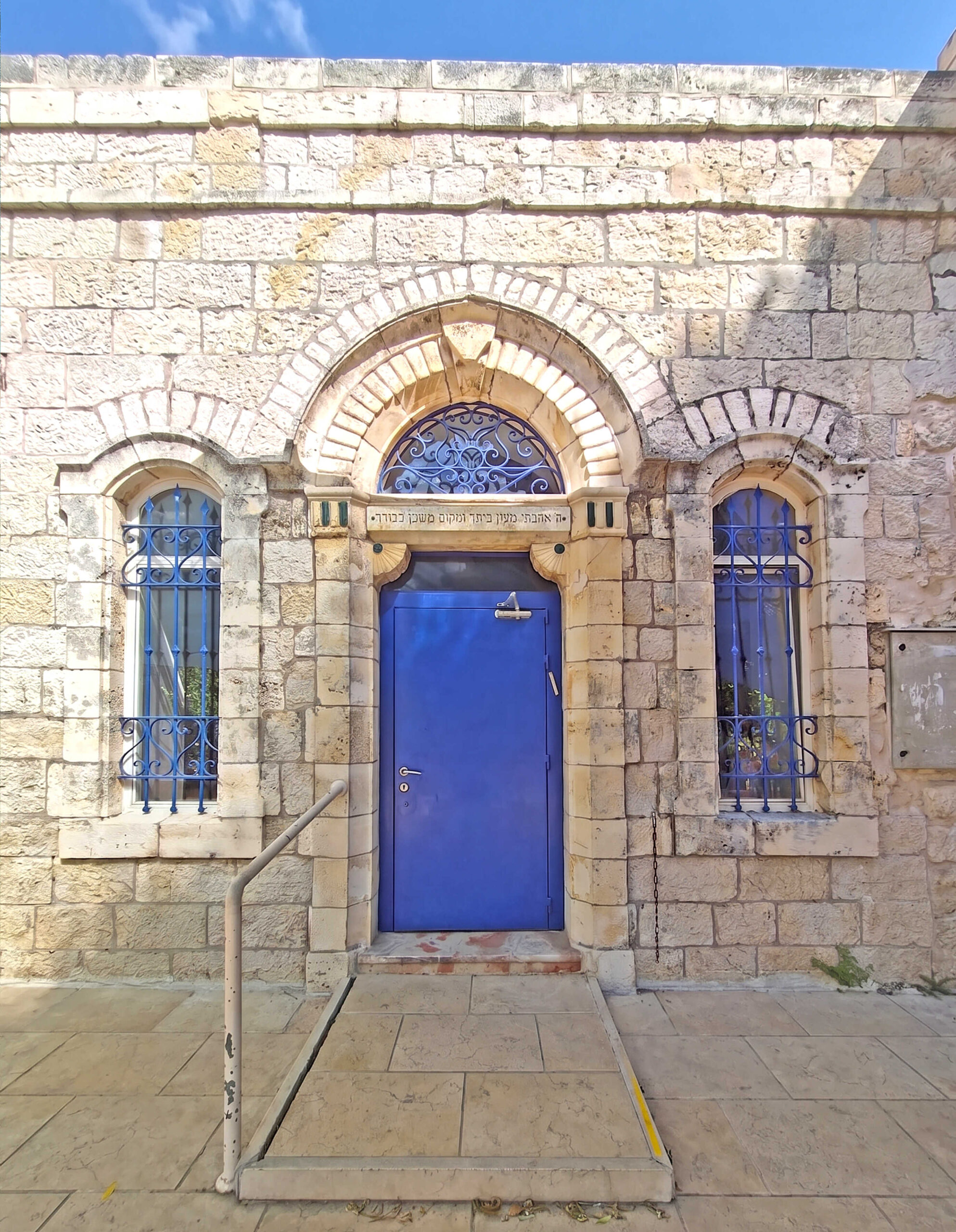
Emek Refaim Synagogue
4 Yael Street, Baka
Sometimes in Jerusalem, it’s better not to ask. Not everyone there with the last name Ashkenazi originated in or around Germany, for instance, and not every Tzarfati (literally, French) hails from France. And how many flowers even are there on the Old City’s Flower Gate?
Perhaps that’s why residents of one of Jerusalem’s more picturesque southern neighborhoods, officially called Geulim but better known as Baka, don’t question why the local Emek Refaim Synagogue isn’t on Emek Refaim Street, in the German Colony. No one comments on the glass pane in the synagogue floor either, and even the sock drawer incorporated into the place’s otherwise tasteful wooden ark hasn’t raised an eyebrow in thirty years. Neither has the singular decoration carved into the ark doors.
As a native Jerusalemite, I tend to leave well enough alone, but for our readers outside the Holy City, let’s set the record straight.
Who Moved the Valley?
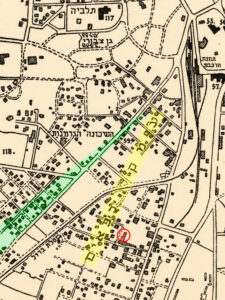
Emek Refaim literally means Valley of Ghosts (or Giants), a name wholly inappropriate for the charming vale running through the hills and dales of south Jerusalem. “Baka” comes from an Arabic word for “field” rather than the Hebrew term for “valley” (bik’a). In fact, Baka is situated not in a valley but on the city’s highest ridge, along the watershed bisecting Israel’s interior (see “By the By,” p. XX). How, then, did a synagogue in Baka acquire the name Emek Refaim?
A certain young lady, daughter of one of the congregation’s founding members, has spent years researching the issue. In the end, she blames a Hebrew map from 1948 including sundry misspellings – and the words Emek Refaim boldly inscribed at a completely inaccurate angle along the length of Baka. Immigrants pouring into Jerusalem after the declaration of the state evidently perpetuated the error by assigning the same name to the synagogue they opened in 1949 in an abandoned Arab house.
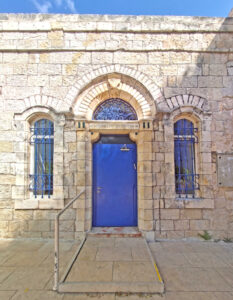
The congregation’s founders, mostly Holocaust survivors, devoted enormous efforts to converting this domicile into a synagogue. One major obstacle was the elderly couple who’d moved into one room of the building just before it was repurposed. Another was the architecture. The iron front door, for example, led straight into the men’s section, complicating the location of the women’s gallery. Immediately behind the synagogue was a Hasidic house of prayer, or shtiebel, precluding expansion backward. The only space remaining was one of the two rooms immediately in front of the men’s area, with the niche containing the holy ark right behind them.
The eventual solution was farcical: the women’s seating was crammed into one of these chambers. The other remained home to the aforementioned aging residents, who went about their daily routine even as shofar blasts, cantorial trills, and communal singing periodically pierced the air. The couple adapted remarkably well, even allowing the women’s section to overflow into their quarters on the High Holidays.
Not yet a Segula subscriber?
Access our full archive online, have print issues delivered to your door, and moreFeel free to share