
Has the Maresha excavation unearthed a pile of junk or the key to a Judea much more diverse than we’d supposed? The best thing is, you can find out for yourself

Maresha is an archaeological oddity. First of all, nobody’s heard of it, as it’s usually lumped together with nearby Beth Guvrin. Then there’s the fact that almost nothing of it remains above ground, but there are a good few square kilometers of dwellings in thousands of caves under the surface. Finally, digging in Maresha is somewhat like excavating a refuse dump – with the odd sensational piece of jewelry thrown in. But one man’s trash is another man’s treasure, especially in archaeology.
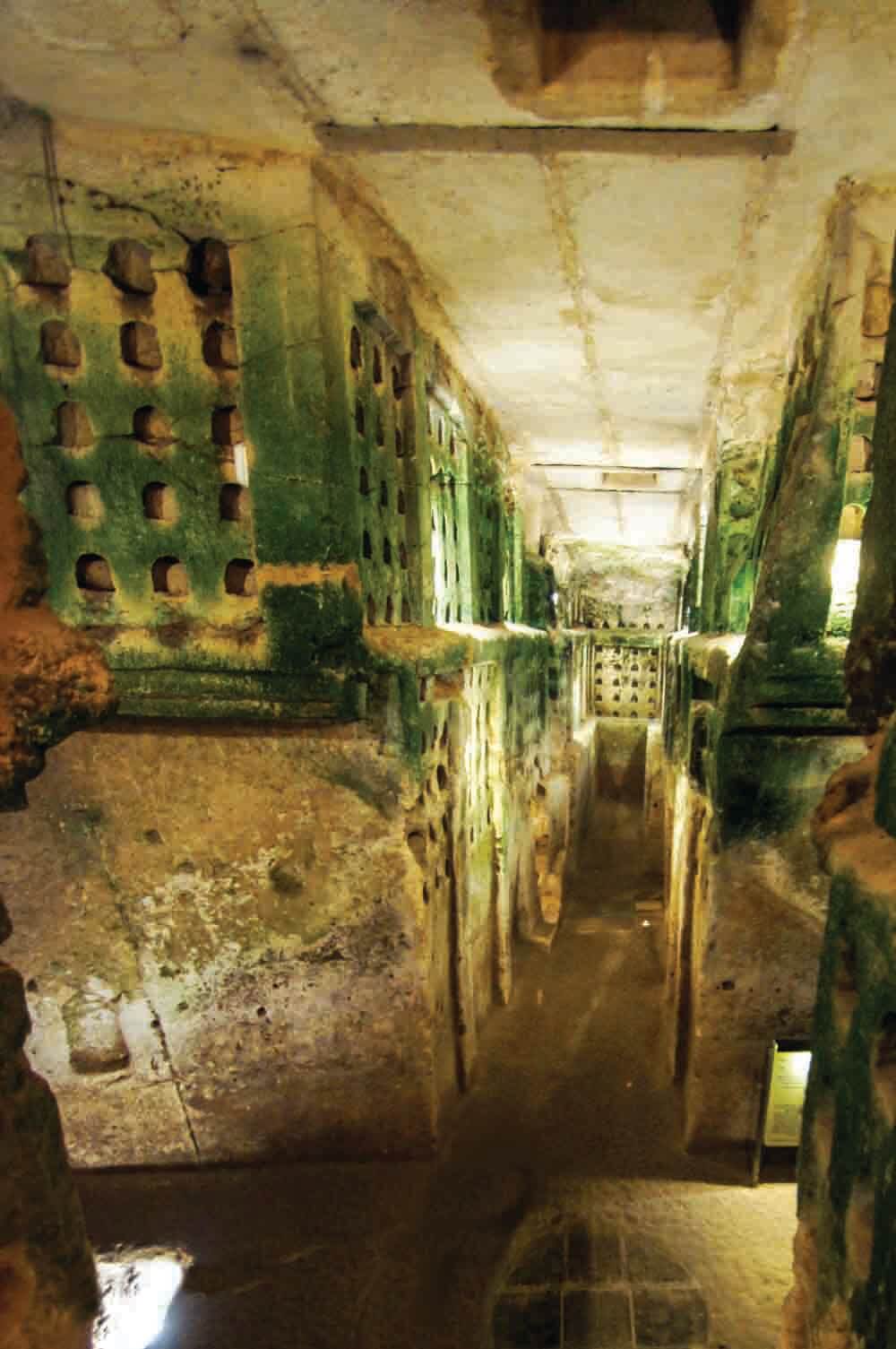
So which section of Maresha interests you? The ancient necropolis, best-known for its colorfully decorated Sidonian caves? The columbaria, with their hundreds of small, triangular alcoves carved out of the rock? Or the caves that were used as storerooms and workshops, providing an underground refuge from the heat?
But these are just the “popular” parts of Maresha. For the more adventurous, another Maresha has revealed itself inch by inch over thirty years of excavation. Dusty, backbreaking, and unglamorous, this place doesn’t beckon to the superstars of Israeli archaeology. There are no biblical remains to be found. The Israelites never even lived here, nor did their descendants. But in a way that makes Maresha all the more fascinating – and startlingly relevant. Because at its height, it was conquered by the Hasmonean king John Hyrcanus (137–104 BCE), and all its inhabitants – at least according to Josephus – converted to Judaism. Abandoned soon afterward, the town never recovered. So Maresha is that rare site reflecting what happens when Jews constitute the dominant culture and non-Jews have to adapt – which wasn’t the case again here until 1948.

Everyman’s Excavation
Another unique thing about Maresha is that anyone can excavate there. The Archaeological Seminars Institute runs the “Dig for a Day” program, which allows tourists, schoolchildren, and anyone else who feels like it to excavate under the watchful eyes of its archaeologists and trained volunteers. This method has moved and sifted mind-boggling amounts of earth – a few hundred rooms, ranging from small baths to large halls, have already been uncovered. The reason archaeology can be undertaken here in this way is that at some point the caves became a dump. When things are randomly thrown down a big hole (and there are lots of large holes in the area, opening onto the original underground rooms), there’s neither rhyme nor reason to the way they settle, so there’s no point in looking for any.
Archaeologists call this a “non-stratified” site, meaning that what’s on top isn’t necessarily newer than what’s underneath. As a result, digging in Maresha is less obsessive than elsewhere. You don’t have to pinpoint to the millimeter where anything was found, as long as you know which room and cave system it came from. So less disciplined workers – kids, for example – can be accommodated too.
Archaeologists Ian Stern and Bernie Alpert have spent years discovering Maresha with Professor Amos Kloner. Stern and Alpert set up “Dig for a Day,” working in conjunction with Hebrew Union College, the Israel Antiquities Authority, and the Israel Nature and Parks Authority. Stern is coordinating efforts to document the enormous amount of household pottery, ornaments, and refuse in all these caves. That’s another interesting aspect of Maresha – it’s ordinary people lived here in an ordinary way, so it’s important for what it can tell us about their daily lives.
Not yet a Segula subscriber?
Access our full archive online, have print issues delivered to your door, and moreFeel free to share