Scrambling through the hidden tunnel network of Khirbet Midras takes one back to the claustrophobic perils faced by the Bar Kokhba rebels

Where To?
Khirbet Midras
Extensive tunnel network from the Bar Kokhba rebellion

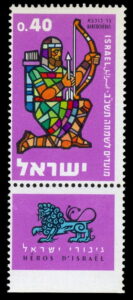
Few Israeli kids get through kindergarten without learning to sing about Bar Kokhba in time for Lag Ba-omer. The nursery rhyme they’re taught celebrates the hero who fought for freedom and gave the Romans what for. It takes a while for these youngsters to find out that the warrior riding the lion in the pictures they’re shown didn’t quite defeat the Roman legions, he just held them at bay for three and a half years before they rebounded and destroyed him – along with thousands of other Judeans for good measure.
For anyone wondering how one man, however muscular and charismatic, spearheaded the resistance to mighty Rome from 132 to 135 CE, here’s Roman historian Dio Cassius’ scholarly opinion. Though not exactly an eyewitness, he was certainly around at the time:
At Jerusalem [Hadrian] founded a city in place of the one which had been razed to the ground, naming it Aelia Capitolina, and on the site of the temple of the [Hebrews’] god he raised a new temple to Jupiter. This brought on a war of no slight importance nor of brief duration, for the Jews […] did not dare try conclusions with the Romans in the open field, but they occupied the advantageous positions in the country and strengthened them with mines and walls, in order that they might have places of refuge whenever they should be hard pressed, and might meet together unobserved under ground; and they pierced these subterranean passages from above at intervals to let in air and light.
(Dio Cassius, Roman History, vol. LXIX, sec. 12, Loeb Classical Library, vol. 8)
This method, corroborated by other sources, allowed Bar Kokhba to mount a sophisticated guerilla insurrection. His fighters whiled away the day underground, sharpening their swords and telling tall tales of their herculean leader, then surprised the Romans by night with attacks boldly timed to coincide with the changing of the guard.
Such warfare required both planning and a region conveniently endowed with easily excavated Cretaceous rock, providing a sufficiently spacious subterranean headquarters. The Judean Foothills happened to fit the bill, plus they offered plentiful underground spaces already hewn out by the locals, who used them for storage, cisterns, and ritual baths. These were all summarily pressed into service, their entrances blocked and connected by crawl tunnels, creating a fabulous subterranean maze. In addition, sudden drops, traps, sharp corners, and other tried and true ruses ensnared any Roman intruder, not to mention the Judean rebel hiding in the dark, hammer in hand and taking no prisoners.
Similar tunnel networks, although far fewer, were dug in the Galilee. Judea had effectively become one mighty Swiss cheese of underground cities, with hundreds of underground passages in which Bar Kokhba’s fighters and their families hid during the revolt years. Whether or not they were victorious, you can’t help admiring their organization of food, water, and ventilation.
Cave Dwellers
Though known for centuries, these cave systems were documented and dated to Bar Kokhba only in the 1970s. First excavated and mapped by European archaeologists in the 19th century, many still await fuller exploration. Far more are filled with earth and waiting to be revealed. Small sections are accessible, and one of the most varied and extensive is located in Beit Guvrin National Park, beneath the Idumean city of Maresha.
However, if wriggling through extremely tight places is your thing, head for Khirbet Midras (as it appears in Waze). The ruins of the town of Midras – located near Tzafririm, in the Elah Valley – contain a whole complex of cave systems from the time of Bar Kokhba. Most popular is “Cave 20,” as the Israeli Center for Cave Exploration has dubbed it. Vehicles can access the cave via an asphalt road veering off Highway 38, opposite Massua Hill, which soon becomes a dirt track before ending at a parking lot among the trees.
A flashlight and knee pads are a must, but leave any backpacks and claustrophobia in the car.
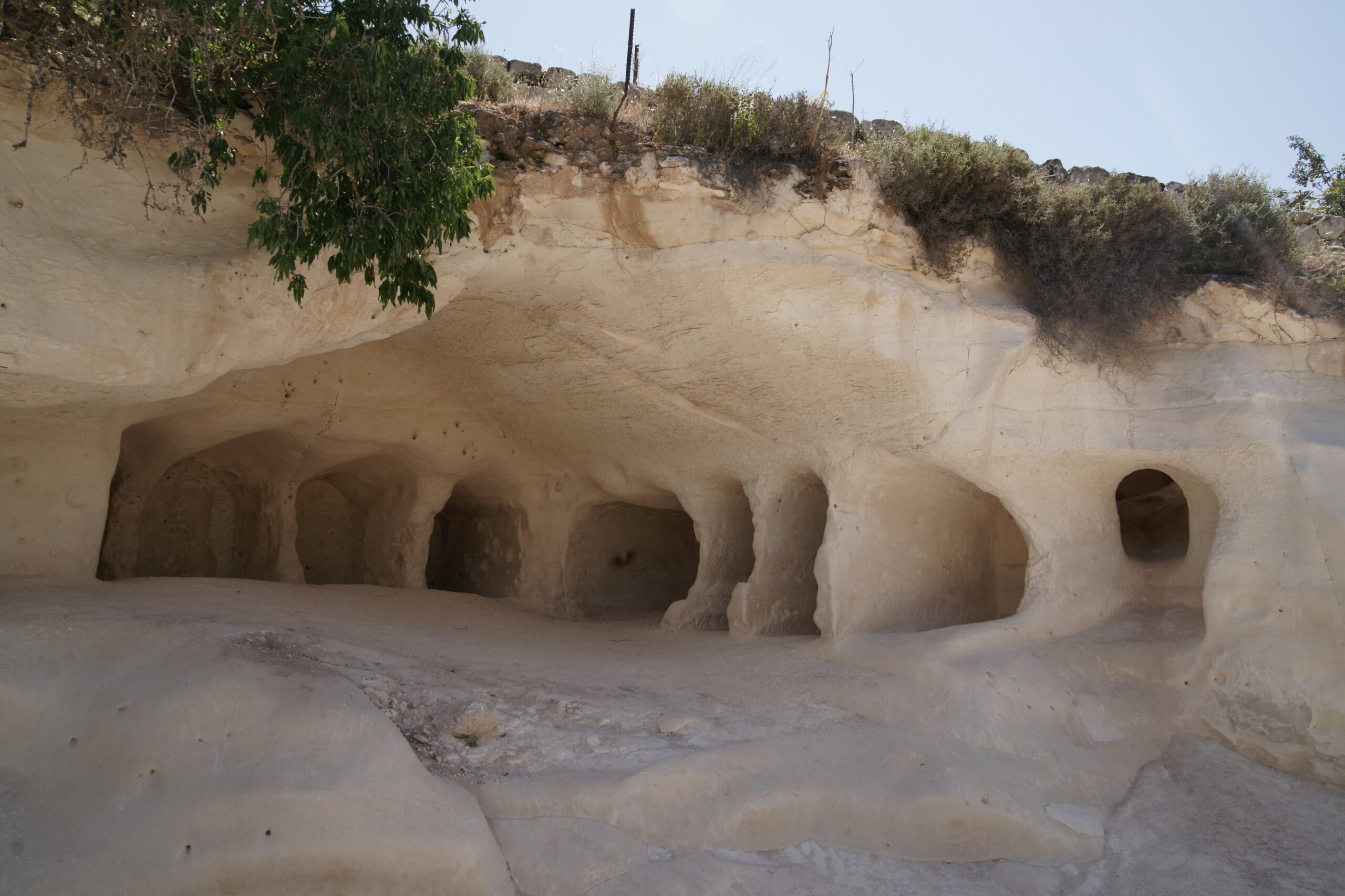
Enter the cave through a large cistern whose roof has caved in (number 1 on the map). The fig tree growing out of the side of the cistern marks the entrance (3), but before making your way inside, notice the remnant of a mikveh (2) at left, whose clearly hewn stone steps once led down into water. A brief crawl through several small storerooms brings you to a round room, where a large, square stone door lies useless. Many such doors throughout the complex could be heaved into place to block tunnels in case of attack.
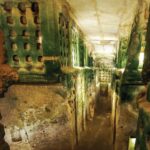
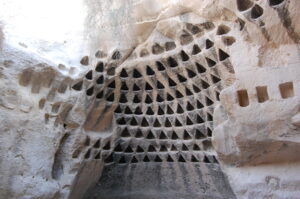
After a slight incline ending in more stairs, you’ll find yourself in a large, long room lined with square and triangular depressions (5). This chamber was likely a columbarium, or underground dovecote. Hundreds of similar caves have been excavated in the Middle East, their many openings presumed to have served as nesting spaces where pigeons laid eggs – for the columbarium owner’s breakfast, assuming he snatched them in time.
Alternatively, these nooks may have held urns containing the ashes of the dead after cremation.
The Hebrew term for “columbarium” cautiously incorporates both theories, translating literally as “grave of dovecotes.”
Yet a third hypothesis rules out both pigeons and corpses, attributing the room’s purpose to some ancient pagan rite – which is what archaeologists say about anything they can’t explain.
In any case, two tunnels branch off from the possible columbarium: one leading to three more rooms (7) and a dead end, and the other (6) moving forward through the system. To access the latter, you’ll have to scale an almost vertical slope.
Next, descend through a deep hole to ground level in another, lower tunnel. If you’ve had enough, duck out for fresh air and coffee by following the tunnel to a square room (8) from which an opening drops back to the large cistern where we started.
Braver souls will press on through the last, knee-scraping roundabout tunnel, where a small, iron ladder leads back down to the same cistern. After a round of applause and the essential selfies, extreme-sport lovers can go back and do the whole thing again. Just bear in mind that it’s a one-way system, so don’t try going backward, which will only cause annoying underground traffic jams.
Not yet a Segula subscriber?
Access our full archive online, have print issues delivered to your door, and moreFeel free to share