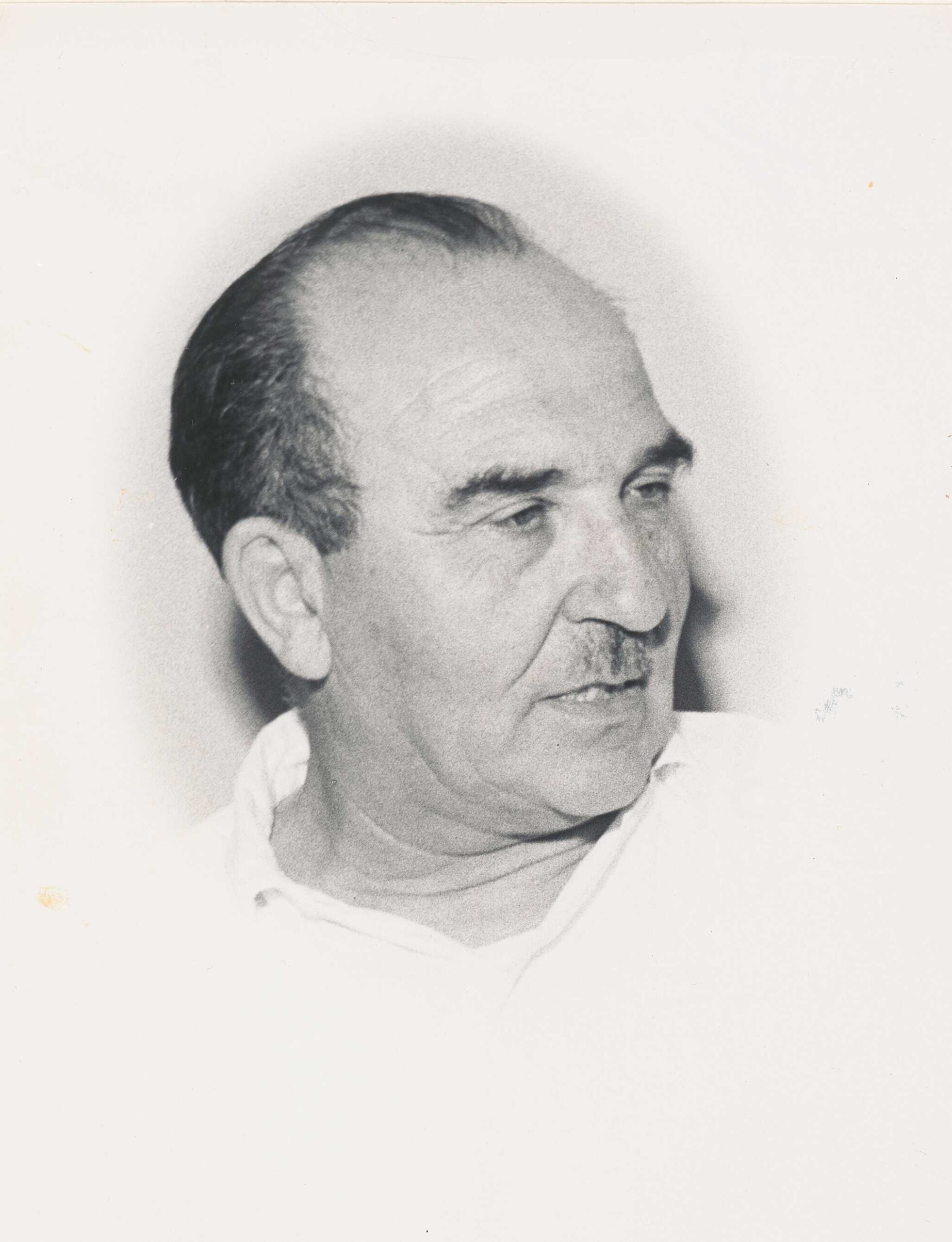
Arguably Israel’s least charismatic leader, Levi Eshkol nonetheless translated his management and coordination skills into real achievements in agriculture, settlement, and – above all – harnessing the country’s scant water resources

The land of Israel has always been short of water, but no leader attacked the problem as vigorously as Levi Eshkol. The challenges of meeting the fledgling Jewish state’s water needs went hand in hand with each step in its third premier’s career.
Levi Eshkol was born Levi Shkolnik on 7 Marheshvan/October 25, 1895, in the township of Oratov, in the Kiev Governorate, in today’s Ukraine. His family owned agricultural businesses, relying on regional rains and snow to guarantee a good crop. Eshkol received a traditional Jewish education but was also tutored in general studies, enrolling at the Jewish gymnasium in Vilna (now Vilnius, Lithuania) in 1911. There he discovered Zionism.
In the winter of 1914, at age nineteen, Eshkol left for Ottoman Palestine. Working in the orchards of Petah Tikva, he first encountered the challenges of irrigation. That spring, he joined a farming commune in Kalandia (today’s Atarot industrial area, near Jerusalem), where he helped dig the well the settlement needed to survive. By 1920, he’d moved north to the Galilee as a founding member of Kibbutz Degania Bet. The grueling daily routine of rising before daybreak to haul water from the River Jordan, brought by mule-drawn wagons to irrigate the fields, was etched deep in his consciousness. In 1924, he wrote to a friend in Degania Alef, Yosef Baratz:
You know what the issue of water means to both Deganias and what strain we’d be exposed to without the necessary arrangements. (Levi Eshkol, the Third Prime Minister: Selected Documents from His Career [1895–1969], ed. Arnon Lammfromm and Haggai Tsoref [Jerusalem: Israel State Archives, 2002], p. 160 [Hebrew])
A severe drought in Mandate Palestine in the late 1920s and early 1930s persuaded a few of the country’s Zionist leaders – Eshkol among them – that Jewish agriculture couldn’t be based on rainfall. Eshkol instead urged the Jewish Agency to set up an irrigation system in the Jezreel and Jordan valleys.
In the summer of 1933, he visited Nazi Germany on behalf of the Zionist Organization to help finalize the Transfer Agreement, under which German Jews were allowed to move some of their wealth to Mandate Palestine. The agreement permitted them to purchase German goods on behalf of Jewish companies there, which enabled refugees to recover a portion of the assets they’d forfeited on leaving Germany.
On his return, Eshkol helped found the union-owned Nir Ltd. to buy agricultural and building equipment for the neighborhoods and farming villages then under construction. Purchases included water pipes acquired from Germany as part of the Transfer Agreement. Many of these were passed on to Mekorot, the water company set up in 1937 by the Jewish Agency, the National Workers’ Union (the Histadrut), and the Jewish National Fund, and owned partly by Nir.
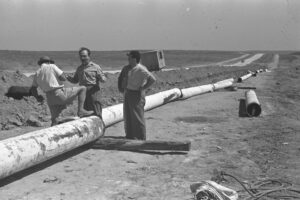
Zionist Pipeline
Mekorot was Eshkol’s idea, which he pitched at the nineteenth Zionist Congress (1935). Eshkol served as founding director together with Zvi Shariv. Pinhas Sapir later joined the directorate, working intensively as Eshkol’s sidekick for some thirty years. Under Eshkol’s leadership – and that of chief engineer Simcha Blass (see “Perfect Partnership?” p. 24) – Mekorot started laying irrigation pipes in the Jezreel Valley and the Lower Galilee. Yet Eshkol’s vision extended much further. Water for agriculture was one thing, but the real challenge he foresaw was how to provide for the rest of the country, especially its cities.
On February 5, 1938, at a meeting of the year-old company’s board of directors, Eshkol pushed for the purchase of a waterworks factory near Haifa.
As a national water company, it’s only natural that Mekorot should grow […] no one would call selling drinking water a losing proposition […] it will be worthwhile. (Lammfromm and Tsoref, p. 162)
Eshkol expected Mekorot to make a tidy profit on its urban customers, who’d pay more than farmers. Apart from the economic incentive, he believed that water – like every other natural resource – should be nationally owned. Under his management, Mekorot pumped from around the country. When aquifers were discovered, Eshkol boasted to the Zionist Congress of 1946:
We’ve discovered another land of Israel – a subterranean land of Israel, I might say. We’ve found millions of cubic meters of water in the land of Israel. (“Twenty-Second Zionist Congress Report,” Central Zionist Archives, p. 468 [Hebrew])
Man of Many Hats
Eshkol served in various leadership and management positions, acquiring expertise in settlement and agriculture, water, economics, and defense. Working within different organizations allowed him to facilitate cooperation and minimize competition.
After the British Mandate authorities arrested half the Zionist leadership in Mandate Palestine in Operation Agatha (also called Black Saturday by those on the receiving end) in the summer of 1946, Eshkol filled in as chief of the Jewish Agency’s settlement department. Under his direction, eleven Negev settlements went up overnight, securing the region for the Jewish state in the event of a UN partition plan. Simultaneously, as head of Mekorot, he ensured that the water pipeline to the Negev was laid in time to supply these new communities.
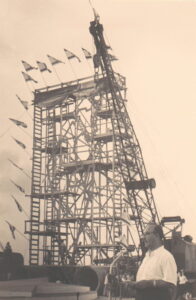
After the State of Israel was established, Eshkol became acting director of the Ministry of Defense as well. When the Burma Road secured access to Jerusalem during the War of Independence, Mekorot provided the city with water by means of the Siloam pipeline (named for the pool of drinking water King Hezekiah enclosed within the city walls in anticipation of an Assyrian siege).
In September 1948, Eshkol was appointed head of the Jewish Agency’s settlement department, then agency treasurer as well as minister of agriculture and development. As such, aside from supplying development towns and farming cooperatives with water, Mekorot employed their residents to lay the necessary infrastructure until their agricultural efforts paid off. Conversely, Eshkol insisted on building a settlement beside the pumping station at Muhraka, thereby securing the area.
Not yet a Segula subscriber?
Access our full archive online, have print issues delivered to your door, and moreFeel free to share