
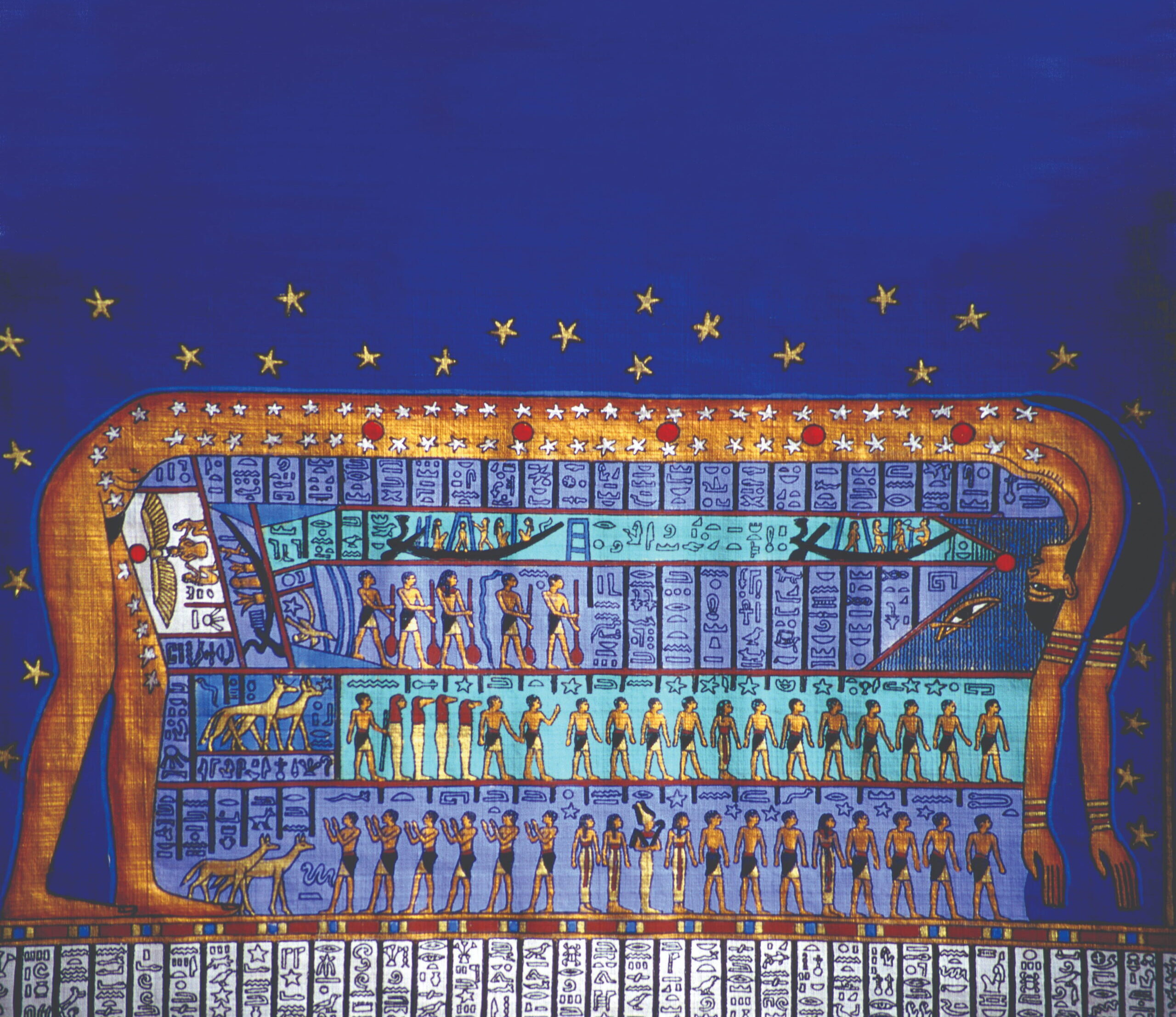
Way back when man began marking time, the natural unit of choice was the day. When did people begin breaking days into hours, and why were some hours longer than others? And if an Egyptian, a Babylonian, and a Jew arranged to meet, who would be on time?

The daily cycle is the most basic natural unit of time. The transition from sunrise to sunset, and from darkness back to light, ranks among the most primal human experiences. Even larger time units such as months and years are measured in days, while hours, minutes, and seconds divide the day itself. Although we break the day into twenty-four equal hours, that’s not the only option.
Today, hours remain the same length all year round, but their number by day and by night varies with the seasons. Certain ancient civilizations, however, preferred seasonal hours over equal (or equinoctial) ones, thereby compensating for a phenomenon that becomes more pronounced the farther one strays from the equator: longer days and shorter nights in summer, and the opposite in winter. In a system of seasonal hours, just as the year is divided into twelve months, day and night are generally each divided into twelve units, which vary in length depending on the season.
Based on inscriptions from the Egyptian pyramids and clay tablets found in the former Mesopotamia (in today’s Iraq), we know that ancient Egypt generally used seasonal hours, while Mesopotamia’s were equal.
Egyptian Hours
Egyptians told time using both sundials and water clocks, some of which have been preserved to this day. While sundials self-adapt to the seasons (unless otherwise manipulated), water clocks – which work on the same principle as hourglasses – move at the same rate year-round. These clocks were therefore equipped with twelve scales (one for each month), marking a different volume of water loss per seasonal hour each month. This feature allowed the fixed volume loss measured by water clocks to adjust to seasonal variations.
Artifacts dating from the late second millennium BCE and even earlier show that Egyptians were nevertheless familiar with equal hours. According to the oldest schematic table of day and night lengths throughout the year, the longest day is three times the length of the shortest. Yet these statistics have proven true only in countries far north of Egypt. Another table, found in the remains of ancient Tanis (in northeastern Egypt) and dating back to Pharaoh Necho II (around 610–595 BCE), is more precise; it lists fixed hours rather than seasonal ones, with the longest day lasting fourteen hours, and the shortest, ten. This ratio was also widely accepted during the Hellenistic period, from the fourth century BCE onward.
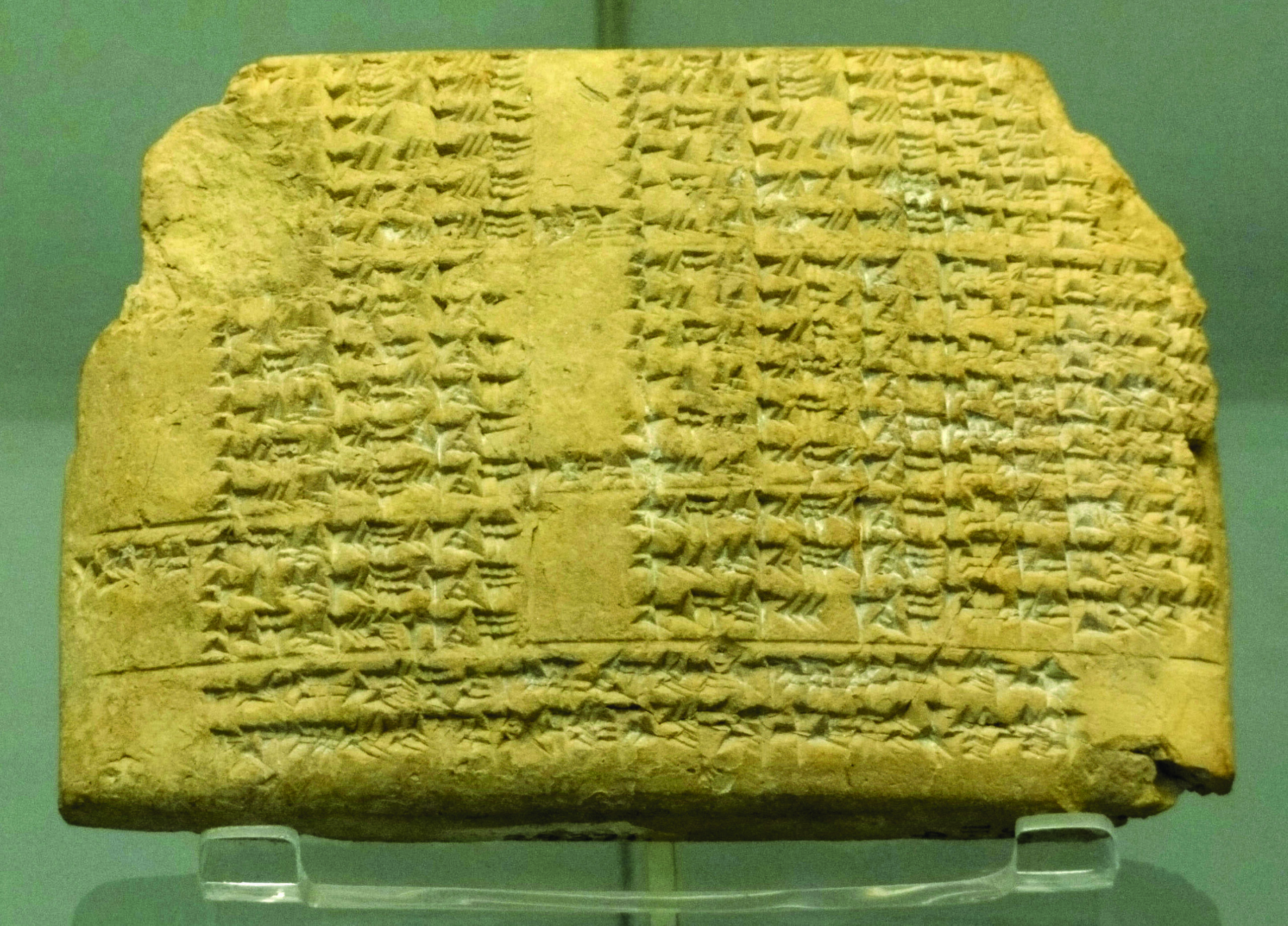
No remnants of Babylonian water clocks have ever been found, only descriptions, such as this cuneiform tablet | Courtesy of the British Museum, London
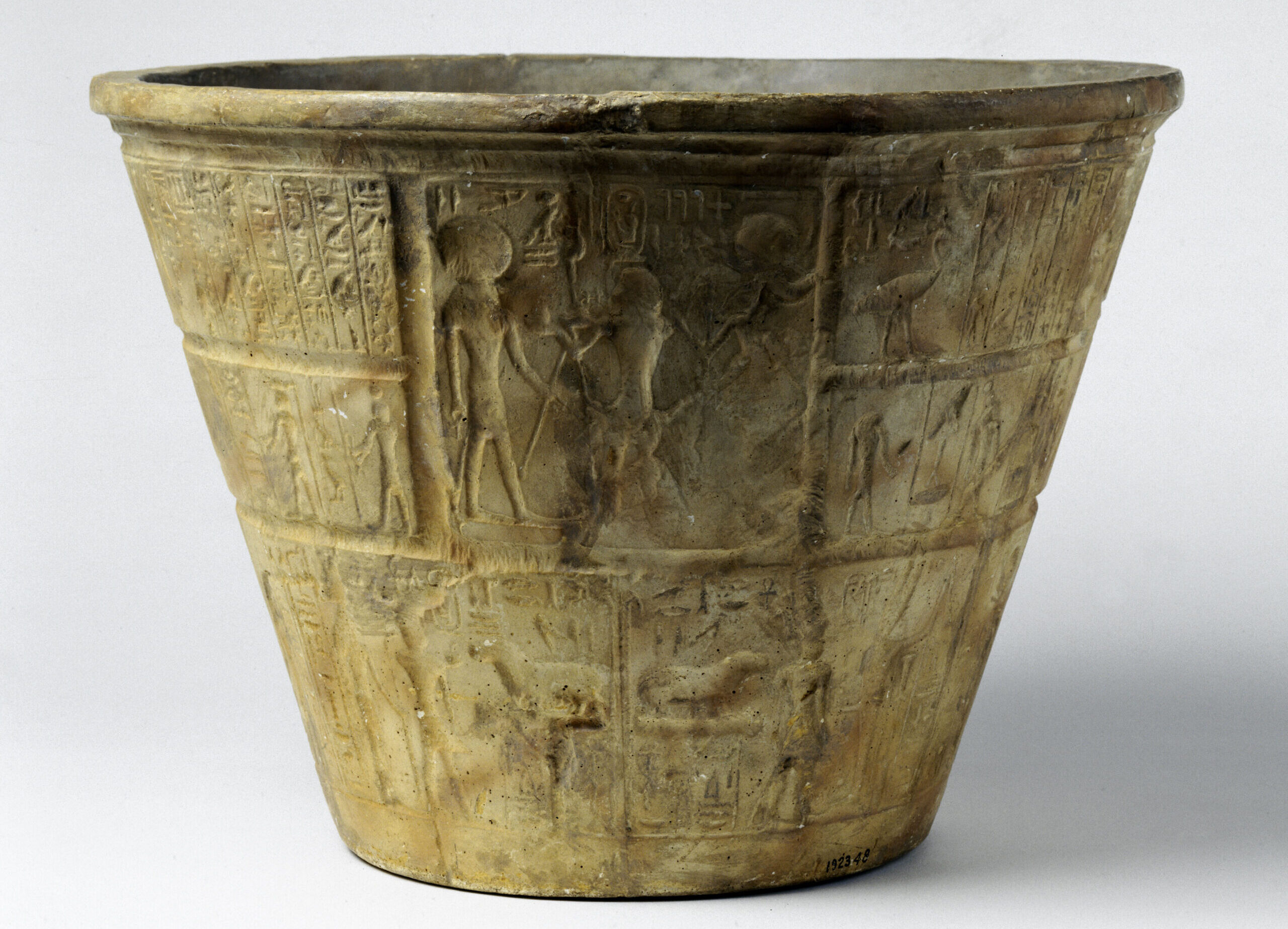
Alabaster water clock from Karnak, near the Egyptian city of Luxor, late 14th century BCE. Its dropping water level measured the passing hours as water dripped from a small hole near its base. The interior was marked with different scales for each month of the year, allowing for the changing seasonal hours | Photo: SSPL, Getty Images
Babylonian Time
Avid stargazers, the Babylonians were aware that the stars move through the night sky at the same rate in both summer and winter. Their astronomers therefore divided the entire cycle of night and day into fixed periods.
Observations recorded on clay tablets from the second millennium generally divide night and day into twelve fixed units, or bēru – each equivalent to two modern hours. Each bēru was in turn subdivided into thirty USH (much as the year was divided into twelve months of thirty days apiece). An USH thus equaled four of our minutes.
The Babylonians also knew that night and day varied in length with the seasons. A tablet from a collection of astronomical inscriptions known as Enuma Anu Enlil, dating from the same millennium, lists the number of hours in each day and night of each month. The description is purely schematic, with the longest day twice as lengthy as the shortest. Later, however, Babylonian estimates became more accurate, making the shortest day about two-thirds’ the length of the longest.
Seasonal hours can be measured by the shadow on a simple sundial, but how does one track time when its units are the same length all year round? No timepieces have been discovered in Mesopotamia, but there are records of water clocks. Time was measured by water dripping at a fixed pace, unaffected by the time of year. In addition, Babylonian astronomers tried to calculate fixed hours using a sundial.
Mul Apin, an astronomical compendium from the early first millennium BCE, describes an elementary version of such a shadow clock, in which the shadow length of a stick standing in the middle of an unspecified surface is measured throughout the day. Of course, the relationship between the length of the shadow and the time of day is dependent on the season. Mul Apin computes this relationship schematically, converting the seasonal effect on the shadow to fixed hours.
Did Babylonians use seasonal hours as well as fixed ones? Until recently, it was thought that the Babylonian Empire learned from the Egyptians to take seasonal hours into account, but new research shows that seasonal hours reached Babylonia only during the Hellenistic period.
Mesopotamian economic and legal records – inscribed in cuneiform on clay tablets – reveal that before the daily cycle was divided into twelve, the workday was already broken up into as many as sixty increments (depending on the labor in question), which were used for calculating wages. Like the workday – and like seasonal hours – these units varied in length with the time of year. But they never became as widely accepted as the twelve-bēru cycle.
Not yet a Segula subscriber?
Access our full archive online, have print issues delivered to your door, and moreFeel free to share