
Can a clear path be sketched from Wagner’s music to Auschwitz? Can one artist’s work shape history? Wagner’s oeuvre was beloved by Hitler and played in the concentration camps, accompanying unspeakable acts of cruelty. But is that the composer’s fault?

Holocaust survivor Esther Greenbaüm sponsors an international orchestration competition. Her favorite finalist is a young Israeli, Asaf Drori, who has conducted a superb rendition of Mahler. For the contest’s final phase, however, Drori wants to orchestrate Wagner. Greenbaum is vehemently opposed. Not only was her father killed in the Holocaust, but she herself, a virtuoso violinist, was forced to play Wagner in the camp orchestras. So her money, she insists, won’t be used to fund any performance of this hated composer’s work. Drori retorts that Chopin, too, was an ardent anti-Semite, but no one outlaws his compositions. A composer’s ideology, says the contestant, has nothing to do with his music.
Such is the plot of Victor Gordon’s You Will Not Play Wagner, which premiered in Israel on March 30, 2019, at the Jerusalem Theater. Roy Horovitz directed this stage reading of the play by the Mikro Theatre.

Drori’s attitude is now common within the Israeli music world. Though Israel has unofficially boycotted Wagner since its founding, lawyer Jonathan Livni established the Israel Wagner Society in 2010 to promote performances of the composer’s works.
Yet those opposing Israel’s ban on Wagner are perhaps uninformed. This musical genius was no mere anti-Semite. His writings – including his operas – depict the Jew as the root of all evil, an enemy to be eliminated not just for Germany’s sake but to save the entire continent.
To understand Wagner’s link to the Holocaust, one must plumb the depths of his connections to Hitler.
Theory and Composition
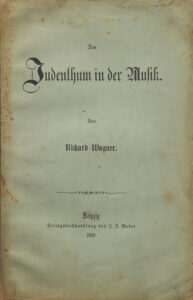
Wagner’s first anti-Semitic work, Das Judenthum in der Musik (Judaism in Music), was published under a pseudonym in 1850, when its author was thirty-seven and exiled from Germany for his socialism. It was republished under Wagner’s name in 1869, by which time he had returned home and was enjoying the patronage of Ludwig II of Bavaria. The essay contended that Jews, as cold intellectuals, cannot be creative. As examples, Wagner cited Felix Mendelssohn (1809–1847) plus oblique references to Giacomo Meyerbeer (1791–1864). Whereas Meyerbeer remained a proud Jew throughout his life, Mendelssohn converted to Protestantism. But for Wagner, as later for Hitler, conversion changed nothing; a Jew was a Jew.
An uneasy sense of gratitude might have prompted Wagner not to denigrate Meyerbeer by name; the popular composer had recommended one of Wagner’s early operas to the theater in Dresden that subsequently made it his first success. But the general tone of his article was unmistakable.
“Judaism in Music” set out to explore and explain the abhorrence that Wagner – representing all Germans – felt toward Jews:
We have to explain to ourselves the involuntary repellence possessed for us by the nature and personality of the Jews […]. [The Jew] rules, and will rule, so long as Money remains the power before which all our doings and our dealings lose their force […]. [His] exterior can never be thinkable as a subject for the art of re-presentment: if plastic art wants to present us with a Jew, it mostly takes its model from sheer fantasy […]. Our whole European art and civilization, however, have remained to the Jew a foreign tongue […]. In this Speech, this Art, the Jew can only afterspeak and afterpatch – not truly make a poem of his words, an artwork of his doings […].
If we hear a Jew speak, we are unconsciously offended by the entire want of purely-human expression in his discourse: the cold indifference of its peculiar “blubber” (“Gelabber”) never by any chance rises to the ardour of a higher, heartfelt passion. […]
His adaptations needs must seem to us outlandish, odd, indifferent, cold, unnatural and awry; so that Judaic works of music often produce on us the impression as though a poem of Goethe’s, for instance, were being rendered in the Jewish jargon […] and in the history of Modern Music we can but class the Judaic period as that of final unproductivity, of stability gone to ruin. (The Theatre: Richard Wagner’s Prose Works, trans. William Ashton Ellis, vol. 3 [1894], pp. 80–85)
The final paragraph recommends the Jews’ self-annihilation:
Without once looking back, take ye your part in this regenerative work of deliverance through self-annulment; then are we one and un-dissevered! But bethink ye, that one only thing can redeem you from the burden of your curse: the redemption of Ahasuerus – Going under! (Ellis, p. 100)
This Ahasuerus isn’t the Persian king of the book of Esther, but the legendary Wandering Jew. Having refused to allow Jesus to rest a few moments against the wall of his store as the condemned man bore his heavy, wooden cross to the site of his own crucifixion, a Jewish shoemaker named Ahasuerus was doomed to eternal wandering. Wagner thus proposed three solutions to the existential problem of the Jew: total assimilation (“self-annulment; then we are one”), annihilation by exhaustion from eternal wandering (“the burden of your curse”), or “Going under,” which the composer left for German history to define.
Wagner returned frequently to these themes in his ten volumes of theoretical works. His correspondence (and his dinner conversation, recorded by his second wife, Cosima) reflects his conviction that Jews everywhere conspired to conquer the world. In his Richard Wagner and the Jews (2005), however, Milton E. Brener notes that Wagner had several Jewish friends and collaborators. Among them: Hermann Levi, his favorite conductor; Josef Rubinstein, who lodged for long periods in Wagner’s home, transposing his operatic scores into piano music; and pianist Karl Tausig. Wagner’s prejudice against “that amorphous entity, the Jews,” often conflicted with these relationships:
At one point, with two Jewish friends living as part of his household, he laconically told his wife that their home would soon be a synagogue. (Brener, p. 2)
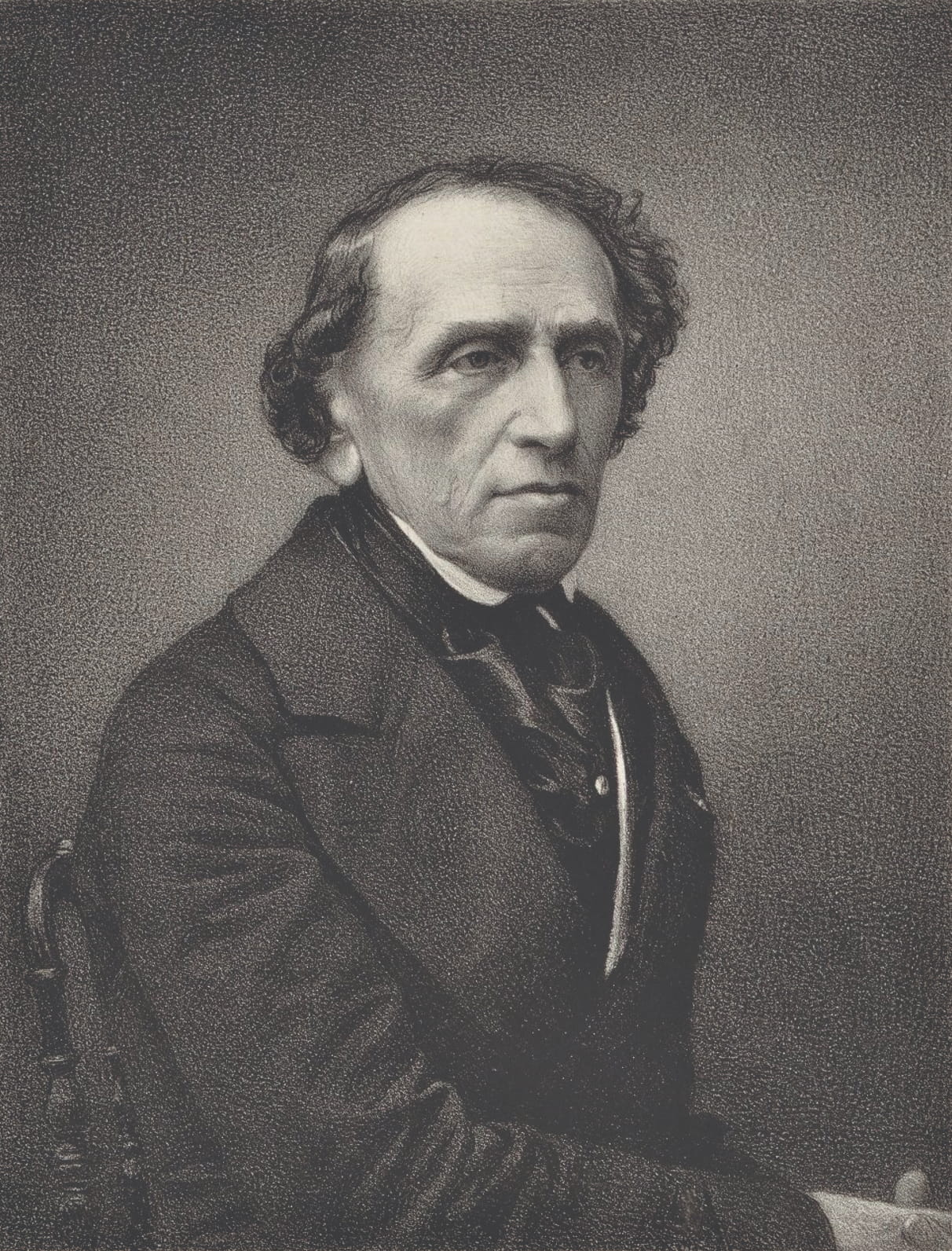
Early patron, later derided by Wagner as his enemy. Giacomo Meyerbeer, engraving from a photograph by Pierre Petit published after the composer’s death in 1864
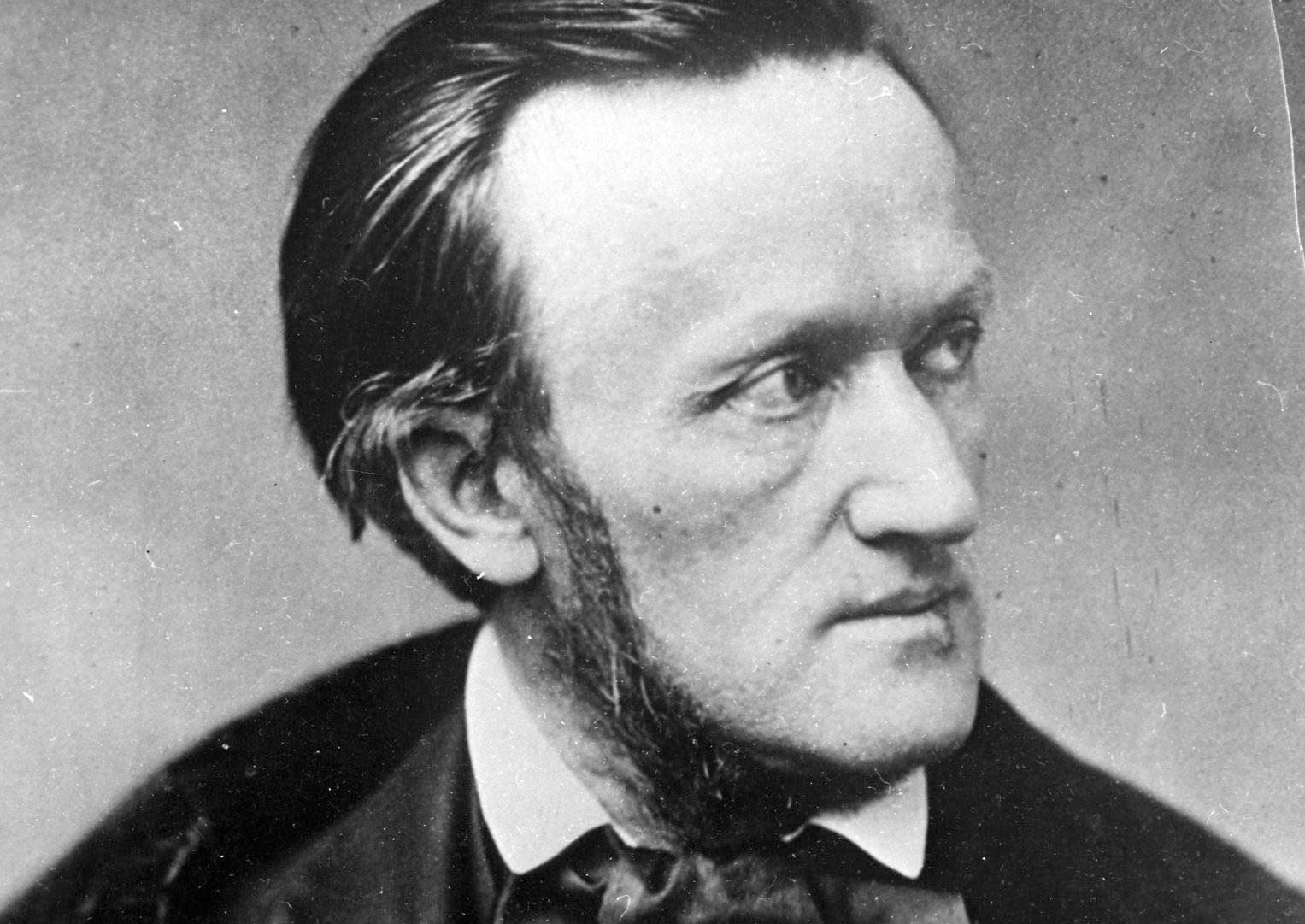
Bohemian no more? Richard Wagner in 1871, finally married to Cosima and planning to move to Bayreuth, Germany
Not yet a Segula subscriber?
Access our full archive online, have print issues delivered to your door, and moreFeel free to share