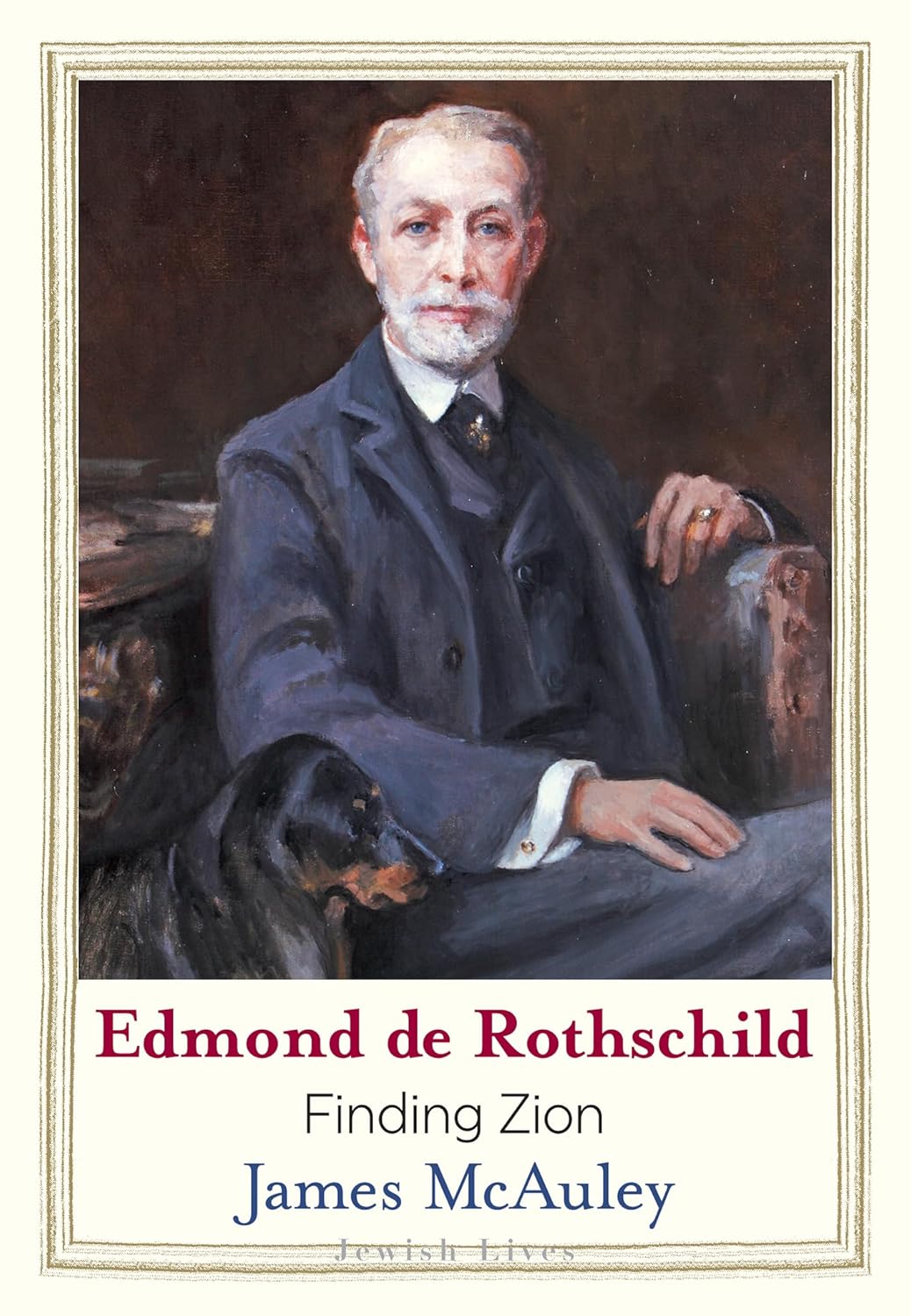

Edmond de Rothschild: Finding Zion
by James McAuley
Jewish Lives series, Yale University Press
2026, 305 pages
McAuley’s well-researched biography of the “well-known benefactor,” as Edmond de Rothschild was termed in Zionist circles, portrays him as an initially retiring type who actually preferred anonymity. Yet the Rothschild who emerges here is complex and contradictory – so privileged that he was almost unaware of his exalted status, yet able to empathize with the distressed Jewish masses; a collector of art and artifacts who also amassed colonies and real estate in the land of Israel; shy but with an enormous ego that brooked no defiance.
For this youngest of five, Zionism changed everything. It “filled a manifest void in the life of a man who did not seem to have any other clear purpose” (p. 10), transforming “a wealthy dilettante into a man of consequence” (ibid.). But what underlay this metamorphosis? The author notes two of Rothschild’s traits: empathy born of Jewish solidarity, and a sense of betrayal as the same society that had emancipated its Jews in the name of liberty and fraternity began reviling them.
As for Edmond de Rothschild’s ability to identify with and aid the victims of the eastern European pogroms in the last decades of the 19th century, McAuley credits the observant Jewish home provided by both Rothschild’s mother and his wife (unlike many other branches of the family). A chapter is devoted to these women and their influence, although relatively little is known about them, especially wife Adelheid, who seems to have been almost the opposite of beautiful socialite Betty.
Not yet a Segula subscriber?
Access our full archive online, have print issues delivered to your door, and moreFeel free to share