
Resorts are a world unto themselves, with their own mores and culture. In the 19th century, the spa towns of western Bohemia were patronized largely by Jews from all over Europe, creating a transient, highly diverse community

 Next Year in Marienbad
The Lost Worlds of Jewish Spa Culture
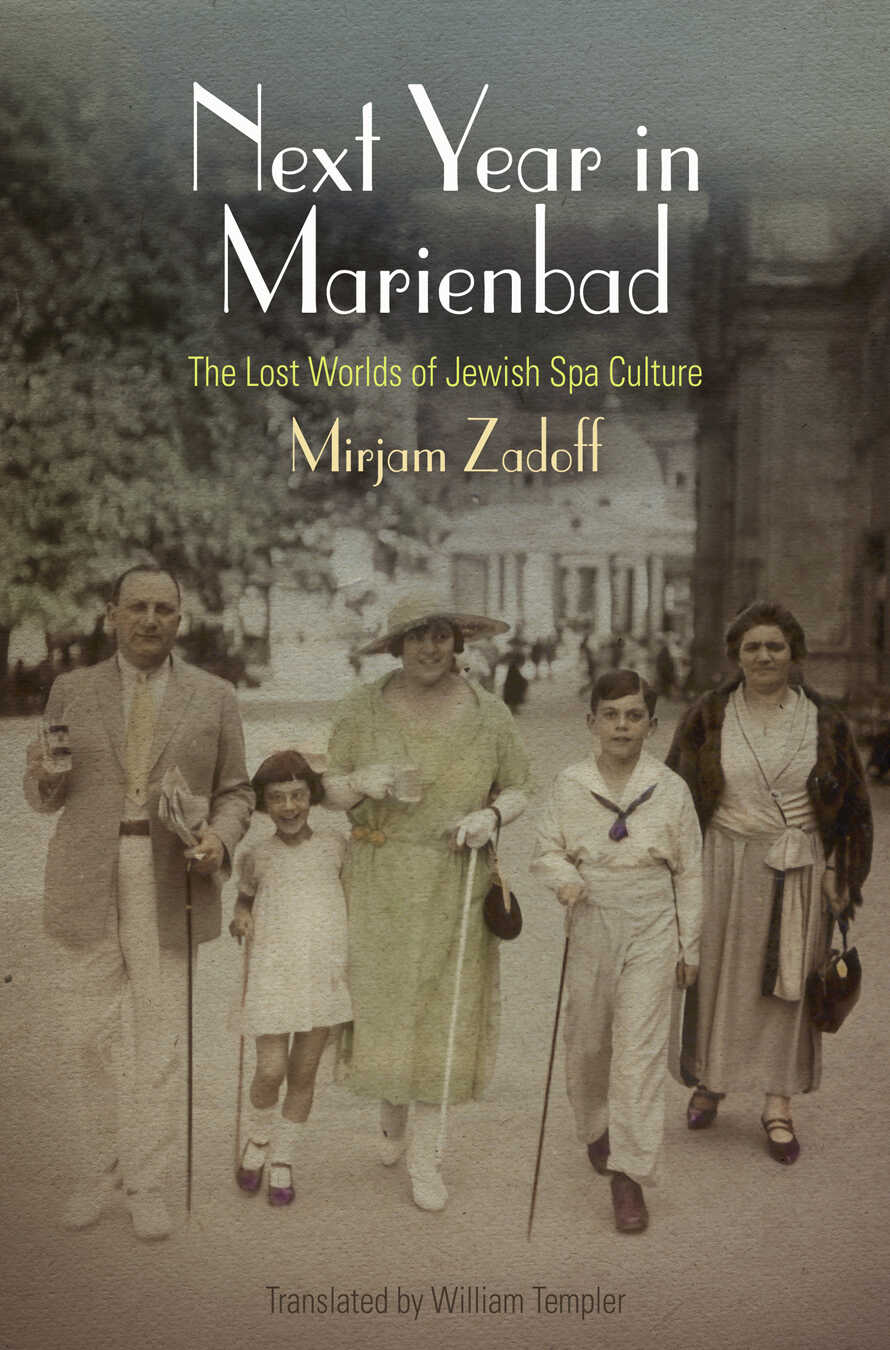
Mirjam Zadoff, translated from German by William Templer
Penn Press, 2012, 320 pages
In early May 1904, a bearded forty-four-year-old from Vienna arrived unannounced at one of the more elegant hotels in Franzensbad, Bohemia. The proprietor was surprised to see him, as the summer season had yet to begin. Yet the guest’s doctor had urged him to take a complete rest at the local mineral springs, avoiding all physical and intellectual exertion. The visitor later described his experiences in a letter to his mother:
A profound quiet, devoid of thought, and an indescribable boredom. I suck on this boredom like someone else on some pleasure. I want to take a long rest from kings, popes, ministers, politics and newspapers. I don’t want to hear about anything. By the way, people treat me here with the greatest of courtesy. The few people around all know me. (p. 184)
The guest was none other than Theodor Herzl. Unfortunately, the cure the doctor had recommended for Herzl’s newly discovered heart condition didn’t work. He left the spa early, his health fast deteriorating, and passed away soon afterward.
To Your Health!
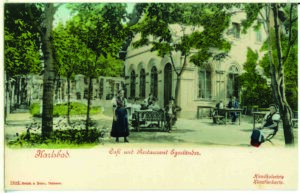
Leisure activities, and vacation culture in particular, can provide a wealth of information on any society. Next Year in Marienbad explores Jewish vacation culture in a trio of western Bohemian spa towns from the final third of the 19th century until Hitler’s annexation of Czechoslovakia brought an end to Jewish holidays in the area – albeit temporarily. Every summer, Jews from central and eastern Europe flocked to Carlsbad, Franzensbad, and Marienbad – today the Czech towns of Karlovy Vary, Františkovy Lázně, and Mariánské Lázně, respectively – since many of Germany’s more affordable resorts advertised themselves as “Jew-free.”
In a spa-related Jewish joke, the German kaiser asked his chancellor when he planned to call the next parliamentary meeting. “Between the High Holy Days and Sukkos, God willing,” answered the chancellor. When the kaiser then inquired where this official had picked up such expressions, the latter replied, “Let’s see how you sound after spending the summer in Carlsbad.”
Realizing the potential of an essentially “captive” clientele, the Bohemian resorts carried Jewish newspapers and staged performances catering to Jewish audiences. Some hotels provided kosher food, and synagogues and Jewish hospitals were set up for the season. The spas developed an entire lexicon of Yiddishisms and even Hebrew expressions; author Yehuda Leib Gordon, for example, translated Marienbad into Hebrew as “Miriam’s Well.” There was even a special goodbye borrowed from the Haggada – “Next year in beautiful Marienbad.”
The book draws on a variety of sources: letters, novels, poems, postcards, municipal records, maps, visitors’ guidebooks – and jokes.
Thirty-five years ago, when I was a boy in Berlin, the saying was common among the Jews there that if a gentile is thirsty he gets drunk and beats up his wife, but if a Jew is thirsty he would diagnose his thirst as a symptom of imminent diabetes and would go to Carlsbad to drink the waters and regain his health. (p. 42)
The first few pages are rather heavy going, partly because of their confusing structure. Explanatory subheadings would have been a helpful addition to the colorful but often inexplicable chapter titles. But the farther in you get, the clearer the picture of a fascinating subculture providing intriguing historical, social, and even political insights into the period.
Not yet a Segula subscriber?
Access our full archive online, have print issues delivered to your door, and moreFeel free to share