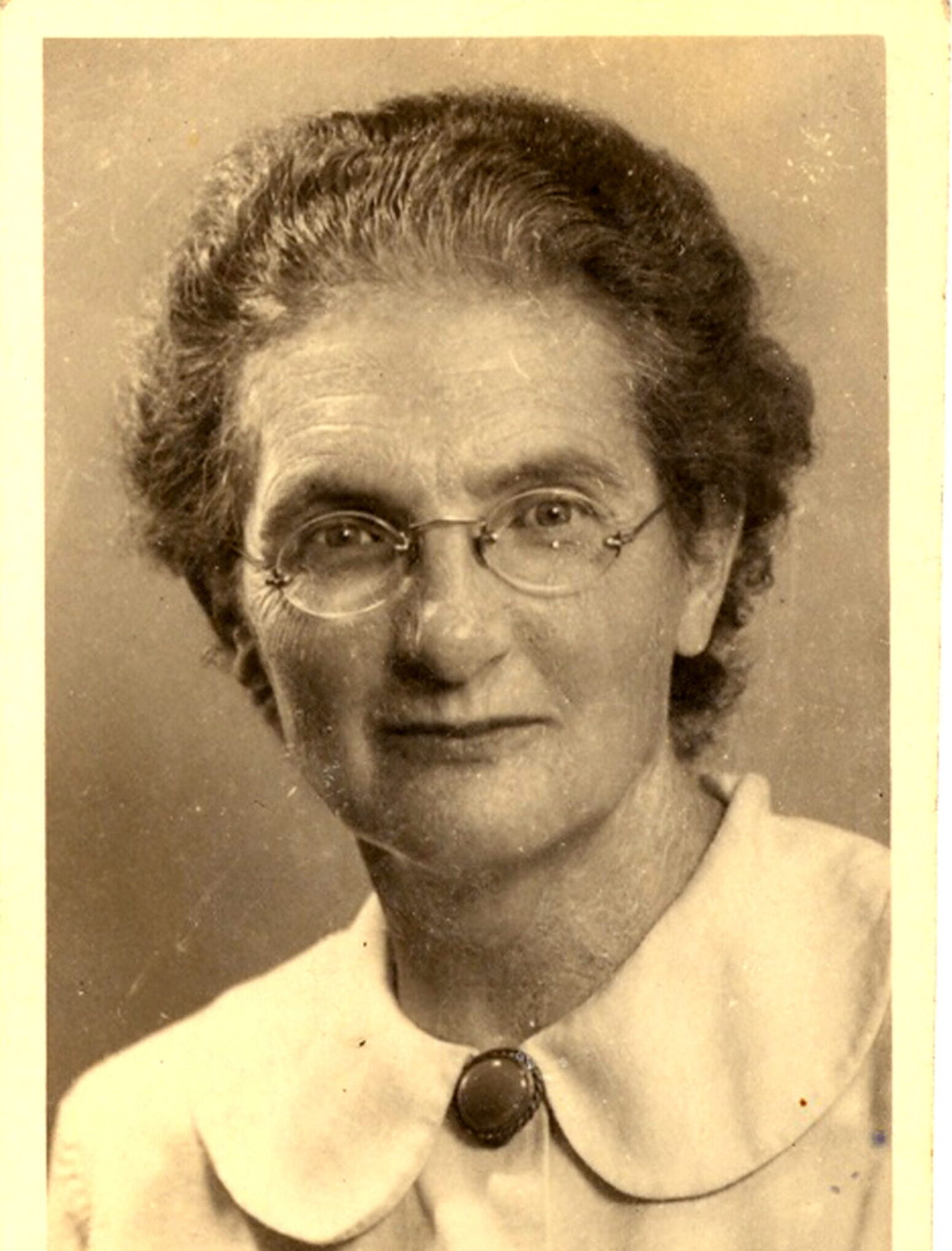
One of a handful of Jewish women completing medical school despite Russian quotas, Miriam Duker served prestate Israel’s remote communities through thick and thin, extending medical care even to neighboring Arabs

Such a sad situation. Two nights ago, forty joyful young men arrived, full of life and strength. They set out from here on their way to [relieve besieged] Kfar Etzion. And this morning, a large search party came and went looking for them, filling us with dread. […] There are three injured men in my clinic, plus a surgeon who came with them […]. But so many were killed! Of course, this is a war, and it’s for a Jewish state. Yet I still can’t get used to the thought that all those young men I saw – every last one is gone. For now, Har-Tuv is a bit like a city under siege. (Yehuda Ben-Bassat, Har-Tuv: An Isolated Colony in the Judean Hills, p. 241 [Hebrew])
This description of the Palmah fighters ambushed en route from the isolated agricultural colony of Har-Tuv to the Etzion Bloc was penned by Dr. Miriam Duker to her son Shlomi (now architect Shalom Gardi), studying in Petah Tikva. The circumstances were almost the last chapter in her long and successful career as Har-Tuv’s resident doctor. Years of devotion to the sick and injured, irrespective of personal safety, were cut short by the turmoil of war.
Doctor in the House?
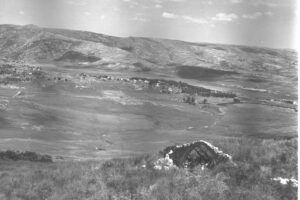
Har-Tuv (“Mount Pleasant”) began in the 1870s. Financial difficulties forced Arab residents of Artuf to sell some of their less fertile land to the Spanish consul in Jerusalem. He in turn sold this real estate to the London Society for Promoting Christianity among the Jews, whose missionaries endeavored to use it to resettle and convert Jewish refugees from eastern Europe. Twenty-four such families lived on the property awhile, but none embraced Christianity, and farming proved difficult.
The land was then purchased by a Bulgarian branch of Hibbat Zion (Love of Zion), an early Zionist movement. Its association – the Brotherhood for the Settlement of the Land of Israel – sent its members to establish a flourishing agricultural settlement using their own capital rather than Baron Rothschild’s or any other organization’s. They arrived on Hanukka in December 1896 and were soon struggling. The only Jews for miles, they were unencumbered by the Baron’s bureaucracy but had no institutional support.
The travails of Ottoman rule (including bribes and taxes) swiftly reduced Har-Tuv to penury, and residents almost gave up. In 1910, however, help arrived in the form of Isaac Leib Goldberg, a businessman known as the “Unknown Benefactor” for his unconditional aid to Zionist enterprises. A visit to Har-Tuv convinced Goldberg to put down enough money for a farm and plant nursery, and the colony survived. Medical services weren’t always available in Har-Tuv. For years, inhabitants got by on their own limited medical knowledge and folk remedies (sometimes supplied by local Arabs); occasionally, they called in the Arab midwife from neighboring Artuf. Emergencies were sent to Jerusalem. In a remote region with harsh living conditions, better care was clearly needed.
Over the years, various doctors served Har-Tuv, but none stayed for long or actually lived there. Poor hygiene and overcrowding resulted in rampant infection and contagion, particularly among children. Eye infection was one of the worst scourges, with serious cases referred to famed Jerusalem ophthalmologist Abraham Albert Ticho. Har-Tuv’s distance from Jewish clinics led to many medical complications. What the village needed was its own doctor.
Finally, in 1925, twenty-nine years into the life of the colony, Dr. Miriam Duker settled in Har-Tuv. Despite the cultural differences between the recent Russian immigrant and the Bulgarian natives who’d been in Har-Tuv for a generation, Duker slipped comfortably into her new role.
Against All Odds
Dr. Miriam Duker was born Maria Slimovna Duker in 1898 in Minsk, White Russia. Her family soon moved to Moscow, as only the wealthy Jewish elite could. The Dukers were in lumber, trading forest concessions, building sawmills, and rafting logs down rivers across Europe. Though secular, the family identified strongly as Jews. But Miriam’s parents certainly weren’t Zionist, and none of her three brothers took that route.
Miriam began studying medicine in Moscow in 1915. All the odds were against her. The numerus clausus restrictions on the number of Jewish university students (see “Take a Number,” p. 55) were still in force, and very few women worldwide were accepted into institutions of higher learning.
Like many, the Dukers lost their wealth with the outbreak of the Bolshevik Revolution, and Miriam fell on hard times. At this crucial juncture, she read Heinrich Graetz’s History of the Jews and began participating in Zionist activities. One such introduced her to Nissan Gardi, a fellow student who convinced her to follow him from Russia to Ottoman Palestine. After completing her studies, Miriam headed for the Middle East, arriving in 1922. The couple subsequently wed.
Not yet a Segula subscriber?
Access our full archive online, have print issues delivered to your door, and moreFeel free to share