
Much as Nazi Vienna couldn’t stand it, the gasoline-powered car was invented by a Jewish-born Austrian engineer. Siegfried Marcus has been all but forgotten, however, owing largely to his lack of business acumen

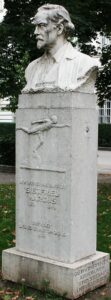
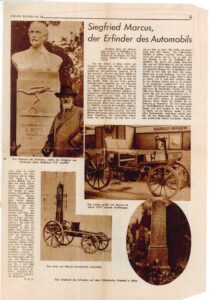
On October 15, 1932, a monument commemorating the centennial and achievements of Siegfried Marcus was dedicated on the grounds of Vienna’s prestigious College of Technology, today the Vienna University of Technology (TU Wien). The next day, the city’s Wiener Journal pronounced Marcus an “outstanding Austrian and inventor of the automobile,” a title he himself would probably have disowned.
Five and a half years after this acknowledgment, Austria was annexed by Nazi Germany, whose rulers chafed at Vienna’s historical primacy as the birthplace of the first gasoline-powered car. Not only was this essential piece of modern engineering inconveniently manufactured outside imperial Germany, but its inventor was also Jewish. So the Marcus memorial was soon removed from Vienna’s city center.
In the summer of 1940, Joseph Goebbels’ Ministry of Propaganda ordered Marcus stricken from German lexicons and encyclopedias, with Gottlieb Daimler and Karl Benz to be listed instead as the creators of the automobile. Back in 1925, in an article in the Berliner Tageblatt, Benz himself had charged that the “Marcus Wagen” had never actually traveled anywhere. He admitted, however, that Marcus’ engine significantly improved on its predecessors.
The memorial was reinstated in 1948, where it stands to this day. The attempt to commemorate Marcus and his inventions between the two World Wars produced a flurry of correspondence among his acquaintances. Most of it is preserved in his personal archive, which was entrusted to the Central Archives for the History of the Jewish People in the early 1950s. Other items of interest in the collection are Marcus’ personal documents, photos of some of his creations, and newspaper clippings about him.
The archive of his hometown was evidently destroyed by fire, so no documents relevant to the Marcus family’s history exist. Aside from his wife, Eleanora Baresch, and their two daughters, Eleanora Maria and Rosa Maria Anna, he had a nephew, Max Rosenbaum, who worked diligently on the commemoration project in Vienna. In November 1927, in response to Rosenbaum’s inquiries, he received a letter from his mother, who was living in Hamburg:
Letters apparently no longer exist, and anyway, to the best of my knowledge, the brothers almost never corresponded.
Siegfried Marcus’ private archive, however, allows us to reconstruct some details.
Prolific Inventor
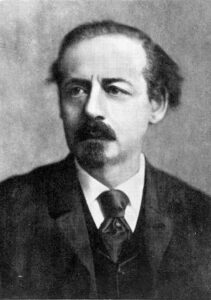
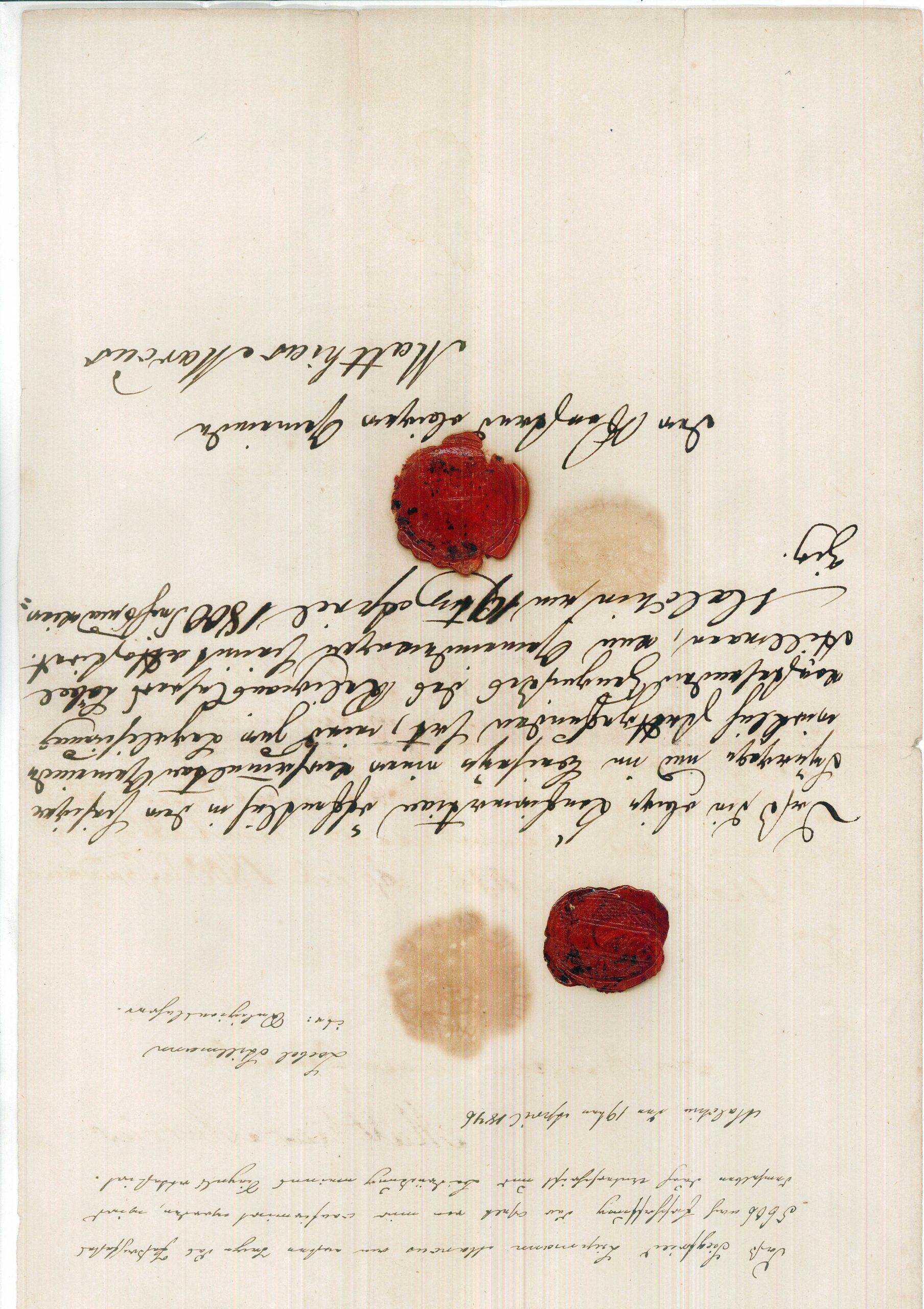
Siegfried Samuel Marcus was born to Rosa and Liepmann Marcus on September 18, 1831, in Malchin, a town in the northern German state of Mecklenburg-Schwerin. A certificate dated April 19, 1846, and recorded by Loebel Stillmann, a teacher within Malchin’s Jewish community, reports that Siegfried’s “confirmation” – his bar mitzva – was celebrated on Pesach 5606. He was fourteen and a half by then.
Marcus worked as an apprentice mechanic in Malchin, qualifying at age fourteen. He moved to Hamburg, then to Berlin, where he was accepted for training at the Siemens and Halske workshop, today Siemens multinational conglomerate corporation. A letter from Max Rosenbaum – asking Siemens for more information regarding his uncle – mentions that the family thought Marcus had represented the company at the Vienna World’s Fair of 1873, where he evidently guided Wilhelm I around. The inventor exhibited patents at similar events in Paris.
Marcus stayed in close touch both with his mentor, Ernest Werner von Siemens, founder of the German electrical industry, and with the firm, as indicated by another letter from the archive, dated November 1878 and addressed to Werner von Siemens. By 1852, however, Marcus was in Vienna, where he resided until his death. Austrians like to claim him as one of their own, but he retained his German citizenship.
Although a letter from nephew Edward Rosenbaum to engineer Erich Kurzel-Runtscheiner in 1927 mentions that Marcus isn’t known to have “altered his religious affiliation,” a certificate – also from the personal archive – attests that in 1856 he converted to Christianity and joined the Evangelist Lutheran congregation in Vienna. He was later buried in the Protestant cemetery of Hütteldorf, a Viennese suburb.
In 1856, Marcus opened a “tools and mechanical and physical machinery” factory at 107 Mariahilferstrasse, in downtown Vienna. The facility moved to 4 Mondscheingasse in 1890. In these workshops, he did most of his inventing, resulting in 130 patents in sixteen countries. Though he lacked academic technical training, he was gifted in many fields: mechanics, electricity, lighting, electro mechanics, engines, and military equipment. Electric lamps, internal combustion engines, an electromechanical trigger for naval mines, a lithographic printer, and a whale-hunting harpoon were just some of his creations. Furthermore, his explosives destroyed the French line of defense in Strasbourg, Verdun, Metz, and Toul in the French-Prussian War of 1870.
Hitting the Road
The Daimler-Benz archive includes the following testimony by Albert Curjel:
One day in 1866, Marcus invited me to try out his first car […]. To test this mode of transportation, we had to go somewhere as empty and dark as possible. The Schmelz [Vienna’s army training ground] was the best choice. Toward evening we set out for the Schmelz graveyard. In front went a porter dragging the automobile […]. When we reached the Schmelz, the work of starting [the engine] began – no easy task. Eventually the engine started working, and Marcus invited me to sit in the wagon. He was busy navigating. The car did indeed manage to move by itself, and we traveled about two hundred meters, but then the engine broke down, and our test-drive came to an end. The porter went to work once again instead of the engine, bringing the car back to the workshop. [German]
Marcus’ noisy practice runs caused a riot on the streets of Vienna, from which he was saved only by his friends on the police force.
Siegfried Marcus was the first to engineer a vehicle powered by gasoline, not coal (the era’s main fuel). This innovation required several other inventions – a carburetor mixing fuel with air, an internal combustion engine, and the gas engine itself. At the 1867 Paris World’s Fair, this last won a silver medal as well as earning its inventor a medal of honor from Franz Joseph I of Austria.
Marcus was thus well ahead of Gottlieb Daimler, who patented a gasoline-powered bicycle only in 1885, and of Karl Benz, who tested his three-wheeled automobile in 1885.
Marcus’ second car, likely completed in 1875, is still on display at Vienna’s University of Technology (though the vehicle belongs to Austria’s ÖAMTC auto club). This prototype was significantly more advanced, incorporating some twelve improvements. According to accounts of the period, the car even went backward. And its single-cylinder engine was equipped with a magneto (the first electromagnetic ignition starter), another of Marcus’ groundbreaking inventions.
The gasoline was sucked up by a carburetor whose brush dipped into the car’s gas tank, then sprinkled drops of fuel as it rotated. The car also boasted brakes, a can of water for cooling the engine, spring bearings on its wheels, and many other parts still used in auto making today.
Marcus’ archive doesn’t tell us how many prototypes he made himself and how many were built according to his instructions. He never patented any of his automobiles, but close friend Bernhard Rund worked hard to make sure Marcus got his due. The day after the memorial’s dedication, Rund published an article in the Vienna press, which began: “Siegfried Marcus is the undisputed inventor of the automobile,” (Rund, “My Friend Siegfried Marcus,”Wiener Journal, October 16, 1932).
Some claim that Marcus’ second prototype wasn’t built in 1875 or in Vienna. They insist that it was produced by Märky Bromovsky & Schulz company in Adamsthal, Moravia (today Adamov, in the Czech Republic), according to Marcus’ specifications, and hit the road only in 1888 or 1889. Another car of Marcus’ may have fit those details, but it would have been a later version, which hasn’t survived.
The 1875 model in TU Wien is labeled “the oldest gasoline-powered car to have survived intact.” That’s thanks to museum workers, who hid the historic exhibit during the Nazi occupation of Vienna. The vehicle is also proudly featured on an Austrian postage stamp from 2016, commemorating 120 years of the ÖAMTC.
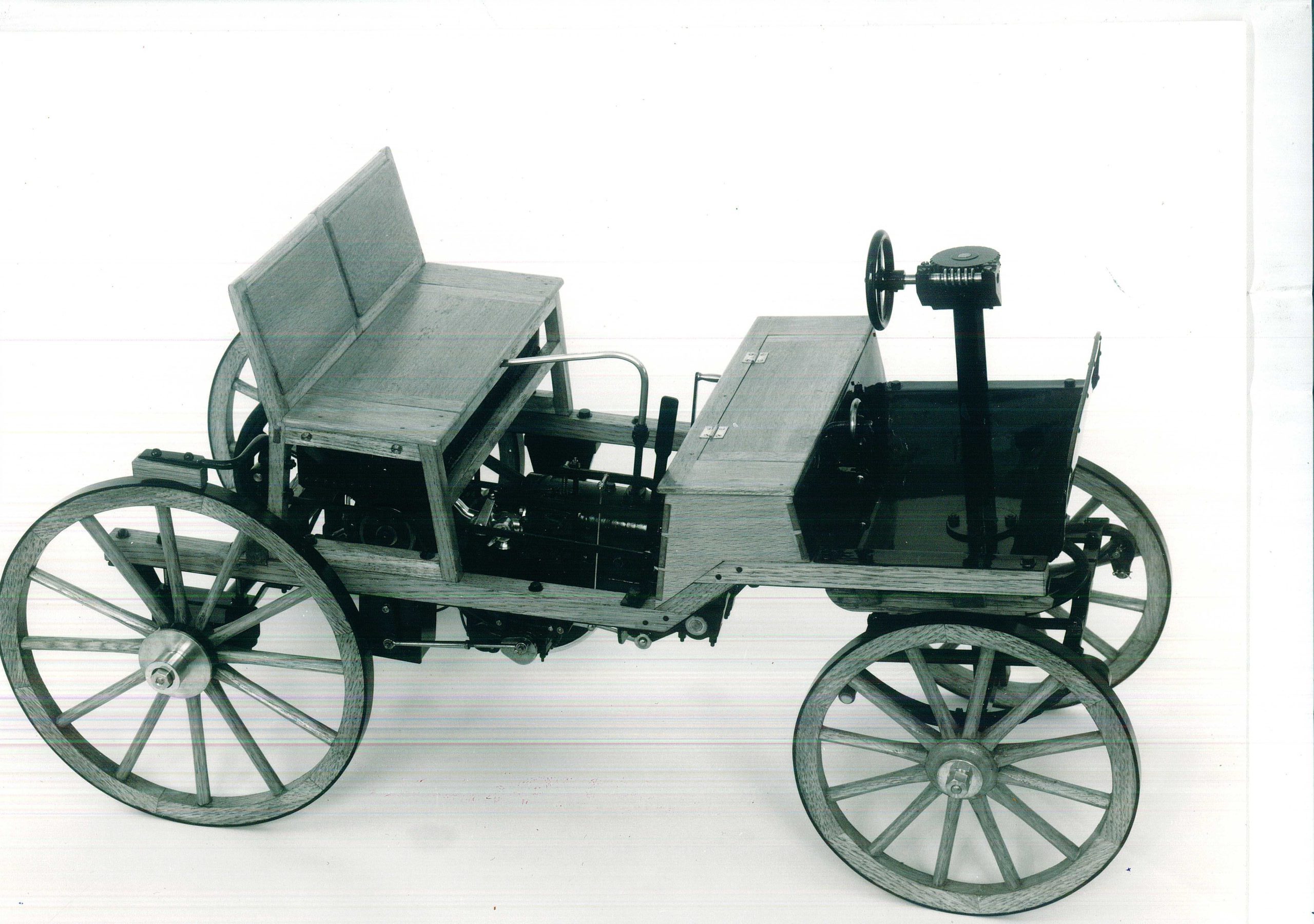
Marcus’ second prototype was saved from destruction by the Nazis and is still on display at the Vienna University of Technology
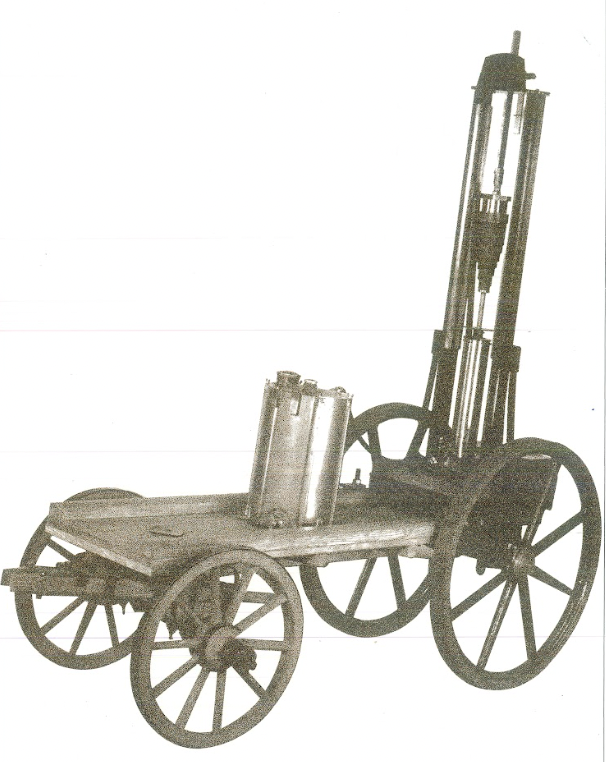
The first gasoline-powered automobile. Marcus’ original prototype, circa 1866
Not yet a Segula subscriber?
Access our full archive online, have print issues delivered to your door, and moreFeel free to share