Jews have traditionally sent New Year cards even when times were hard. The messages show that even the direst circumstances offered hope

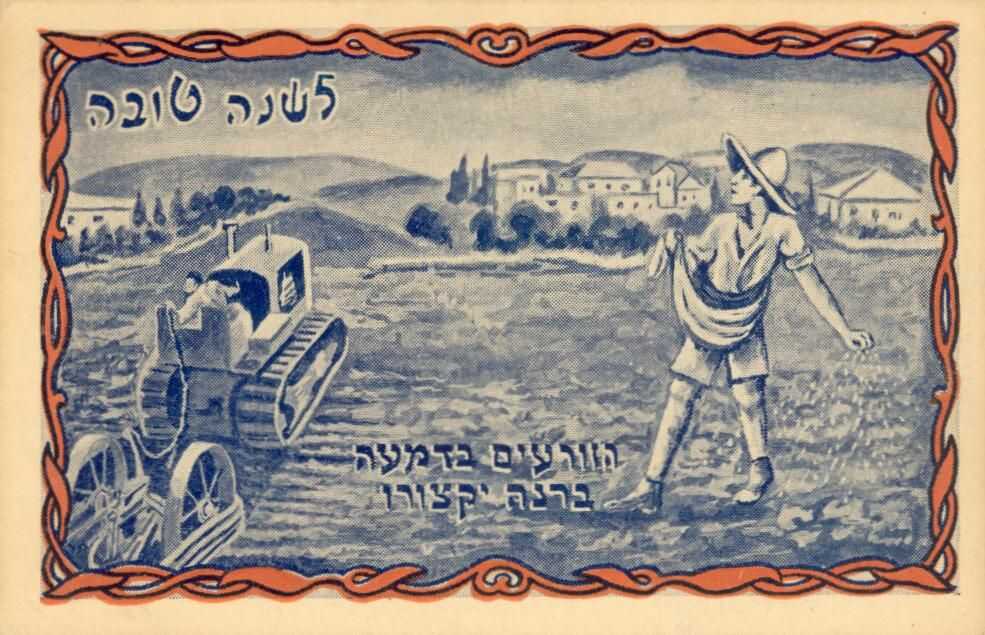
In 1946, Lehi commander Yehoshua Cohen wrote to his parents from the British prison camp where he was being held in Asmara, Eritrea.
I’m enclosing my New Year greetings in a special greeting card we designed and produced in the camp. The words and pictures best express my feelings; I don’t want to add more […]. Our people’s situation is so tragic, it’s difficult to write anything without yielding to a flood of angry thoughts and stormy emotions. And since I know that such sentiments sometimes distress you when coming from me, I’ll be brief this time, and a greeting card will have to suffice. […]
Holiday wishes for a year of struggle and arousal to redemption,
Your son, YehoshuaHappy New Year to all family and friends (Yehoshua Cohen, 21 Av 5706 [August 18, 1946], Otzarot Archive)
Cohen later became a founding member of Kibbutz Sde Boker as well as David Ben-Gurion’s bodyguard. But this letter was sent a day after bad news had reached him. Members of the Lehi underground militia who’d attacked a railway depot in Haifa had been sentenced to death by a British Mandate court. Cohen’s bitter words, hinting at sadness, fear, and turmoil, end on a note of resolve to continue fighting for a Jewish state until the long-awaited redemption.
For generations, New Year cards have nostalgically depicted the past year’s milestones and achievements with such kitschy touches as flowers, butterflies, and white doves. Humorous or poignant, the greetings usually settle on one event that sums up the previous year while looking forward to the coming one. (See “One Hundred Good Years”.)
But what about in wartime? What did people wish each other when pain, loss, and existential fear clouded the holidays? Conversely, how were heartwarming military victory and relief reflected in the New Year wishes of better days?
Not yet a Segula subscriber?
Access our full archive online, have print issues delivered to your door, and moreFeel free to share