Between the Caspian Sea and the Caucasus Mountains, the Jews of Derbent clung to their unique culture despite invaders, revolution, and civil war. Largely uprooted by 20th-century challenges, they still preserve the memory of the town they left behind

The Mountain Jews of the Caucasus – who are also known as Gorsky (Russian for “mountain”), Kavkazi (from the Russian for “Caucasus”), or Juhuro (“Jewish” in their own language) – are an ancient Diaspora community. According to their tradition, they descend from the ten tribes exiled from the Israelite kingdom by the Assyrians in the eighth century BCE. Whenever their exact arrival in the region, a Jewish presence there was first recorded by Armenian historian Movses Kaghankatvatsi in the seventh century CE and by Muslim geographers alIstakhri and al-Mas’udi in the tenth.
The Mountain Jews lived in their own neighborhoods and auls (fortified, hilltop villages) as farmers, gardeners, artisans, and tanners. Like other Jewish communities, they were a minority dependent on the ruling power’s good will, though their isolation in a rugged border region granted them some autonomy alongside their mostly Muslim neighbors.
The Mountain Jews’ language, Juhuri, is a form of Persian written in Hebrew script. This dialect, as well as the community’s proximity to the Persian Empire, indicates these Jews’ possible Persian origins.
Between periods of independence, present-day Dagestan and Azerbaijan (the Mountain Jews’ heartland) have long been a battleground for empires. The area was conquered by the Sassanid Persians in the sixth century, fought over by Arabs and Khazars (whose leaders converted to Judaism) in the late first millennium, conquered by the Mongols (13th century), invaded by the Timurids (14th century), and fought over again by the Persians and Ottomans (15th–16th centuries). In 1813, Persia formally ceded the territory to Russia.
Ashkenazic Jewry associates czarist Russia with oppression, but for Mountain Jews, Russian rule brought freedom. In the 19th century, the community suffered massacres and forced conversions by Islamic revolutionary forces led by Imam Shamil, who sought to throw off the Christian yoke. The resulting Caucasian War ended in victory for Russia in 1864. Mountain Jews had served as scouts, interpreters, and sometimes cavalry and infantry for the Russian army. In return, they were declared “indigenous” to the Caucasus in 1872 and given equal rights with Muslims and Christians.
For the Juhuro, as they called themselves, integration into a European empire also meant increased urbanization, modernization, Russification, and interaction with Ashkenazim. To this day, many Mountain Jews speak Russian and share cultural similarities with other Russian Jews. Nonetheless, the community is rooted in Sephardic Judaism, though with elements common to the over fifty ethnic groups of the Caucasus, including Avars, Azeris, Chechens, and Armenians. (See “Europe’s Edge,” p. 39.)
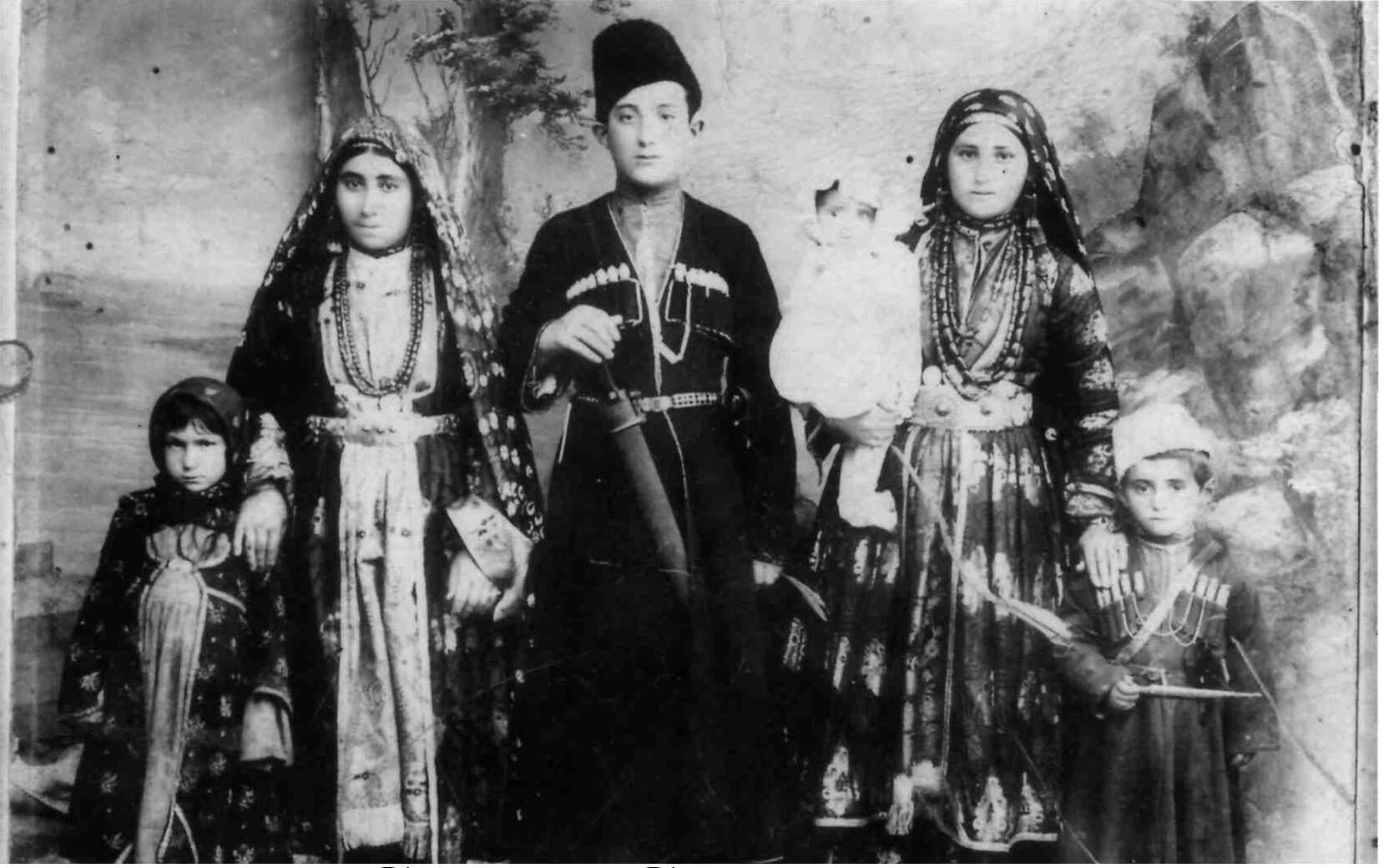
Like other Caucasus peoples, the men wore papakhas (large, round, wool hats) and carried daggers, musicians played the oud (a lute-type instrument), and couples celebrated their marriage (and still do) with the Lezginka folk dance. Mountain Jews also practiced kunachestvo, a Caucasus code of interethnic patronage, and even recognized blood feuds.
This article focuses on the history of the 20th-century Mountain Jewish community of Derbent.
Founded by the Persians in the fifth century, and located in today’s Russian Republic of Dagestan, Derbent is that country’s southernmost and by many estimates oldest city. Settlement of the area dates back to the eighth century BCE. The name Derbent derives from Persian words meaning “barred gate,” evidently alluding to the town’s strategic importance as a Caspian seaport near one of the Caucasus’ few mountain passes. Derbent’s fortifications, including the renowned Naryn-Kala citadel, were built by the Persians in the sixth century and declared a UNESCO World Heritage Site in 2003.
Mountain Jews established the town’s Jewish quarter in 1799, fleeing the destruction of their largest village, AbaSava, during a Muslim pogrom. Over the next two centuries, Derbent became their religious and cultural center.

Dagestan village abandoned in 2015 | Photo: vostokphotos.ru
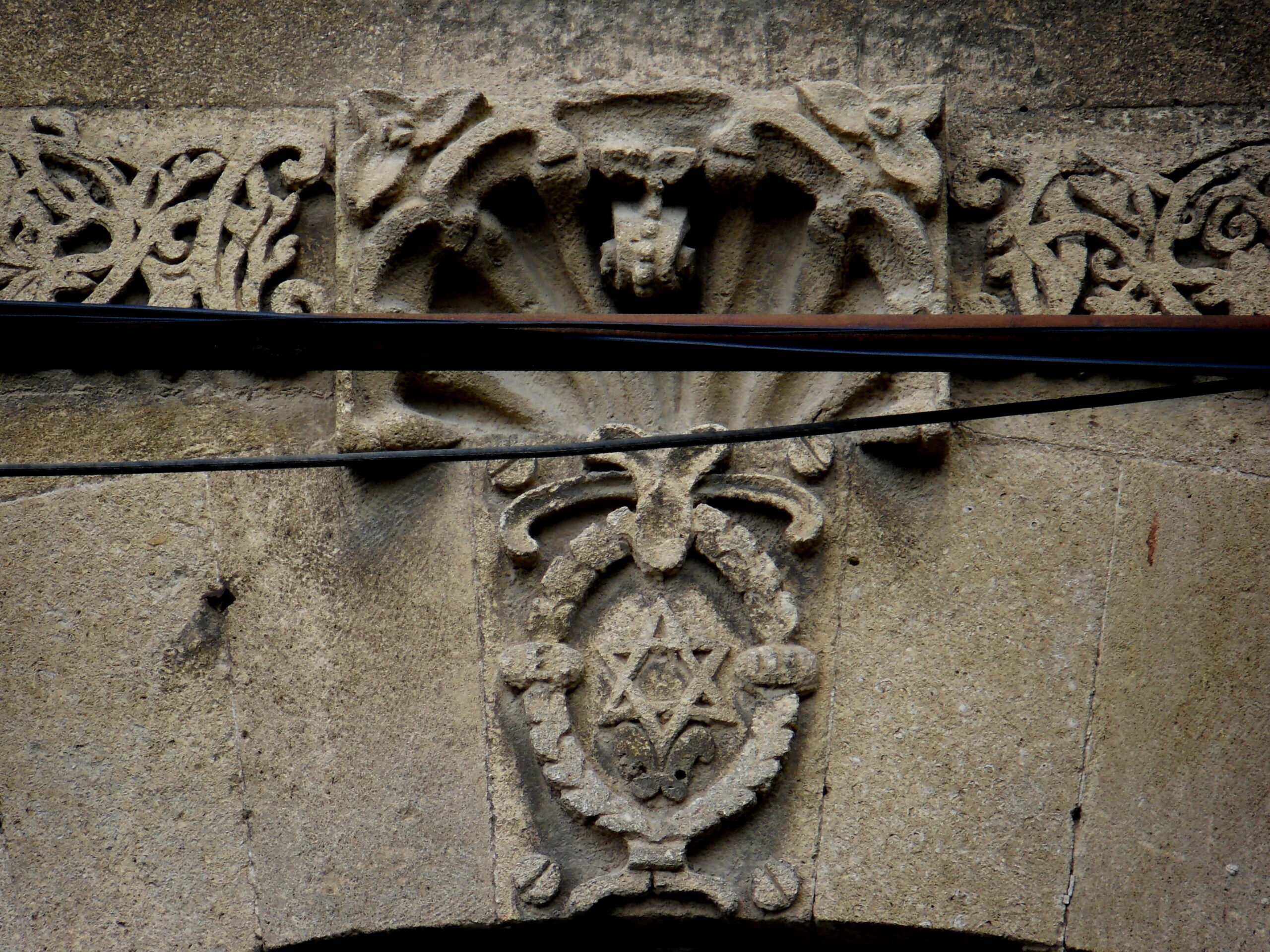
Lavishly embellished lintel with a Star of David over the entrance to a home on Derbent’s Komendantskaya Street
Not yet a Segula subscriber?
Access our full archive online, have print issues delivered to your door, and moreFeel free to share