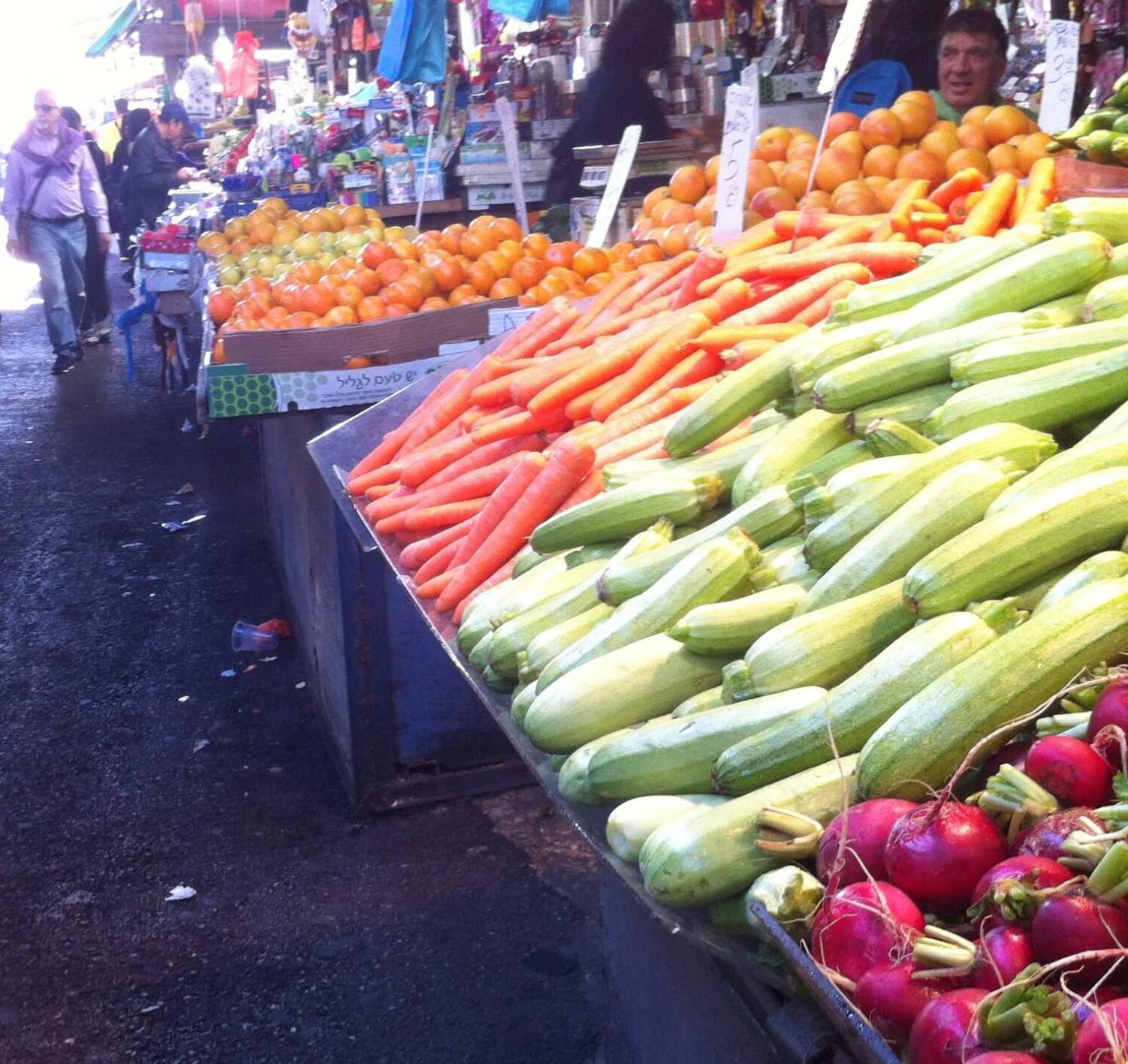
Though the Jewish peddler epitomized the wretched poverty of exile, even prestate Tel Aviv needed someone to sell vegetables. Who plied their wares in the Carmel Market, and how did they get away with it?

Where To?

Nowadays, when one can shop in supermarkets or order online. why bother with old-fashioned, largely outdoor vegetable markets, which here in the Middle East mean leaky roofs, narrow passageways crowded with wobbly, produce-laden trolleys, and dubious business practices? Yet these emporia somehow remain a viable venture, a veritable “shopping experience” fueled by nostalgia and bargain hunting. Tel Aviv’s Carmel Market, centrally located for almost a century in the heart of the White City’s commercial district, is a perfect example. Both locals and tourists enjoy its winning combination of fresh produce and trendy specialty restaurants and coffee shops.
Unlike most markets, however, this one didn’t grow organically out of its easy access to farmers, wholesalers, and customers. Believe it or not, it originated in a small meeting hall in Moscow during the summer of 1913.
Deal of the Century
For Arthur Ruppin, director of the Zionist Organization’s Palestine Bureau, it was an urgent Zionist mission: Wealthy Russian Jews had to be persuaded to invest some of their hard-earned cash in Ahuzat Bayit, the founding association behind a garden suburb built on the sands north of Jaffa just four years earlier – and renamed Tel Aviv in 1910. Ruppin rhapsodized about the importance and potential of developing the land of Israel, but his listeners had no intention of neglecting their thriving Russian businesses to settle some godforsaken corner of the Middle East.
Changing tactics, the activist spread out a map of Tel Aviv, pointed to the empty plots and unbuilt avenues, and touted the project as the deal of the century. Near the shore, an entire street was for sale, in parcels of one thousand square cubits apiece. It was the ideal location for a prestigious neighborhood of ample villas cheaply and easily built and promising a tremendous return – if not for these men, then for their children.
By the end of the evening, the assembled had purchased all the lots on Carmel Street, strictly for investment purposes. Ruppin thus raised no less than a thousand rubles for the Zionist cause, making it probably the most successful real estate deal of his entire Russian trip. Returning to Ottoman Palestine thoroughly satisfied, he duly entered the Russians’ names and plots in the records of Tel Aviv.
A year later, World War I had the Moscow landowners in a stranglehold. They made it through the years of famine and privation, but then the Communist Revolution felled them with one blow. All their Russian property was nationalized, leaving them penniless – apart from their Carmel Street holdings. Escaping Russia by hook or by crook, they finally arrived in war-torn Palestine and came knocking on the door of the Palestine Bureau. The obscure deal “Ruppin’s refugees” had concluded in Moscow turned out to have been the best of their lives.
The once and future entrepreneurs replaced the grandiose plans for a villa neighborhood with a modest housing development more suited to their immediate needs, then cast about for a way of supporting themselves with some additional income from their property. Tel Aviv’s population was mainly craftsmen and laborers, but the former Muscovites had more lucrative plans, envisioning a small fruit and vegetable market right on their street, with stalls available for rent.
Veteran residents objected; the first modern Hebrew-speaking city was supposed to be a cultural center, not a transplanted shtetl with merchants hawking their wares. Why not leave that to Jaffa’s Arab market? But Mayor Meir Dizengoff intervened on behalf of the new arrivals, maintaining that Jewish competition in the produce sector wouldn’t be a bad thing.
In 1920, the Carmel Market opened along the length of the new neighborhood, close to where Carmel Street meets today’s Allenby Street (though then it was simply Sea Road). Yemenite immigrants living nearby in the Kerem Teimanim (Yemenites’ Vineyard) neighborhood promptly opened their own Kerem Market next door. Though the idea didn’t catch on straight away, the Arab riots of 1920–21 redirected Jewish customers from the Jaffa market to the Carmel. Thanks to Dizengoff’s foresight, the Jews had an alternative, for which they were extremely grateful.

Not yet a Segula subscriber?
Access our full archive online, have print issues delivered to your door, and moreFeel free to share