The greatest tragedy of World War One was the fact that its leaders started out fighting yesterday’s war – and their troops paid a terrible price. New weapons wrought carnage on the killing fields, but there were discoveries that saved lives too

On the morning of August 20, 1914, the sun shone brightly on the fields of Lorraine. Forty-four years had passed since France had been humiliated by the German conquest of Alsace-Lorraine. Now, at the slightest hint of German aggression, the French army was determined to reclaim these two predominantly French provinces. Forty-four years of careful planning and an entire nation thirsting for revenge formed the backdrop to the start of World War I.
At the heart of French military strategy was Plan 17, a secret scheme devised by the General Staff describing the army’s deployment for invasion of the German-occupied provinces in minute detail. Following this incursion, a military offensive was to advance deep into enemy territory, striking a fatal blow to the capital, Berlin. French troops still marched to the beat of Napoleon’s “doctrine of the offensive,” and to quote French general Ferdinand Foch: “There is only one way of defending ourselves – to attack as soon as we are ready” (Barbara Tuchman, The Guns of August [New York: Ballantine Books], p. 233). Defense was akin to disgrace; retreat was unthinkable. The French army’s guiding principles were attack and honor.
Miscalculations
And so, on that summer morning, the French army divisions, conspicuously dressed in their traditional red trousers and blue shirts, polished helmets glinting in the sun, prepared to attack. The officers, white-plumed graduates of the elite Saint Cyr military academy, adjusted the fit of their gloves as if for a ball. The heart of the nation throbbed at the approaching liberation of Lorraine; everything was set for a French victory that would wipe out years of shame.
The French senior command had drilled its troops according to precise calculations. In the twenty seconds it would take the enemy infantry to raise its weapons, take aim, and fire, French soldiers were to advance fifty meters, reaching the German trenches, where they were to neutralize their opponents. A light artillery barrage was to keep the Germans in the trenches, rendering their fire even less effective.
But the French had miscalculated. Well camouflaged in khaki uniforms and entrenched in fortified positions, the German army awaited the onslaught. Armed with powerful new machine guns, they could return fire within eight seconds. Undeterred by the French light artillery, they turned the fields of Lorraine into a vast death trap for hundreds of thousands of young Frenchmen. At the end of the day, all that remained of the French pomp and glory was a grotesque pile of densely packed corpses. It looked “as if the place had been swept by a malignant hurricane” (ibid.), leaving a terrifying silence in its wake. The debacle came to symbolize the entire war, rendering Napoleon’s doctrine obsolete. France had been rudely awakened and thrust into the harsh military reality of the 20th century. Its error had resulted in crushing defeat.
Effective Entanglement
World War I, in which millions lost their lives, lasted just over four years. An assortment of nations bound by complex and sometimes obscure treaties fought an unremitting, frequently incomprehensible war, with battlefields scattered far and wide. Often regarded as the beginning of the 20th century’s litany of revolutions and bloodshed (Winston Churchill called it “the terrible twentieth”), the war produced many technological innovations. While World War II brought the world the atom bomb, the computer, guided rockets, and jets, World War I also spawned, almost unnoticed, a multitude of military and civilian developments that affect our lives to this day. With the passage of time, the technological innovations of the Great War have been largely overshadowed by the greater social and political changes – wrought by Communism, Fascism, and nationalism – that followed it.
The most destructive invention of the Great War, as it was shortsightedly dubbed, originated about forty years earlier in the American Midwest. To control his large cattle herds, farmer Joseph Glidden fashioned a fence out of steel wire embedded with clusters of metal spikes, or barbs. Although barbed wire had served military purposes before World War I, during the war it became the ultimate deterrent. Easy to use and quick to install, barbed wire fences effectively hindered any advancing infantry. Soldiers attempting to storm trenches swiftly became entangled and fell easy prey to enemy fire. Though heavy shelling, especially with time-fuses to delay explosion for maximum effectiveness, could tear openings in the wire fencing, barbed wire only really met its match with the introduction of the tank (see below).
Another feature of World War I was the widespread use of machine guns, then known as firing machines. The Gatling guns of the late 1800s had to be manually cranked, were extremely cumbersome, and frequently jammed. Just prior to World War I, however, more sophisticated models were developed, operating on a principle still in use today – a cocking and reloading mechanism that utilizes the gas emitted by the previously fired bullet. A cooling device was then added to prevent overheating. The new weapons could be operated by a crew of two – a gunner and an assistant to carry the ammunition – and accurately fired hundreds of bullets a minute without requiring reloading. The guns were also portable. In short, the effect was devastating.

The combination of carefully positioned machine guns and barbed wire fences made lines of defense almost impenetrable. Infantry and cavalry assaults became useless, but millions lost their lives before the lesson was learned. A century earlier, the British had held out against Napoleon at Waterloo solely by deploying about ten thousand troops along each kilometer of battlefront. Thinner lines of defense would have been breached. In 1914, a deployment of two thousand troops per kilometer was enough to withstand almost any attack, without much effort. The result was a four-year stalemate on the Western Front, and a generation of young men slaughtered.
Flying and Rumbling
Many new weapons were conceived in an effort to break this deadlock. One of the most famous is the tank. Harnessing the automotive technology of the late 19th century, tanks were gradually introduced on the battlefield in increasing numbers, thanks to mass production. Improved navigability and armor plating also played their part. Although attempts had been made to develop an armored vehicle as early as 1903, the Allies built the first operational tanks only in 1915. Winston Churchill, then First Lord of the Admiralty, was instrumental in commissioning their development and pioneering their use. By 1917 tanks had become an effective weapon, and by the time of the Allies’ major offensive in the summer of 1918, the vehicles were in widespread use.
Yet even the most sophisticated tanks were unreliable and mechanically inadequate. Slow and cumbersome, they frequently broke down after just a few hours. As a result they had little real impact on the battlefield. Mainly they protected advancing infantry, significantly reducing losses. Only during the German blitzkrieg of the Second World War, twenty years later, did armored divisions become a decisive factor in warfare.
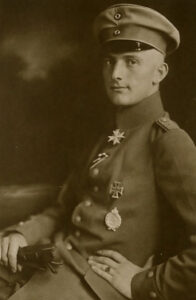
The airplane also made its military debut in World War I. Invented by the Wright brothers in 1903, light aircraft initially replaced manned hot-air balloons for surveillance and reconnaissance purposes. Even the early, crash-prone flying machines were considered safer than the gas balloons. Soon planes were used for short air raids. Once both sides realized the potential of air power, a battle for the skies ensued. This was the start of the German “flying circus,” headed by legendary commander Manfred von Richthofen, the Red Baron. Richthofen downed about eighty enemy aircraft before his own crashed in Allied territory in 1918. Despite the wholesale slaughter going on, his enemies gave him a full military funeral, even sending photographs to the Germans. But like tanks, planes contributed little to the outcome of World War I. Although thousands were built during the war, they were used mainly for reconnaissance.
There were other innovations and improvements as well. The submarine, invented several decades earlier, was upgraded during the war, while antisub techniques were also developed, including depth charges and sophisticated sonar equipment, such as the hydrophone. Although the walkie-talkie had been invented before the war, it was now greatly improved and became an important command and control tool.
Not yet a Segula subscriber?
Access our full archive online, have print issues delivered to your door, and moreFeel free to share