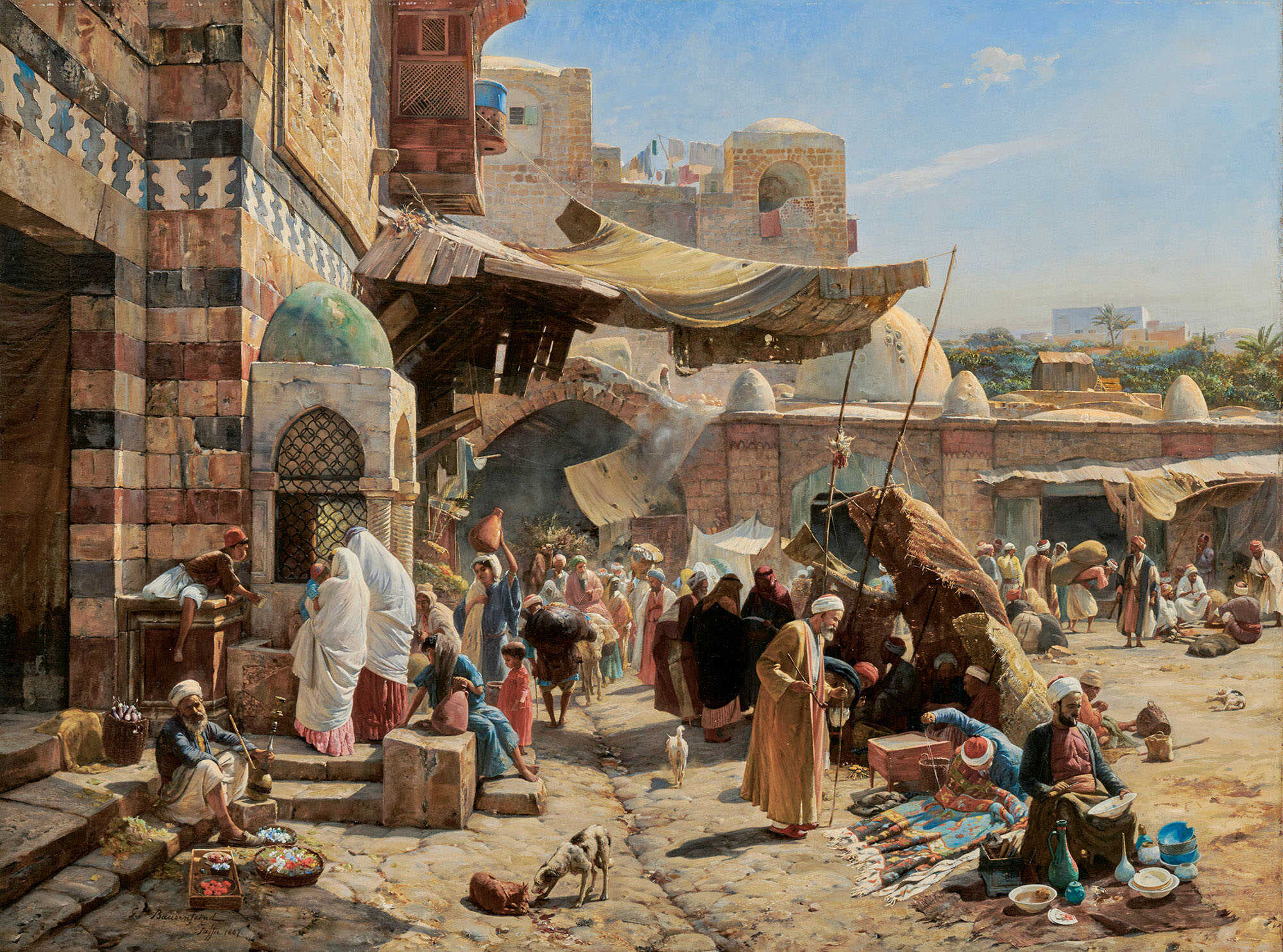
Surprisingly enough, the guiding hand behind eastern European Zionists’ early colonization efforts was a Moroccan Jew raised in Jaffa. He succeeded because, as the colonists discovered on arrival in Palestine, Moroccan Jews had gotten there first

In chronicling the various waves of Zionist immigration, historians overlook the Jews who arrived in the first half of the 19th century and earlier, before Hovevei Zion began investing in colonies and Herzl wrote The Jewish State. Although the secular Zionists of the second and third aliyot (1904–23) have overshadowed the religious pioneers of the first (1881–1903; see “Counting Zionists,” Segula 52), no one ever mentions that a great many of the Jews who relocated to Ottoman Palestine in the mid-1800s actually came as a group from Morocco.
Among those forgotten proto-Zionists was young Avraham Muyal, a rare Sephardic member of the early Zionist establishment. Born in Morocco in 1850, Avraham was two when his family settled in Haifa. The Muyals later moved to Jaffa, where he became a lifelong fixture, leading its small Jewish community.
In the four years prior to his untimely death at age thirty-five, he was constantly working on behalf of the first Zionist colonies – Petah Tikvah, Rishon Lezion, Ekron, and Gedera. In fact, before the word Zionism had even been coined, he and fellow Moroccans (primarily in Jaffa) were active in land acquisition and other aspects of these fledgling settlements (see “Jaffa’s Leading Lights,” p. 48). Muyal was the most prominent among his colleagues, however.
From Rabat to Haifa
The Muyal family originated in Spain and, after the expulsion, Morocco. Some of the clan became rich; others were respected scholars or professionals, including doctors. According to family legend, some of their number moved to Ottoman Palestine as early as the 17th century, but no records corroborate this claim.
Aaron Muyal, Avraham’s father, was born in Rabat in 1813. Although a scholar, Aaron was a firm pragmatist. His father, Moshe, traded extensively in Europe, and Aaron accompanied him from age sixteen, learning the intricacies of customs duties and international transactions.
At eighteen Aaron married Sa’ada, comely daughter of the wealthy Amiel family, and her dowry added to the generous sum he received from his father to launch himself in business. While busily trafficking in grain and precious metals, he fathered four sons: Yosef, Avraham, Shalom, and Eliyahu.
Like his father, Aaron supported the local rabbis and Talmudic academies. A close friend was Rabbi David ben Shimon (acronym Radvash; also known as Tzuf Dvash [Honeycomb], as in Proverbs 16:24), who headed a large yeshiva in the nearby town of Salé. Their association strengthened in later years, when both uprooted themselves and their families to realize what seemed at first an impossible dream.
As his fortieth birthday approached, Aaron Muyal felt that material success was slowly crushing his life’s ambition: to settle in the land of Israel. So in 1851, he began preparing for the adventure of a lifetime. Approaching family and friends, he suggested that they establish their own colony in Zion. (At much the same time, another Sephardic proto-Zionist, Rabbi Yehuda Alkalai of Semlin, Bulgaria, was touring western Europe to promote his messianic vision of Jewish settlement in Ottoman Palestine.)
The response to Muyal’s appeal was surprisingly positive; quite a few sold their property and dissolved their businesses in preparation for the big move. In 1852, as many as 180 Moroccan Jews set sail for the Holy Land in a small ship. After a few stormy weeks at sea, during which the vessel docked at various Mediterranean ports, it finally anchored in the modest harbor of Acre. The local Jewish community welcomed the newcomers enthusiastically, and shortly afterward they made their way to Haifa.
The few Jews already living in the then sleepy little town took the group in. The Muyal family remained in Haifa long enough for an experienced businessman like Aaron to recognize it as a dead end. He’d smuggled enough silver, gold, and precious coins into the country for a substantial investment, but a few inquiries convinced him that any hopes of establishing an independent colony in the Haifa area – or anywhere else in the Holy Land, for that matter – were doomed.
In view of the primitive conditions prevailing in Ottoman Palestine, Aaron concluded that he and his comrades had best move to relatively upscale Jaffa, joining its few dozen Moroccan Jews (known as Moghrabim, “westerners,” since Morocco is west of the land of Israel). Arriving in 1855, Muyal and co. were greeted joyfully by the Chelouche, Benchimol, Abutbul, Matalon, and Chirozin families of Morocco and Algeria. Rabbi Yehuda Halevi of Ragusa, rabbi of Jaffa for many years, was particularly helpful, and Avraham Chelouche, head of the community, took the Muyals under his wing. A few years later, he asked Aaron to succeed him.
Not yet a Segula subscriber?
Access our full archive online, have print issues delivered to your door, and moreFeel free to share