
Opera singer Nehama Lipshitz defied the Soviets not just by performing in Yiddish and Hebrew but by collaborating with Israeli undercover agencies in the USSR

Deep in the Soviet Union, where any public demonstration of Judaism carried a prison sentence, who would dare perform in Yiddish? Yet that’s exactly what Nehama Lipshitz did, serenading the country’s forgotten Jews with her clear soprano. Pale shadows of the vibrant communities obliterated by the Holocaust, their hearts warmed to her haunting melodies of the past. The young opera singer and her listeners forged a tacit understanding, both personal and political. These seemingly innocent musical performances were the heart and soul of Nehama Lipshitz’s contribution to keeping Jewish culture and identity alive in the Communist bloc.
Lipshitz was born in 1927 to Zionist intellectuals from Kaunas (known in Polish as Kovno), Lithuania. Her father, Dr. Yehuda Zvi-Hirsch Lipshitz, was a pediatrician as well as a teacher and principal, having studied in Lida, Belarus, in the yeshiva run by the founder of the Mizrahi religious Zionist movement, Rabbi Yitzhak Yaakov Reines. Lipshitz was also a skilled violinist, and his wife, Batya, “sang endlessly,” according to her daughter. Nehama attended the Kaunas Real Hebrew Gymnasium until the outbreak of World War II, when she, her parents and sister fled east to Uzbekistan ahead of the conquering German army. Many of her relatives were murdered in the Kaunas ghetto or shot to death at the nearby Ninth Fort.
Returning to Lithuania with her family after the war, Nehama studied at the Vilnius Conservatory of Music and was soon soloing with the Kaunas Opera, then with the Lithuanian Philharmonic in Vilnius and elsewhere. Her roles included the heroine of Rossini’s Barber of Seville and Gilda in Verdi’s Rigoletto, but some bristled at seeing a Jewess center stage. Simultaneously, alongside her operatic career, Lipshitz began performing for Jewish audiences in Yiddish.
Religion was of course frowned upon in the Soviet Union, with Jewish culture and identity under attack since the Russian Revolution in 1917. By the 1950s, all that remained of Judaism in Russia was anti-Semitism and the faint echo of customs preserved by a handful of elderly Jews. In the Baltic States, however, where Nehama grew up, the picture was slightly different. Lithuania, Latvia, and Estonia were annexed by the Soviet Union only in the summer of 1940, so their few surviving Jews still remembered the thriving Jewish culture abruptly destroyed in the Holocaust.
In addition to well-known melodies, Lipshitz surprised listeners with a new libretto based on Yiddish author Sholem Aleichem’s novel Wandering Stars. In 1958, she went out on a limb, singing in Yiddish in a Soviet song competition – and won! The judges cited her “stage artistry and professionalism as a singer” rather than her content. Her plan, as she explained in an interview many years later, was to be declared a Yiddish performer, enabling her to tour Russia with her new repertoire. When officials asked what language she performed in, she replied nonchalantly, “Aramaic,” well aware that they’d never know the difference.
In 1959, on tour in Ukraine, Lipshitz realized her true vocation:

Singing in Yiddish and Hebrew came naturally to me, but I understood its importance only in 1959. At a concert in Kiev, I sang a lullaby to [those sent to eternal rest at] Babi Yar, the killing pits that swallowed up Ukrainian Jewry. Immersed in the music, I didn’t notice at first that I was singing so close to where [the slaughter] actually happened.
When I finished the song, no one in the audience clapped. There was a tense silence. Suddenly someone stood up and cried, “Why are you sitting there like that? Get up!” As one, they all rose from their seats and cheered.
That was the end of my classical performances. I knew then that they weren’t the reason I’d survived after so many of my relatives and friends had been killed in the Holocaust. (Yaakov Bar-On, “She Found Nehama (Comfort) – Singer Nehama Lipshitz Explains What Shattered Her Dream,” Maariv, December 23, 2015, p. 18)
With Babi Yar an industrial dump at the time, and the Holocaust taboo under the Soviet regime, the authorities promptly ordered Lipshitz to eliminate all Jewish nationalist content from her act. But she found a way to get her point across.
Tombstone without a Grave
Nehama’s concerts were now carefully monitored and had to include songs from other Soviet minority cultures, paying lip service to the ideal of a global Communist brotherhood. Yet she continued singing in Hebrew and Yiddish all over the Soviet Union, though teaching Hebrew could result in Siberian exile, and though the hermetic nature of the Iron Curtain prevented her from refreshing her repertoire with the latest Israeli tunes.
Thousands of Jews and non-Jews attended Nehama’s performances. The Jews in the audience thirsted for any hint of Jewish culture, a reminder of the heritage wiped out by a generation of Soviet repression following hard on the heels of the Holocaust. Lipshitz referred to her concerts as “a tombstone for a non-existent grave” (Michael Lokin, On Nehama Lipshitz’s Life and Works, 1927–2017, Jewish Music Research Centre, [Hebrew]).
She knew her audience and how to connect with it under the censors’ nose. “If you get it, you get it,” hinted the daring artist’s costume as she took the stage in a black dress draped in a long, white scarf with black stripes. It was only a scarf; no one could accuse the impudent young woman of including ritual objects in her performance. On the other hand – and they all knew it perfectly well – a tallit (prayer shawl) onstage! (Lokin)
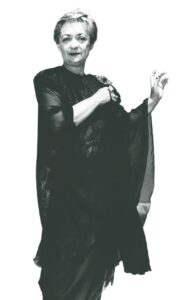
The atmosphere was electric. Even though many in the audience couldn’t understand the lyrics, they absorbed Nehama’s hidden messages. A Yiddish ballad, sung with her eyes closed and her body still; then suddenly an up-tempo Hebrew number. Singing of the blue Sea of Galilee and the bright green fields of the Jezreel Valley, Lipshitz swayed as if in prayer, raising and lowering her hands with the beat. Twenty years later, she described the creative process behind her act:
I decided to use helpful hints and gestures […]; the audience was watching for any little sign, immediately catching on to my every movement, each raised eyebrow, any pause in the melody, the slightest trace of emotion. A magical, mysterious connection was forged with the crowd. (ibid.)
Despite the constant surveillance, the audience passed notes up to Lipshitz. Whatever Hebrew song was requested, Nehama sang it – and was rewarded with bouquets.
“She Did Our Job for Us”
In 1959, Lipshitz was allowed to leave the Soviet Union for the first time, to perform at the centennial of Sholem Aleichem. After meeting her in Vienna, an Israeli journalist wrote:
She approached me with joyous spontaneity and struck up a conversation. In Hebrew. Without batting an eye, regardless of all the Russians standing nearby, she spoke Hebrew […]. When we parted, she wrote her address in Vilnius in Latin characters on the concert program, adding beneath in clear Hebrew script, “Shalom, until we meet again!” (A. Ungar, “Nehama Sang in Yiddish and Spoke in Hebrew,” Maariv, May 14, 1959, p. 2)
At her first performance in Paris, Lipshitz brought the house down; the theater was packed with Jews. She considered defecting to the West, but aside from family obligations, another issue deterred her:
The order came from Shaul Avigur, director of Nativ, the organization that dealt with Soviet Jewry – I was to return to Russia. […] “We need you there,” he led me to understand. (Bar-On, p. 18)
Twenty-five years after Nehama had settled in Israel, Yehoshua Perat of the Liaison Bureau (the adjunct to the Prime Minister’s Office responsible for maintaining contact with Jews in the Communist Bloc during the Cold War) explained in a television special marking the anniversary:
The fact was, she did our job for us. What did we want? A Jewish revival. But she made it happen. (“Nehama – Tribute to Nehama Lipshitz on the 25th Anniversary of Her Immigration to Israel,” Israel Broadcasting Authority, June 19, 1994)
Nightingale of Soviet Jewry
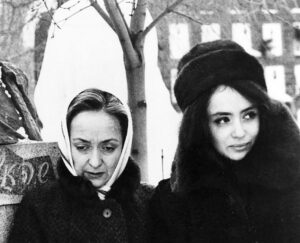
Two years after Nehama Lipshitz’s death, her daughter, Roza Litay, revealed some of her secret activities. To strengthen Jewish identity and culture, Lipshitz collected works by Jewish poets and composers and disseminated them throughout the Soviet Union. (The entire collection is currently being transferred to the National Library of Israel in Jerusalem.) Nehama also handed out money to impoverished Jews: the hungry in Kiev, students, and activists who’d promoted Jewish culture under Stalin. And she informed the Israeli Embassy in Moscow of her upcoming performances, so its agents could be there to reach out to her fans. Aryeh Lova Eliav worked at the embassy:
Nehama was the nightingale of Soviet Jewry. Every one of her concerts pulled at the heartstrings. […] We capitalized on the excitement generated by her appearances to make contact with Jews. (Bar-On)
The Liaison Office covertly referred to Nehama’s efforts as the “Light Music Department.” The embassy even furnished her with records, sheet music, and books, so she could update her repertoire. She in turn provided lists of key figures in the various Jewish communities, enabling officials to piece together what was happening to Jews all over the USSR.
For Lipshitz, the enterprise was by no means risk-free. In the same televised tribute, Prof. Aryeh Harel, then Israel’s ambassador to Moscow, recalled:
I put her in danger, but it was a risk she wanted to take. She wasn’t afraid of it. She wanted to do it, because she felt she was expressing not only herself, but the entire Soviet Jewish population.
Nehama’s audiences, too, knew the perils involved and saw her as a role model. Another present at the televised tribute was famed refusenik Yosef Mendelevich:
We felt that here was someone who was taking a big risk, treading a new path, and showing us the way. When I was very young, I thought she had to be the director of the underground [dissident movement]. Who she was, what she sang, […] what she did was important for all of us. […] she was bringing us all onboard, making us all work with the same spirit, unafraid to get up and sing.
In July 1966, Israeli singer Geula Gil toured Russia with her two guitarists. The morning before their performance in Vilnius, the musicians visited the killing fields of Ponar, where they saw the enormous pits in which tens of thousands of Jews were shot to death. These impressions lingered as the band took the stage. Said Gil:
When I got to the song “My God, My God, Why Have You Abandoned Me?” Nehama Lipshitz suddenly burst onto the stage, took me in her arms, and hugged me, sobbing piteously in front of everyone. And I, overwhelmed as I was, also burst into tears, and the whole audience wept with us. It was the most moving moment in my entire life. (Yaakov Sharet, “Here Comes Nehama,” Yamim Ve-leilot [Maariv entertainment supplement], March 21, 1969, p. 2)
That day, Lipshitz collapsed and was hospitalized. Rumors spread that she’d been arrested by the KGB.
Though the secret police were tracking Nehama and even searched her apartment, they found nothing. There were informers, some of them Jews hoping to curry favor with the authorities. One snitch reported that Lipshitz was corresponding with people in Israel and had affixed a picture of Tel Aviv to her radio. When the KGB demanded she name all those attempting to revive Jewish culture in Russia, she handed over a list of people already executed under Stalin.
Not yet a Segula subscriber?
Access our full archive online, have print issues delivered to your door, and moreFeel free to share