
For many Israelis, the shofar blast that concludes Yom Kippur still evokes the sirens, tears, and prayers of the war that broke out forty years ago on that fateful day. Three veterans’ stories and how the Yom Kippur War affected their faith

The first was in the armored corps. His tank took a direct hit, and he alone survived, burnt from head to toe. In the long months he lay in a hospital bed, he came to a new understanding of suffering and faith. The second was from the Nahal pioneer infantry unit. Atop reconquered Mount Hermon, he discovered his best friend had been killed. The resulting religious and political questions gnawed at him to his dying day. The third was a paratrooper. Crawling under fire to evacuate the wounded, he emerged somehow with his belief in his fellow man not just intact, but strengthened.
On Yom Kippur, October 6, 1973, a Syrian and Egyptian attack on Israel’s northern and southern borders caught the country unawares. As reserves were pulled out of synagogues and bused straight to the front lines, Israel struggled to block the advancing enemy. For the first time since the end of the War of Independence in 1949, Israeli־held positions were conquered and held – the Syrians recovered the strategic outposts on Mount Hermon, and the Egyptians crossed the Suez Canal and moved rapidly across the Sinai Desert. Heavy Israeli casualties in the first days of fighting caused widespread demoralization, as did the evacuation of entire communities on the Golan Heights.
It took four days in the north and over a week of bloody combat in the south before Israeli forces managed to turn the tables and launch an offensive. Eighteen days after the war began, a cease־fire was declared. Israel had recovered all the positions it had lost, had advanced on the Egyptian front to within a hundred kilometers of Cairo, and was in firing range of Damascus in the north.
Despite Israel’s victory and its Arab aggressors’ humiliation, the Yom Kippur War is remembered as the Jewish state’s first defeat, the first crack in the myth of its invincibility. For the three soldiers we are about to meet, the war raised questions that shaped the rest of their lives.
“God Lies in Broken Hearts”
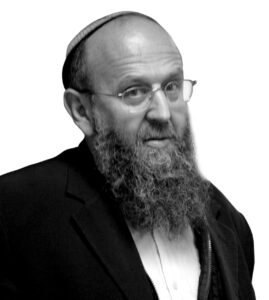
Rabbi Shimon Gershon Rosenberg (known by the acronym Shagar) was an outstanding educator with a unique outlook. He died of cancer six years ago, leaving behind a philosophical legacy that boldly confronts the tensions of a postmodern world.
During the Yom Kippur War, Rabbi Shagar drove a tank in the battle of Nafakh, in which a vastly outnumbered Israeli battalion held back the Syrian advance at a crucial crossroads in the Golan Heights. He had married only six months earlier.
“He was called up as Yom Kippur ended and was sent up to the Golan Heights the very next day. His forces were ambushed very early in the war,” his widow, Miriam, told me in her Alon Shvut home. “He rarely spoke of it. His tank took a direct hit. He lost consciousness and awoke to find the tank filled with smoke. He was badly burned but managed to extricate himself only seconds before the tank went up in flames reaching several stories into the sky. There was no way of evacuating the wounded. Two of his former classmates, Shmuel Orlan and Yeshayahu Holtz, were left behind. The thought that he might have saved them always haunted him.”
Rabbi Yaakov Medan, cohead of Har Etzion Yeshiva, also fought in that battle. In a documentary about Shagar, Medan recalls those horrifying moments: “Syrian tanks had ambushed them at the turn in the road. We could only pray. All I had was my gun. Moving on, we came across the wounded from the first tanks. The Syrians took aim at us but missed. Suddenly, I recognized Rabbi Shagar. He was in terrible shape. His face was completely scorched; he was shell־shocked and badly wounded. You could see death in his eyes.”
Medan pulled Shagar into his tank and took him to the battalion’s medical station. From there he was transferred to Rambam Hospital in Haifa, where he was treated for several months. “Subconsciously, he remained convinced that other members of his tank crew had somehow survived,” recalls Mrs. Rosenberg. “But after he’d been in the hospital two weeks, someone from the military rabbinate arrived with items found in what was left of the burnt tank. He asked [Shagar] to identify them.”
Rabbi Shagar attended his comrades’ memorial services every year – on the day after Yom Kippur – even after their parents had passed away. “He was always very agitated that day,” she adds.
In a eulogy for one of his students who was killed in the First Lebanon War (1982–5), Rabbi Shagar remarked:
Life is beautiful, and never more so than when death confronts us – the love people share, friendship, children, even just a deep breath of fresh air under blue skies. The grass next to the burning tank is green, ever so green. And there, right beside these fearsome sights, the Divine life and breath is right there. And the man who has survived the fire ponders how. And then he is gripped by a burning desire to kneel before the Divine right there in that awful place and cry out to the heavens: For what? And why? And saddest of all – why do we think to ask only when war overpowers us? Why does man find the way to his Creator only through suffering? (Rabbi Shimon Gershon Rosenberg – Shagar, I Seek Your Face [5768], p. 214 [Hebrew])
Not yet a Segula subscriber?
Access our full archive online, have print issues delivered to your door, and moreFeel free to share