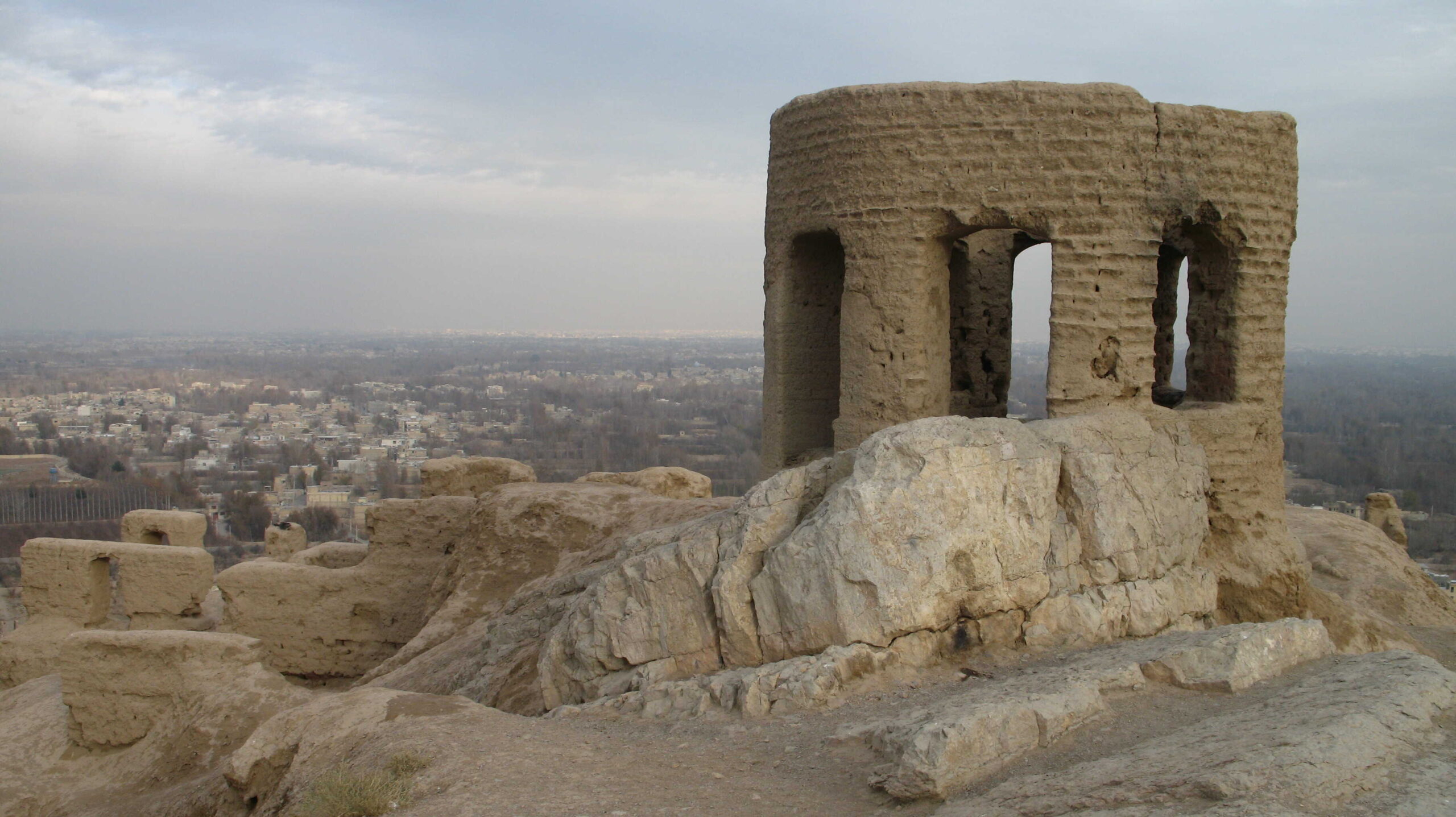
In the Persian Empire of the book of Esther, the Gnostic fire worship of the Zoroastrian faith reigned supreme. The meeting of Persian and Jewish cultures generated mutual influences as well as sparks of confrontation

On November 26, 2008, a Pakistan-based terrorist group unleashed three days of fatal strikes on Mumbai, India. People around the world looked on in horror as the attacks, primarily in the city’s high-class southern end, targeted economic, tourist, transportation, and medical centers. Beyond the obvious tragedy for the residents of Mumbai, the majority of whom are Hindu, for two small religious groups with communities spread across the globe, the Mumbai assault struck personally. The Parsis – a group of Zoroastrians who immigrated to India from Iran in the Middle Ages due to religious persecution – witnessed the attacks up close. For centuries, the Parsi community has been concentrated in South Mumbai, and some of the structures targeted were proud symbols of its success on the subcontinent. Among Jews, the focus of the attacks was the Chabad House – a spiritual and physical watering hole for Israeli and other Jewish tourists located in an old Zoroastrian landmark known as Nariman House. Even now, the attacks remain a painful memory for Jews. In the Israeli media, discussions of the Mumbai tragedy are often heartbreakingly juxtaposed with a photo of the smiling, radiant young religious couple who ran the Chabad House, who were murdered there along with four others.
A few months before the attacks, I was living in Manhattan’s Little India. One rainy Friday afternoon, I sat down with anthropologist Leila Vevaina of the New School, who was writing a thesis on notions of communal space in Mumbai’s Parsi neighborhood, where she was born. In the course of her research, Leila had learned of the Jewish concept of the eruv and was fascinated by the way eruvin have encouraged Orthodox Jews to congregate in neighborhoods delineated by ritual poles and strings. Leila interviewed me extensively. As a “native informer,” I initiated her into the intricate and controversial world of eruv building. For my part, I learned about the distinctively rich texture of Parsi life. As I listened to Leila’s descriptions of her family-centered community, with its emphasis on education, drive, and success, and the intertwining of ritual and food, it began to sound familiar. Knowing she had done considerable field work in South Mumbai, I sent her an e-mail when the attacks struck to check that she was safe. I was relieved to learn that, although shaken, she and her family had escaped harm.

One or Two?
My observations about the similarities between Jews and Parsis are not the product of a private idiosyncrasy. Indians often refer to Parsis as “the Jews of India” – something of a misnomer, since Jews have been in India longer than Parsis. Recent writings on Zoroastrianism abound with comparisons to Jews and their exilic communities. And in certain respects, the Parsi story resembles the Jewish American one. As for the longue durée, Jewish history has been intertwined with its Zoroastrian counterpart for thousands of years.
Still, from a theological perspective, Jews and Zoroastrians could not be more different. Judaism is the classic expression of monotheism; Jews believe in a single, exclusive divine power, who is worshipped though the performance of commandments and the avoidance of sin. Zoroastrianism, on the other hand, is quintessentially dualistic. Two powers, the good Ahura Mazda (“Lord Wisdom”) and the evil Angra Mainyu (“Evil Spirit”), face off in a millennia-long cosmic battle. The duty of good Mazdayasnians – or worshippers of Mazda, as Zoroastrians are also known – is to fight for goodness and oppose evil in its many permutations, including falsehood, impurity, and insects.
If we take a closer look, however, this apparent dichotomy is not nearly so stark.
Jews and Zoroastrians met in the wake of Cyrus the Great’s conquests of Judea and Mesopotamia in the mid-sixth century BCE. As the first Persian emperor, Cyrus had a pragmatic, even pluralistic approach to the many religious communities and temples dotting his vast new empire. Cyrus’ own religious convictions seem to have included worship of Ahura Mazda as well as fire – a central Zoroastrian precept. Two generations later, Darius I had an inscription carved in a rock not far from Kermanshah, in Western Iran. There, in Old Persian, the king declared his allegiance to Ahura Mazda, to whom he felt he owed his kingdom. In typical Zoroastrian fashion, Darius’ archenemy is presented as none other than The Lie – the conceptual counterpart of Angra Mainyu.
The earliest source relating to the Jewish-Zoroastrian encounter depicts it as a clash between monotheism and dualism. In addressing Cyrus’ conquests of the Near East,the prophet Isaiah has this to say:
Thus said the Lord to Cyrus, His anointed one, whose right hand He has grasped, treading down nations before him…. I am the Lord, and there is none else; beside Me, there is no god; I engird you, though you have not known Me…. I form light and create darkness. I make weal and create woe – I, the Lord, do all these things. (Isaiah 45:1, 5, 7)
According to the famous Cyrus Cylinder, the chief Babylonian god Marduk chose Cyrus to bring peace to the Babylonians. Similarly, as reflected in the biblical passage above, Judaism viewed the Persian destruction of Babylonia as an opportunity to reconstruct what had been destroyed. Cyrus had the power to bring the Jews back to the Land of Israel and, as he did for Marduk, to help rebuild their Temple. From the prophet’s perspective, however, there was a problem. Since Cyrus did not recognize the Jewish God, nor did he understand the cosmic significance of his conquests, he required a lesson in Monotheism 101. Isaiah 40–48 presents itself as a kind of theological primer addressed to Cyrus, and it does not mince words: The Jewish God is exclusive and all-powerful. He is the Creator of heaven and earth and everything therein. Most important, this God is responsible not only for all that is light and good, but for darkness and misfortune as well. When the verses from Isaiah are juxtaposed with parallels from the Avesta – the Zoroastrian sacred texts, which were transmitted orally from as early as the second millennium BCE – a fascinating mirror effect emerges. The attributes associated with Ahura Mazda in the Avesta are defiantly attributed to Isaiah’s God, but while the Avesta does not hold Ahura Mazda responsible for misfortune, the God of Isaiah 45 proudly associates His name with “woe.” This early intersection was to set the tone for future interactions between Jews and Zoroastrians. Interestingly, unlike the polemics against other cults found in the Later Prophets, which include parodies of icon production and idol worship, the Jewish-Zoroastrian encounter took place primarily in the intellectual and theological spheres.

Not yet a Segula subscriber?
Access our full archive online, have print issues delivered to your door, and moreFeel free to share