Fifty years ago, Israelis lived and worked freely in Iran. How did those peaceful relations turn to war, and how do Iranians perceive Israel now, after half a century under the Islamic Republic?

The Islamic Revolution of 1979 was undoubtedly the turning point in modern Iranian history, redefining every aspect of Iran’s domestic and foreign policy and transforming the country overnight from Israel’s ally into its bitterest foe. Although Iran’s pursuit of nuclear weapons has kept it at the forefront of international concerns, the nation has remained largely a riddle in Western eyes. Given the complexity of Iranian identity, with its many layers of history, Iran’s citizens necessarily encompass a broad ideological and political spectrum.
A Threefold ID
Today’s Iran is built on three main foundations: an imperial, Persian monarchy; Shia Islam; and – as developed over the last two hundred years – modern Western culture. Every attempt to eliminate any of these three has failed. Mohammad Reza Shah Pahlavi, whose reign began in 1941, minimized the role of religion while embracing ancient Persia. At the same time, he cultivated ties with the West to modernize his country by means of science and technology. Ruhollah Khomeini overthrew the shah after the 1979 revolution, reinforcing Islamic culture and seeking to uproot Persian traditions as well as distancing Iran from Western influence. Yet the Pahlavi dynasty couldn’t weaken the martyred Imam Hussein’s mysterious hold on Shia Muslims any more than the Islamic Republic has managed to disconnect the Iranian people from the heritage of Cyrus, “king of kings” and father of the Persian Empire. Nor has the current regime distanced its citizens from Western influence.
Based on the first two building blocks, Iranians feel destined to dominate the region. Shiites have long seen themselves as an Islamic elite whose birthright of Islamic leadership – as the prophet Muhammad’s true heirs – was stolen by the Sunnis. The Islamic Revolution seemed an opportunity to right that wrong.
This revolutionary mindset transcends national boundaries, encompassing self-proclaimed victims worldwide. In the early 20th century, Syrian intellectual Abd al-Rahman al-Kawakibi (1854–1902) envisioned Mecca – in Arabic, Umm al-Qura, or “Mother of All Cities” – as the spiritual center of a pan-Arab, anti-Western Islamic revival, just as the city was in Muhammad’s day. Iran’s rebellious clerics borrowed from al-Kawakibi but replaced Mecca with their own country as the focus of the Islamic world.
Ayatollah Khomeini was the first to pitch Iran as Islam’s greatest bastion and defender, and his followers continued in that vein during the 1990s. The Islamic Republic of Iran is depicted as the savior of the entire Muslim world, with all Muslims thus obligated to defend the country from existential threat. Accordingly, the fall of Iran would spell the downfall of Islam as a whole.
This elitism is fortified by the Iranian people’s self-image as heir to the Persian Empire, once the greatest in the world and also the first of its size. All the territories of that vast and mighty civilization are still called “Iranian lands.” Iranians take pride in Persian culture and science as well as in having preserved their national identity despite repeated conquest. Thus, Islamic zeal and dreams of Persian world domination combine to create a potent sense of global power.
Over the last two centuries, Iran has grappled with modernity by alternately cutting itself off from the West and aping it. Despite the country’s current rejectionism, Western cultural influence there will likely not just disappear. As an aspiring international force, Iran cannot avoid adopting certain aspects of modern liberalism: nationalism (complete with parliament and constitution), education, and above all technology.
Nationalism, Islam, and the West all play their part in modern Iran. The checks and balances between them just keep changing from one regime to another.
Islamic or Iranian?
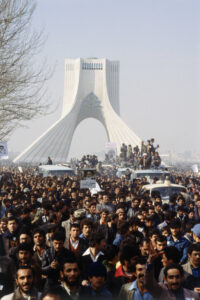
The Islamic Revolution began as a popular uprising against the shah’s authoritarian rule. Communists and Islamists alike opposed his Westernism, while other revolutionaries hoped for a more liberal, democratic regime. In the end, the Islamists won out, and Khomeini became the supreme keader. A new constitution enshrined the ayatollah as the chief Shiite cleric, whereas previous heads of state had never been part of the religious establishment. Despite a broad spectrum of Islamic opinion and observance developed over generations, Khomeini’s interpretation of Islam became the exclusive doctrine. Although he lived in exile until shortly before the shah was deposed, the ayatollah’s attitudes didn’t reflect contemporary Islamic thinking or positions of all the grand ayatollahs.
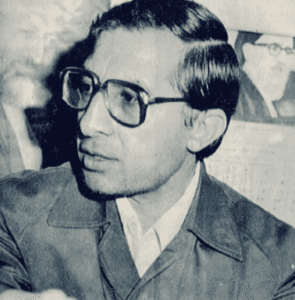
Having seized power, the revolutionaries had to maneuver between their ideals, political and economic shifts (such as the eight-year war with Iraq beginning in 1980), and Iran’s needs. National interests have generally taken precedence over ideology. In 1988, for instance, Khomeini authorized the government even to demolish mosques or suspend Islam’s primary commandments if necessary. How exactly the sometimes conflicting demands of Islam, the regime, and the supreme leader are determined, and by whom, remains ill-defined.
Revolutionary leaders have also clashed over when and to what degree idealistic principles can be overruled. Difficult but basic issues – whether and to what extent religion can be separated from the state; isolationism or engagement, particularly with the West; etc. – have all been subject to disagreement, if not public debate.
Although the shah is widely thought to have prioritized national concerns while Khomeini ignored them, the ayatollahs’ regime is in fact often nationalistic. Early in the revolution, for example, Khomeini rejected a proposition that the Persian Gulf (which other Arab countries call the Arabian Gulf) be renamed the Islamic Gulf.
In theory, the revolution was to grant equality to all ethnic and religious minorities – including Shia and Sunni. In practice, according to the Revolutionary Constitution, only an Iranian Shia Muslim can be president. This provision ruled out a leading contender in the first presidential elections after the revolution: Jalal al-din Farsi (whose last name even means “the Persian”), of Afghani extraction.
Another anomaly has been Iran’s close relations with Syria, governed until this year by the secular Ba’ath party under Hafez al-Assad and his son Bashar. In contrast, although Iraq is also run by secularists, Iran’s border dispute with that nation led to an eight-year war based on its “heretical” Sunni faith.
Similarly, national and political considerations impelled Iran to align itself with Christian Armenia during hostilities between that country and Shiite Azerbaijan. Furthermore, according to strict revolutionary principles, Iran should have come to the aid of Bashar al-Assad’s persecuted subjects when a popular Islamic uprising threatened his regime. Instead, Iran shored up his rule both during the Arab Spring of 2010 and against the threat of isis (Islamic State in Iraq and Syria). In 2024, however, the ayatollahs finally let the younger Assad’s regime crumble.

Rebels replaced the shah’s statue with photos of Khomeini, Tehran, 1979 | Photo: Michel Setboun/Getty Images

Opposition to the shah united Communists, socialists, and Islamists on the Iranian streets. Armed rebels in Tehran, 1979 | Photo: Hatami, Library of Congress Collection
Still at Odds
Iran’s domestic and foreign policies both reflect a constant struggle between the ideological purists, who stick to the revolution’s original Islamist agenda, and the pragmatists. The latter are gaining ground, as they embrace some measure of reform and emphasize Iranian nationalism over anti-Western rhetoric. Since Khomeini’s death in 1989, however, the dogmatists have been protected by his successor, Ayatollah Seyyed Ali Hosseini Khamenei.
Khamenei controls all three branches of government. He also enjoys the support of the Revolutionary Guards and wealthy, government-funded financial social institutions such as the Mostazafan Foundation of Islamic Revolution (ostensibly a charitable organization) and the Foundation of Martyrs and Veterans Affairs, which between them manage most of Iran’s assets.
Whereas Khomeini spearheaded a popular uprising, and his rule was accepted voluntarily (at least at first) by the people as a whole, Khamenei and his colleagues have faced fierce opposition. Despite their firm grip on every aspect of Iranian society, they’ve failed to cure most of Iran’s woes.
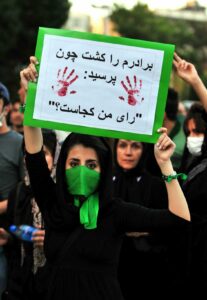
Increasingly frequent protests and mass demonstrations have been quelled, often violently. They began soon after the revolution, and in 1999, enormous student protests were held – resulting in extensive arrests and several deaths. In 2009, after Mahmoud Ahmadinejad claimed victory in a rigged presidential election, the Green Revolution was born. It too met with ruthless suppression.
Between 2017 and 2019, demonstrations focused mainly on social and economic issues, as international sanctions started to bite. When a Ukrainian passenger plane was shot down and the government denied involvement, people took to the streets again, also expressing their frustration at inadequate covid policies. Discontent centered on the very issues that have sparked countless modern revolutions: social justice and political equality. Hence the slogan of the 2022 protest movement: Women, Life, Liberty.
Although the Islamic Revolution began as an outcry against corruption, Iranian society is no freer in 2025 than it was under the shah. Criticism of the state was then a crime; today it’s a sin. As an Iranian colleague of mine remarked sarcastically, “Certainly we have freedom of expression; we just don’t have freedom after the expression.” Social parity is a forgotten dream too. One wealthy elite has simply been replaced by another, this time the functionaries of the Revolutionary Guard. But the gaps between social classes haven’t shrunk at all.
Ever since the revolution, religion has become less and less popular in Iran. As people despair of change, voter turnout has similarly dropped. Sunni Muslim countries’ increased cooperation with the West has coincided with rising conflict and criticism within Iran. In 2021, Ahmadinejad declared the Islamic Republic an unjust society ruled not by Allah but by Satan. Prime Minister Masoud Pezeshkian fears that economic difficulties will bring the regime to its knees. Opposition has crescendoed, while at eighty-six, Supreme Leader Khamenei is in poor health after thirty-six years on the job.
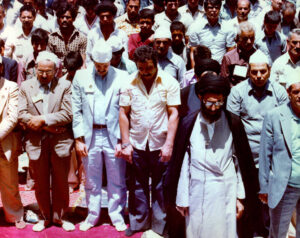
Illicit Love Affair
Iran has no joint border or territorial dispute with Israel, and – until the mutual attacks beginning in April 2024 and culminating in Israel’s attacks on Iranian nuclear facilities in June 2025 – the two were never at war.
On the contrary, for the isolated young State of Israel, adrift in a hostile Muslim sea, Iran seemed the ideal ally. As a Shia, Persian country surrounded by a majority of Sunni Muslim states, Iran was similarly beset and often at odds with surrounding nations. Furthermore, ancient Iran had stood behind the Cyrus Declaration, which launched the first return to Zion, in the fifth century bce. And modern Iran boasted a strategic location, oil and gas reserves, and economic potential.
Prime Minister David Ben-Gurion envisaged cooperation between Israel and its peripheral neighbors, hoping to compensate somewhat for the belligerence of adjacent states. Collaboration with Iran and Turkey, as well as with religious and ethnic minorities like the Lebanese Maronite Christians and the Iraqi Kurds, was intended to offset tense relations with Egypt, Jordan, and Syria.
Threatened by the growing pan-Arabism of Egypt, Syria, and Iraq, Iran became the second Muslim country – after Turkey – to grant Israel de facto recognition (in 1950). There were no official relations between the two states, but a great deal of liaising occurred, particularly during the 1970s. In 1976, a senior Iranian official even dubbed these interactions a love affair without a marriage contract.
The shah saw Jewish businesses as a global economic force and Israel as a welcome ally in developing his ties with the West. He was also riveted by Israel’s military successes, eager to benefit from its technology, and drawn to its model of a nation based on a single faith yet maintaining a secular, modern lifestyle.
Overall, the two countries shared many interests and threats. Both supported the Kurds and opposed Egyptian dominance of the region. And the shah hoped Arab antagonism toward Israel would distract his formidable neighbors from sniffing at his borders.
In 1963, Reza Shah Pahlavi introduced a socioeconomic reform known as the White Revolution, which further strengthened his relationship with Israel. Israeli companies such as the Solel Boneh construction firm, the Tahal water planning agency, and the Koor conglomerate set up solid business relations with Iran, and military cooperation tightened. Iranian Jews even joked that Pahlavi was short for Papa Levi.
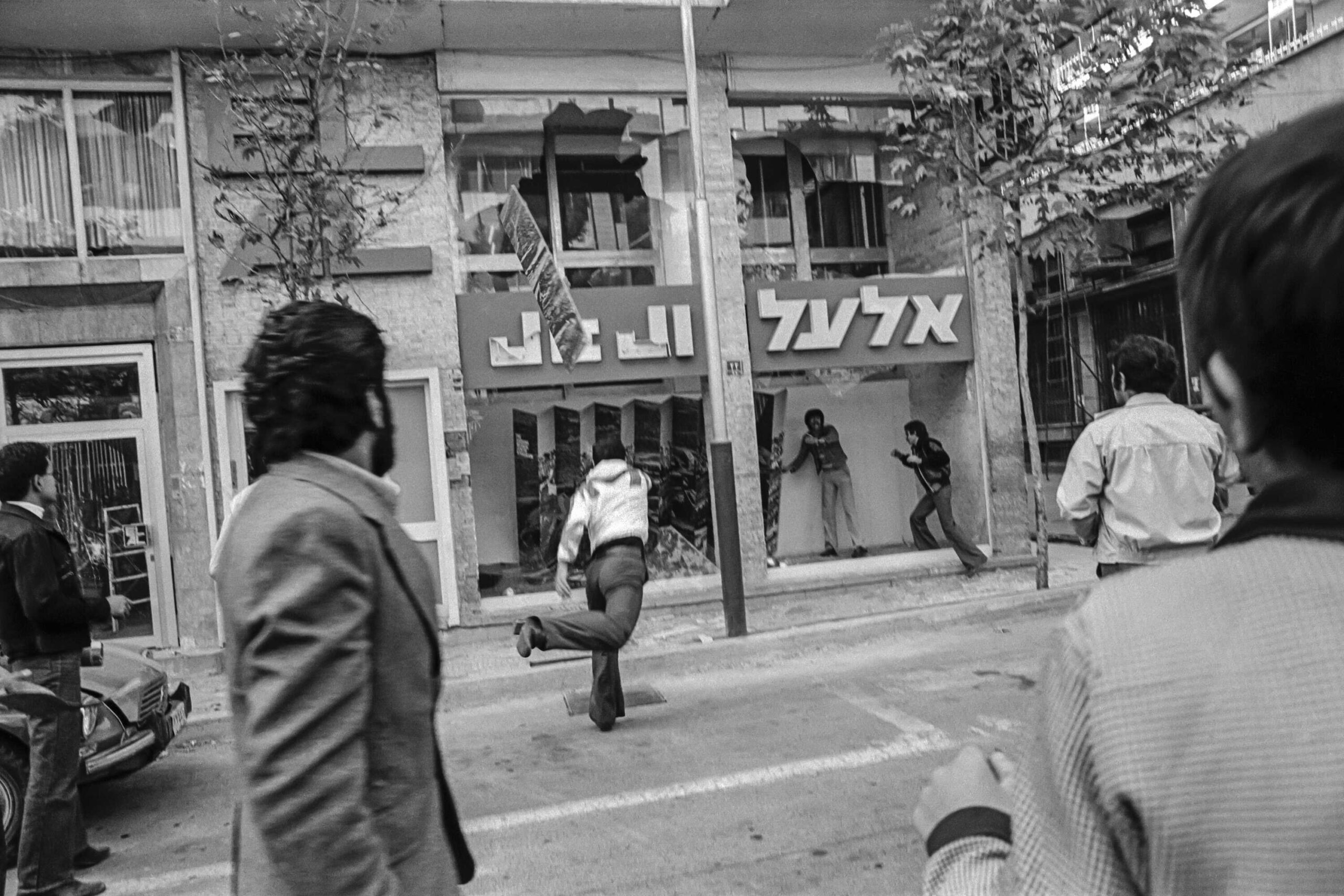
I was in Iran in 1975–77 for research purposes, and I found the Jewish community to be a proud, confident and wealthy minority – largely as a result of Israel’s standing in the world. There was even a significant group of Israelis – diplomats, businessmen, and workers in the various Israeli corporations active there. The children of these transplants attended an Israeli school in Tehran – one of only two Israel. El Al offered daily service to the capital, but no flight schedule was publicized, and the Israeli diplomats’ car bore no diplomatic license plate and flew no flags.
Islamists for Palestine
The golden age of cooperation between Israel and Iran came to an abrupt halt with the Islamic Revolution. The Jewish state’s relations with Iran and the United States made it a symbol of both the shah’s despised regime and American imperialism. Denial of Israel’s right to exist became a revolutionary axiom.
Positioning itself as the champion of authentic Islam, Iran sought to spread its influence – and its faith – throughout the Middle East. Aware that the path to domination of the Islamic world runs through Jerusalem’s Al-Aqsa Mosque, Khomeini prioritized the Palestinian cause. In 1979, he dubbed the last Friday of the Ramadan fast “Jerusalem Day” (Quds Day), and mass anti-Israel rallies are still held on that day in Iran.
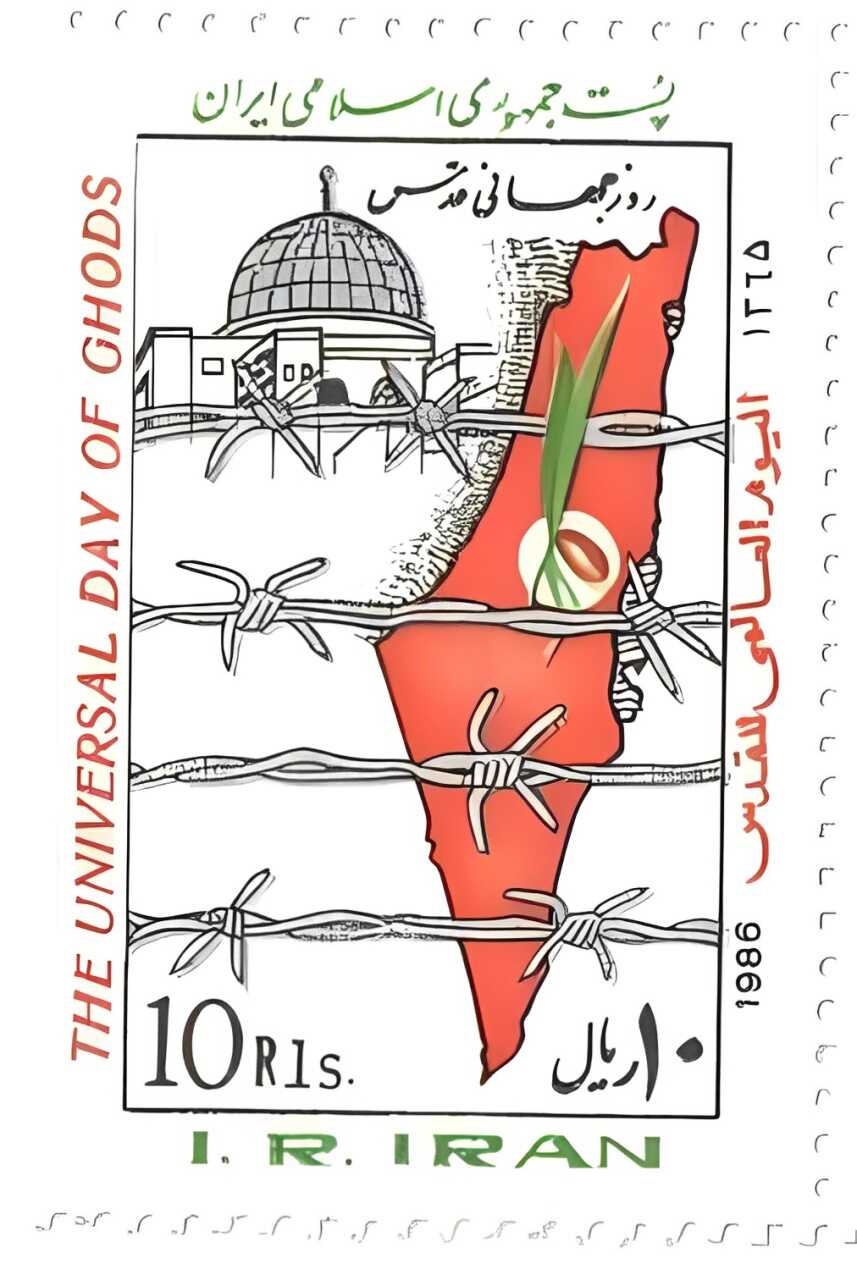
The Iranian revolutionary regime views Jews as members of a religion, not a nation. They therefore deserve no land of their own, and certainly not in the Middle East, on territory sacred to Islam and in violation of Palestinian national rights. Palestine was never the birthplace of the Jewish people, Iran claims, and Jews’ presence there was short-lived in comparison to Muslims’.
For Iranians, their war with Israel is a battle between good and evil, truth and falsehood, leaving no room for treaties or compromise. On their reading, as the last of the three monotheistic faiths, Islam (in its Iranian incarnation) is by definition the world’s most developed community. Currently, however, despite Iran’s ambitions and oil resources, its economy is faltering while the “infidels” (Christian and Jewish) thrive. The Jews, meanwhile, instead of being a downtrodden minority subject to Islam, are ruling millions of Muslims. This historic distortion must be corrected.
For the first decade of the revolution, Iran was preoccupied by its war with Iraq. After that, it was busy with reconstruction. In 1985–86, during the Iran-Iraq conflict, Iran was purchasing American weapons and spare parts via Israel in what became known as the Iran-Contra scandal. But even amid its secret arms negotiations, Iran undermined the Jewish state wherever possible, and the former’s anti-Zionist rhetoric continued unabated.
Khamenei has consistently preached Israel’s destruction, even suggesting a plebiscite of all who lived in British Mandate Palestine prior to 1948, for such a vote would surely endorse a Palestinian state. In Farsi, this strategy is known as “strangulation by soft cotton.”
Mohammad Khatami became president of Iran in 1997, almost a decade after the fall of the Berlin Wall and four years after the Oslo Accords. His rule expanded the pragmatism of the reformist camp, promoting cultural dialogue and calling on Iran to take its seat at the negotiating table alongside other nations.
This realpolitik exerted a moderating influence, making some in Khatami’s government less belligerent toward Israel. Interior Minister Abdallah Nori, for one, said that if Arafat was negotiating with Israel, Iran couldn’t impose its views on the Palestinian people. Iranians would have to accept reality rather than be “a plate warmer than the soup” (to use another Persian expression). Practically speaking, however, any policy changes suggested by the president require approval by Supreme Leader Khamenei.
Since Khatami, Iran has had two other pragmatic presidents: Hassan Rohani (2013–21), under whom the Joint Comprehensive Plan of Action (jcpoa) nuclear accords were signed in 2015, and the incumbent, Masoud Pezeshkian, who would like them renewed. Yet actual power remains in the hands of the religious leadership, which bears no responsibility for the results of its policies. To quote Mehdi Bazargan, the Islamic Republic’s first prime minister, Khomeini gave him a knife with no blade.
Fearful Superpower
After the Arab Spring swept the Middle East at the end of 2010, the authoritarian powers of the rulers of certain Arab nations were curtailed. Iran, by contrast, seemed stable and exploited its rivals’ weakness to promote its own interests.
Though derided as the Great Satan by the Islamic Republic, the United States actually set the stage for Iranian ascendancy by wrestling Ayatollah Khomeini’s greatest enemies to the ground. In 1991, a Western coalition led by the U.S. invaded Saddam Hussein’s Iraq and destroyed whatever military capability he had. In 2002, a similar coalition wiped out the Taliban in Afghanistan, the greatest threat on Iran’s eastern border. In 2003, America reentered Iraq and ended Saddam’s Ba’ath regime. Another major U.S. gift was its signature – along with other powers’ – on thejcpoa.
When civil war in Syria aimed to topple Bashar al-Assad in 2011, Iran had his back. In 2014, Islamic State challenged all of Shia Islam – and also undermined Iran – by aspiring to a Sunni caliphate in Syria and Iraq. Outside forces extricated Iran from the complications of both. In the case of Syria, Russia and Turkey came to Assad’s aid. In the struggle against Islamic State, Russia and America provided the massive firepower necessary to defeat the Sunnis. Yet Iran masterfully aligned itself as a coveted ally opposing the extremists. Instead of being viewed by the West as part of the problem, it positioned itself as part of the solution.
Even as Iran radiates confidence, however, its fears are palpable. It sees conspiracy everywhere. In past centuries, the culprit was Britain, but since the Islamic Revolution, suspicion has been aimed at the United States and Israel. Even Islamic State is regarded as an American-Israeli plot to oust the ayatollahs. That vulnerability has been exacerbated by U.S. and European sanctions against Iran and by America’s abandonment of the jcpoa in 2018. The 2020 Abraham Accords, signed by Israel and America with various Gulf states, have been perceived as yet another blow to Iranian supremacy. This tremendous sense of victimhood, coupled with a heady dose of power and the pursuit of regional dominance, created Iran’s long-term strategy for the area. The plan was to keep all perceived threats far from the country’s borders rather than risk penetration and reinforcement of existing pockets of dissent. According to reasoning, if Islamic State could be contained in Syria, there’d be no need to fight it on the streets of Tehran. Iraq, Lebanon, Syria, Gaza, and Yemen were all viewed as extensions of the Iranian hinterland. A similar rationale prompted the development of Iran’s nuclear program. Iran first attempted regional dominion immediately after the revolution, hoping to export its radical version of Shia Islam. After Iraq’s Ba’ath regime fell in 2003, leaving a political vacuum, Iran began to pursue methods of projecting power by arming and training local Iraqi militias. The emergence of Islamic State in the wake of the Arab Spring made that policy imperative. By 2024, Iran had deployed a dozen substantial militias in Lebanon, Iraq, Syria, Yemen, and Bahrain as well as forces embedded within Palestinian society, primarily in Gaza. Hezbollah, Hamas, and the Houthis are only three of many.
As it progressed toward a nuclear breakthrough, amassed regional power and standing, strengthened its militias, and enhanced its military capabilities, the regime gained confidence, and its rhetoric against Israel became increasingly strident. In 2015, Khamenei announced that in twenty-five years the Jewish state would no longer exist. A digital clock in Tehran’s Palestine Square even counted down to the Zionists’ demise. Yet the supreme leader added that he wasn’t in any way targeting Jews.
The ongoing war has left Iran weakened, still regrouping from its first direct encounters with Israel. Its strategy of outsourcing the conflict has taken some major hits, as has its own hinterland. Economic hardship is eating away at its citizens, boosting criticism of the enormous military investment at the cost of the population’s welfare – especially as an inestimable portion of that expenditure has now gone to waste. Will all these challenges culminate in another swing of the Iranian pendulum? Only time will tell.
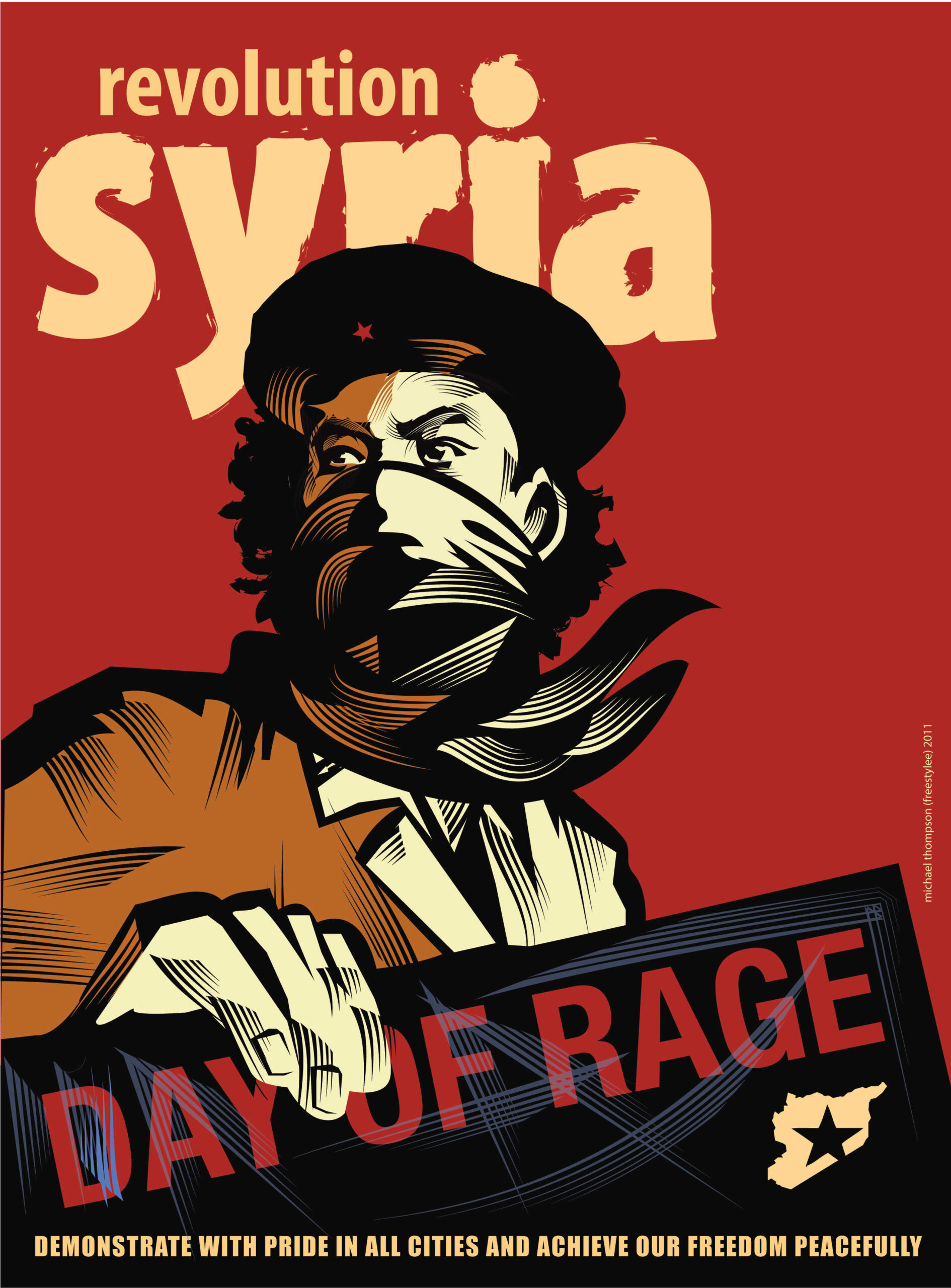
Social media poster calling for a Syrian day of rage in the spring of 2011, launching the country’s civil war | Courtesy of Michael Thompson/Flickr
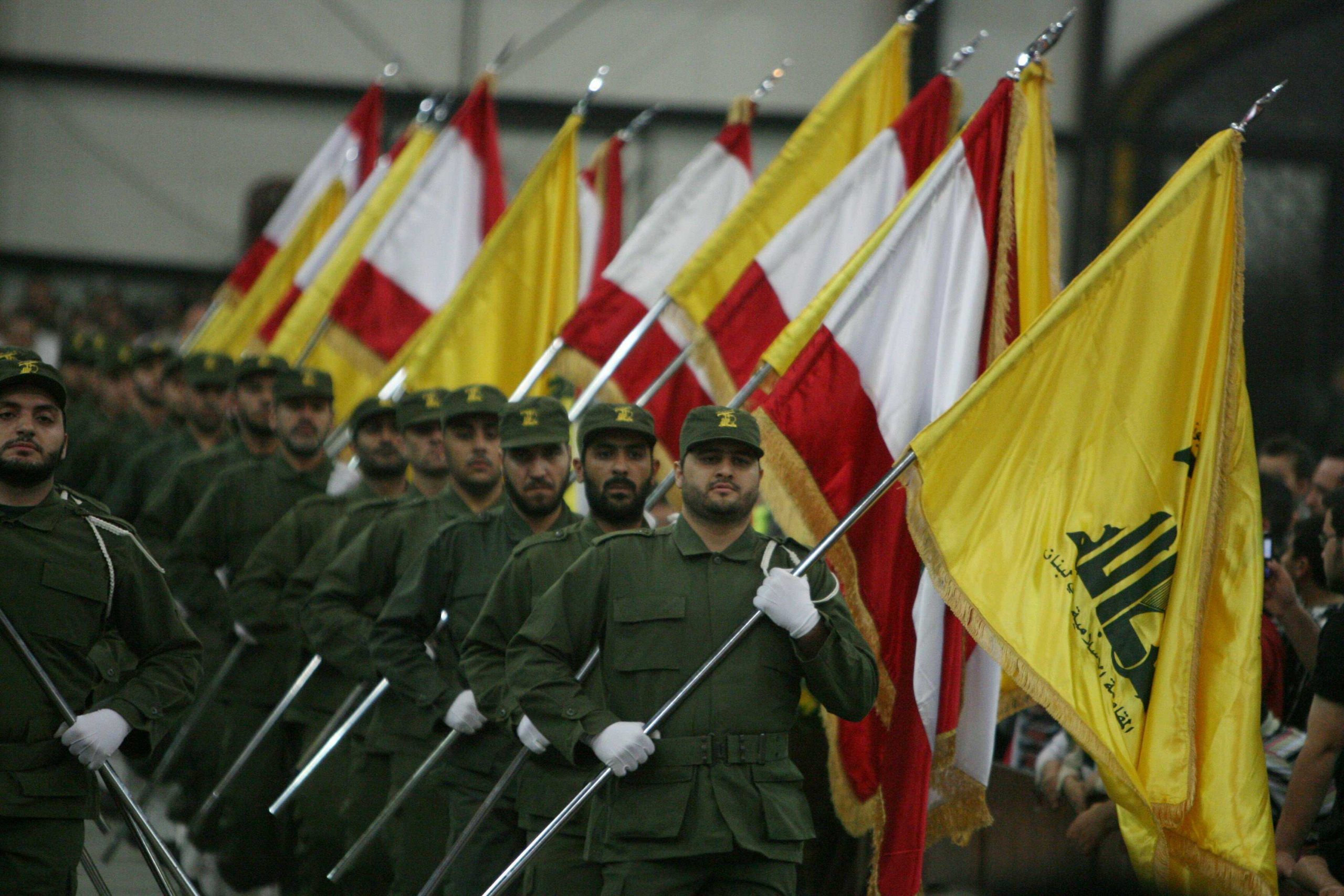
Ever since the revolution, Iran has been sponsoring anti-Western militias throughout the Levant and the Arabian Peninsula. Hezbollah fighters | Photo: Khamenei.ir
Feel free to share