How did Walter Dirr, born to a Jewish mother and a Catholic father, come to be drafted into Hitler’s army? Clues from a family archive

The curious case of Walter Dirr begins with his father, Robert Heinrich Dirr (1880–1944), born into a Catholic family in Mühlhausen, Germany. Drafted at age seventeen, Dirr climbed the ranks to become an officer in 1904. By then, he was also apprenticing in construction. Robert became an architect in Metz, a city in Elsass-Lothringen, formerly part of the German Reich and now part of France.
In 1907, Dirr fell in love with Frieda Rothschild (1889–1978, no relation to the famous banking family). She was one of twelve children born to Orthodox Jewish parents in Jünkerath, Germany.
Frieda’s family disapproved of her relationship with Dirr. So when the couple asked permission to become engaged, her mother challenged them to test their love by refraining from all contact for a year. Should they still wish to marry after that, the Rothschilds would consent.
Throughout 1908, their year of separation, Robert kept a diary. Addressing every entry to Frieda, he filled more than 250 pages with thoughts such as “I can overcome everything with joy owing to my love and confidence in you.” At year’s end, he presented the leather-bound journal to Frieda. “You have to feel,” read the flyleaf dedication, “how in my whole being, with every drop of blood, with every beat of my heart, I have been living only for you. […] Only once can a man really and truly love, dedicating himself so fully to just one person.”
Frieda and Robert wed in either 1909 or 1910. Settling in Metz, they had three children: Mirjam Caroline (1913–2000), Argonna (1915–2003), and Walter Julius Hermann Stephan (1923–2012).
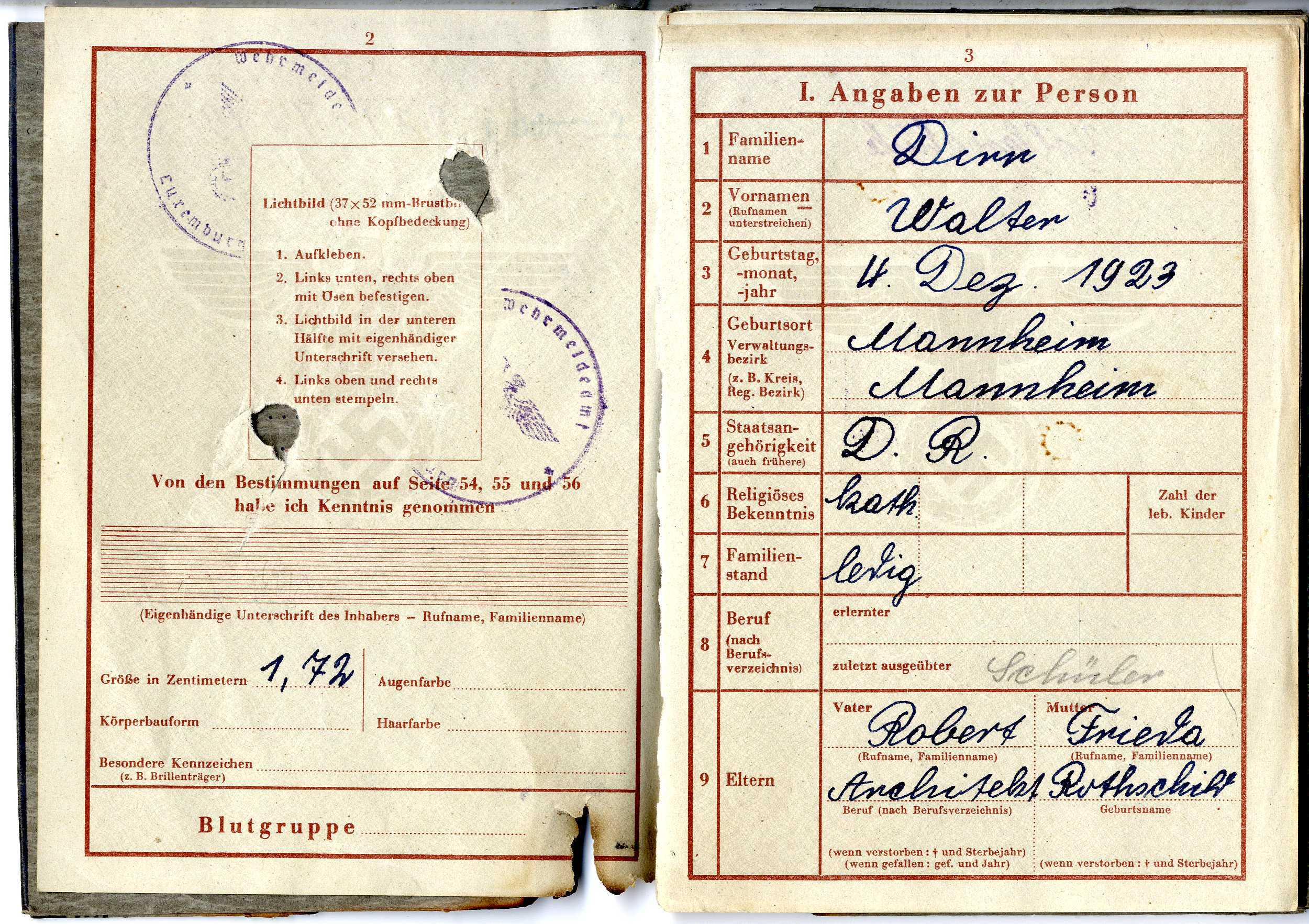
Walter collected the family’s letters, diaries, photographs, and documents, later passing them on to a relative. In January 2021, the collection was deposited in the Central Archives for the History of the Jewish People.
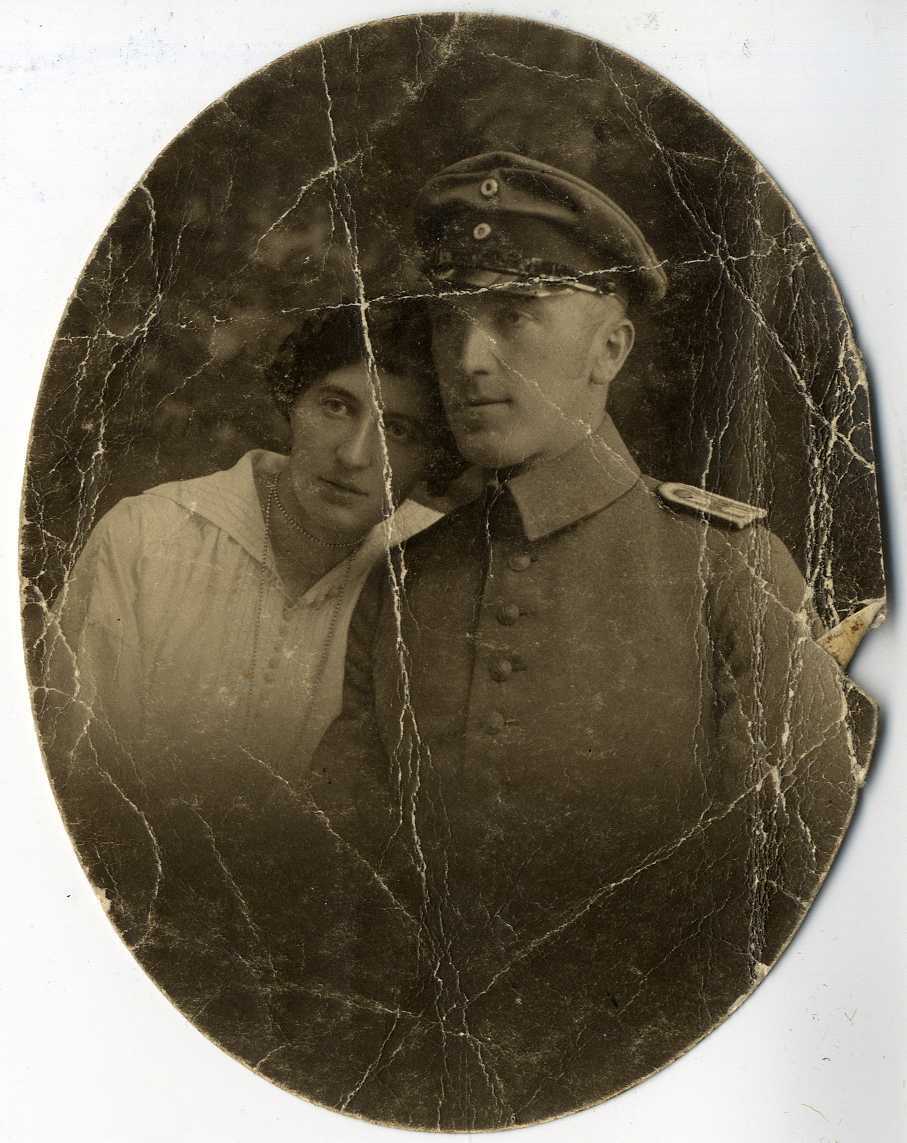
Their courageous romance didn’t last. Frieda (née Rothschild) and Robert Dirr early in their marriage
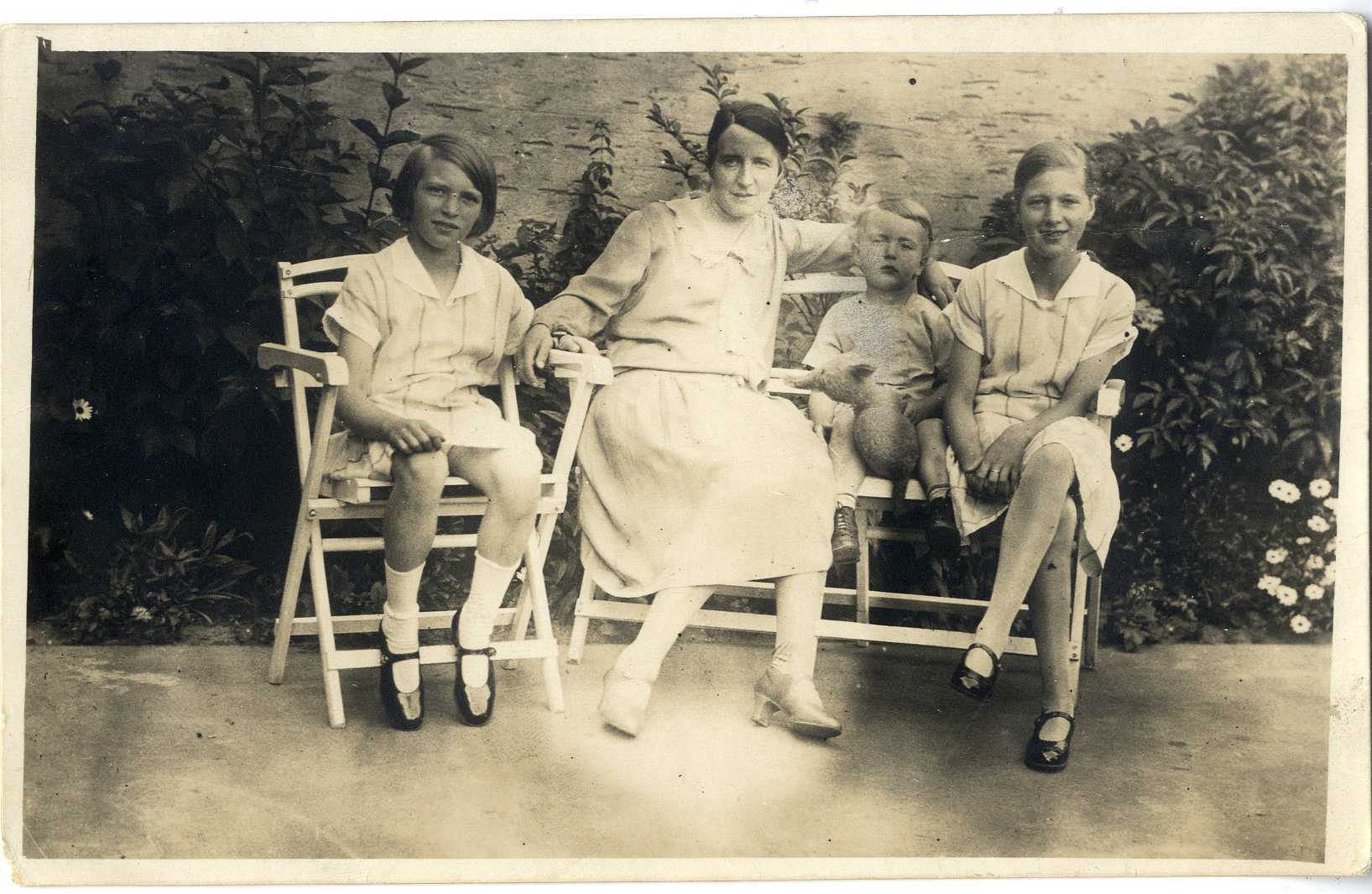
Happy family. Frieda and her three children in the mid-1920s
Separate But Safe
The few clues regarding the circumstances leading to Walter’s short-lived military career are located in several journals and letters written by Frieda Dirr between 1915 and 1945. Frieda and Robert’s initially happy marriage foundered in the economic crisis begun in 1923. Robert had to sell their new home, and ongoing financial struggles further strained their relationship. Frieda’s diary describes this difficult period, but in comparison with what was to come, it was positively idyllic.
Immediately after Hitler’s nomination as German chancellor in 1933, every intermarried couple was forced to divorce. The Dirrs were no exception, but Robert’s connections with the Catholic Church allowed him to move his family to nearby, independent Luxembourg.
Initially neutral after Hitler’s invasion of Poland, Luxembourg fell victim to Nazi aggression in March 1940, when German occupying troops crossed the border. Of the 35,000 Jews then in Luxembourg, most of them refugees from Germany, only a few hundred survived.
Here the intrigue begins. Robert registered his family as Catholics in Luxembourg, and though they never hid Frieda´s maiden name, the Dirrs joined the community of gentile German exiles. Letters indicate that acquaintances knew nothing of the family´s Jewish roots.
In stark contrast to the fate suffered by Luxembourg’s Jews, the “cover” provided by Robert Dirr meant that his family could survive without going into hiding.
One piece of mail stands out among many sent to various family members during the war. Dated November 26, 1944, the letter is addressed to Walter, then twenty-one, by a German commandant in Luxembourg. Clearly oblivious to the family background, the official hopes for a “good end” for their “mutual fatherland.” He sounds concerned for the Dirrs’ safety and surprised by their decision to stay in Luxembourg despite the Allies’ approach. The “anger of the people of Luxembourg” would, he feared, soon be directed toward the loyal Germans in their midst.
Not yet a Segula subscriber?
Access our full archive online, have print issues delivered to your door, and moreFeel free to share