

Yehuda Moraly’s examination of French cinema under German occupation reveals an uncomfortable subtext its creators have tried to erase

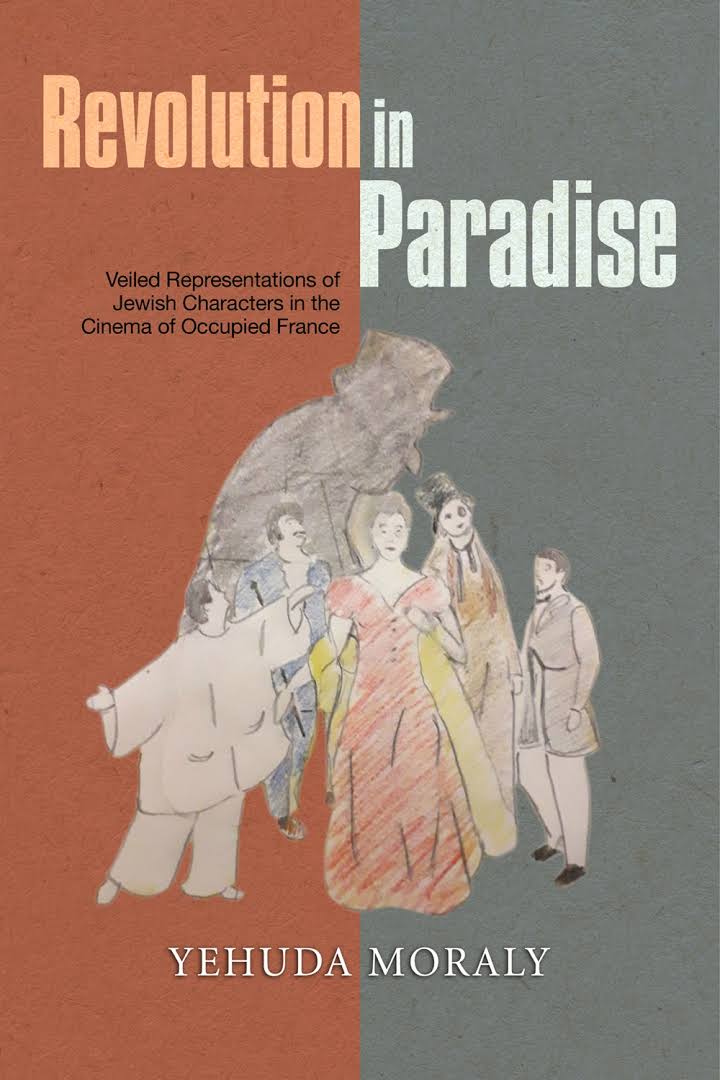
Revolution in Paradise: Veiled Representations of Jewish Characters in the Cinema of Occupied France
Yehuda Moraly
Sussex Academic Press, 2020, 276 pages
Although it sometimes reads like a laundry list of obscure French films, Revolution in Paradise performs an important task. The titular paradise is the world of French cinema, which unexpectedly blossoms and produces some of its greatest works during the Nazi occupation of France between 1940 and 1944. Author Yehuda Moraly, attributes this sudden renaissance in war-torn Europe to Herman Goebels’ use of French films to warn the public of the Jewish threat:
Goebbels, in his speech before the Reichsfilmkammer on February 15, 1941, insisted on the necessity of a veiled propaganda disguised beneath the cloak of entertainment; the films he espoused would include certain unmistakable characters and topics […] and these tacit messages would act upon the public’s consciousness much more effectively than direct propaganda films. […] Such insinuations took the form of an accessory, a symbol, a profession, a name, allowing the public – so aware of “Jewish” characteristics at the time – to comprehend the subtext. (p. 198)
Moraly, a French Jewish academic also suggests that this misinformation fell on fertile ground. The deep-seated anti-Semitism exposed by the Dreyfus Affair was ingrained in many leading French artists and writers. They were only too happy to “collaborate” in producing Goebbels’ preferred art and theater – from an exhibition on stereotypical Jewish features to the kind of cinema Moraly examines (in often wearisome detail and far too repetitively) in this book.
The villains of these romantic dramas were Jewish only by insinuation, with Jewish-looking actors playing the parts. These odious foreigners controlling the French economy and industry (and particularly the cinema) were frequently contrasted with the hardworking rural innocents of the “real” France – and Moraly cites examples of the Jewish film and theater magnates on whom they were based.
The Elders of Zion in Paris
Moraly contends that after the country’s liberation in September 1944, many films made under occupation were censored or even destroyed by producers to avoid charges of collaboration with the Vichy regime and rehabilitate their reputations.
One may wonder why such research of these films and plays has not yet been carried out in a systematic way. As for the characters of Jews during the period of the [o]ccupation, there seems to be a “war” against accurate memory. For the most part, many of the creators modified or obfuscated the works they created during these years.
I will provide an example from the world of comics. In 1942, in Tintin and the Mysterious Star, serialized in the collaborationist newspaper Le Soir, Hergé [Belgian author of the popular series] renames the arch-traitor Rastapopulos (who had appeared in previous adventures) Bronstein, and gives him an overtly Jewish nose. Bronstein is a New York financier who commits terrible acts and ends up punished by justice. […] Today this particular 1942 edition of Tintin sells for exorbitant prices because copies of it are practically impossible to find. (p. 210)
Sifting through French film archives and original scripts, and sometimes even exercising his own “director’s intuition,” Moraly reconstructs the classics produced under the occupation. While censored versions are readily available on the Internet, the originals constituted a subtle attempt to alert French moviegoers to the cancer that pervaded their country and was to be eliminated at all costs – the Jews.
Some of Moraly’s suggestions seem far-fetched. Take Le Camion Blanc (The White Caravan), the story of a Gypsy king’s funeral and succession. The author surmises that a scene deleted from the climax clarified the depiction of the Gypsies’ world domination as an allegory for Jewish wealth and power.
From Balzac to Wagner, the author traces the romantic influences on French cinema in this dark period, suggesting that permissive, humanist values were intended to replace obsolete Judeo- Christian ethics.
Not yet a Segula subscriber?
Access our full archive online, have print issues delivered to your door, and moreFeel free to share