Sleep is hardly the stuff of history, yet medievals spent their nights in surprising ways, as rabbinic literature attests. Europe’s long, cold hours of darkness could make even sleeping a challenge. How did Jews cope?

Though the Dark Ages might not deserve their name, the blackness of their nights is almost unfathomable to modern man. Even in the late Middle Ages, European streets remained unlit, and the candles burning at home were far less illuminating than electric light. Though Jews lived in relative isolation, they were also part of society at large, so they too struggled with darkness.
Night has generally been of little interest to historians. The activities traditionally associated with these hours – such as supper, sleep, and sex – hardly impacted the annals of human achievement. Jewish law, however, discusses night as well as day, even comparing contemporary nighttime customs with those of yore. Such halakhic material sheds considerable light on medieval Jewish nights.
Time’s Wilderness
By the 10th century, major Muslim cities such as Cordoba and Cairo were a lit by night, but the bell jars that protected outdoor flames reached Europe only in the 1500s. Until then, public spaces were lawless after dark. Night wayfarers had to light their own way, not just to get anywhere, but because any traveler bearing neither torch nor lantern was automatically suspect and could be arrested or even killed by nightwatchmen. In 12th-century Paris, all households had to be locked and barred by night, and it was a crime to admit anyone, even a homeowner knocking at his own door.
Just as the outskirts of town were regarded by the Bible and the sages as a no-man’s-land where murderers could strike without fear of retribution, “for none can know who smote him” (Deuteronomy 21:1), night was considered the “outskirts” of day, so all were vulnerable. Fear gave rise to the demons of darkness, ready to pounce particularly on those who walked alone. Forbidden to kindle a light on the Sabbath, Jews coming home from the evening service were especially at risk, and communal prayers were extended so even latecomers could finish in time to leave the synagogue with everyone else.
The Tosafist Rabbenu Tam (Yaakov ben Meir of France, 1100–1171) noted that “[…] some say [the extension applies] even in our [synagogues] at night” (cited in Rabbi Yaakov ben Yehuda Landau, Sefer Ha-agur, Laws of Blessings 137). Though the houses of worship to which Rabbenu Tam referred were far from isolated, by night they were thought to be as exposed as the devil-ridden wilderness.

The Rabbi’s Bedchamber
A 15th-century work by the Austrian scholar Rabbi Yosef ben Moshe relates that he slept in his teacher’s bedchamber nightly. Rabbi Israel Isserlin was elderly and frail, and his closest disciple probably attended to him at night. Yet the rabbi’s wife also shared the room, prompting another student to criticize the arrangement. Rabbi Yosef quotes him:
“Who gave you license to sleep in the same room as a man and his wife, even during [their separation as a result of] her menstrual period? As the Talmud (Eruvin 63b) says: [Whoever does so banishes a wife] ‘from the source of her enjoyments’ [Micah 2:9].” But when I repeated this to the master, may he rest in peace, he didn’t instruct me to desist from sleeping in his room. (Leket Yosher, Yoreh De’a, p. 23)
The Talmud recounts how Rabbi Kahane was rebuked by his teacher, Rav, under similar circumstances. Just as apprentices toiled alongside master craftsmen, aspiring scholars followed their teachers everywhere, thirsty not only for knowledge but for the refinement that characterized their masters’ everyday dealings – even while sleeping. Thus, eager to learn from every aspect of his teacher’s life, Kahane hid under Rav’s bed. Finding him there, his astonished mentor thundered, “Kahane, get out! It’s rude!” (Hagiga 5b).
Yet Rabbi Isserlin ignored the Talmud’s implicit prohibition of such intrusions. Why did he allow his pupil to sleep in the bedroom he shared with his wife? Apparently, medieval sleeping habits differed from today’s – and from those of antiquity.
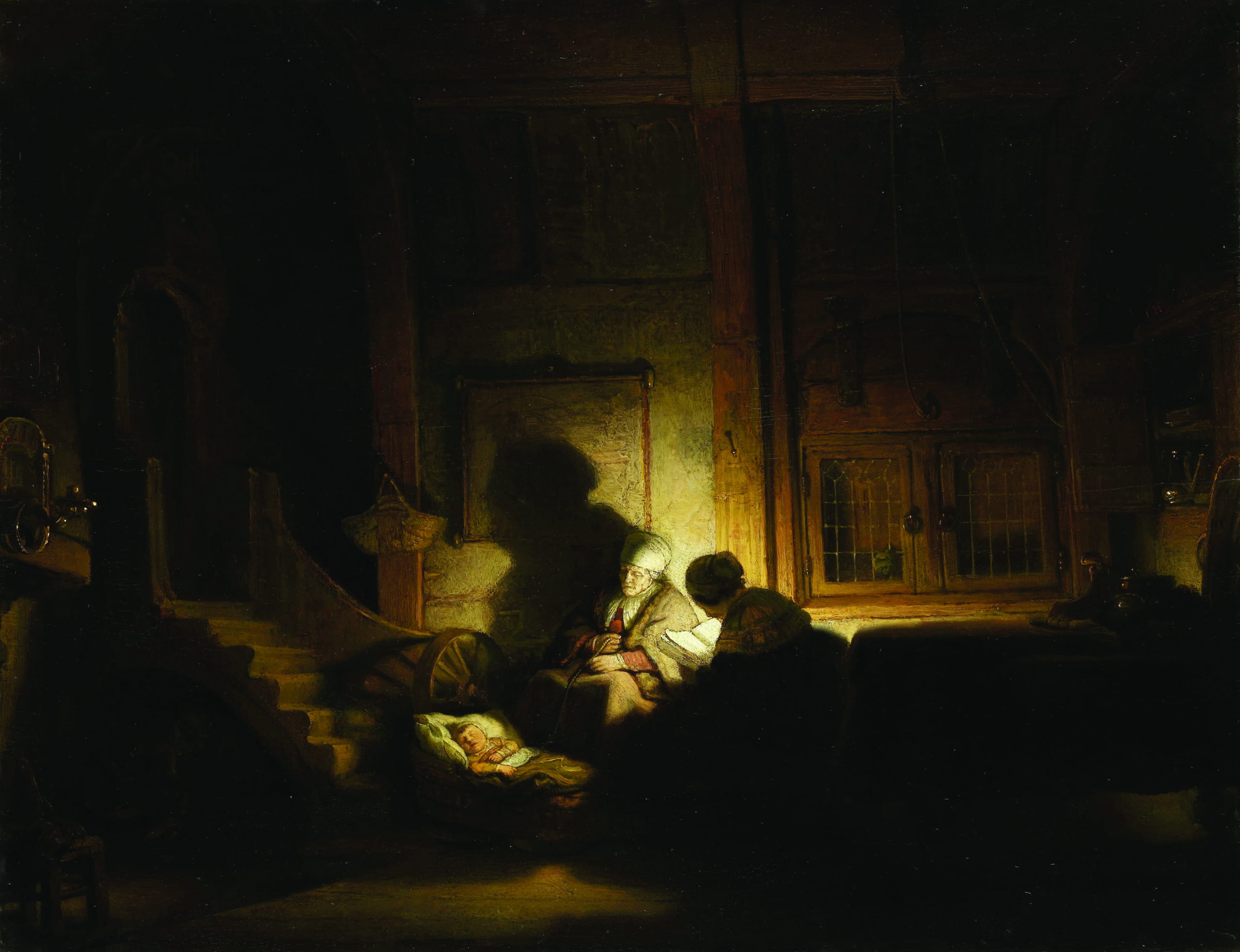
The medieval bedchamber was not just for sleeping. Most houses consisted of only one room, serving all functions. The larger this space was, the more people it accommodated. Furthermore, the bed was often a home’s most expensive piece of furniture. Designed to distance sleepers from the cold European floors, a bed could be worth up to a third of the value of a household’s furnishings. Though the poor made do with straw mattresses, richer families indulged in a raised, wooden bed, and the wealthy added a canopy and curtains to keep out the chill.
Beds were wide, and children slept with their parents. Sometimes servants were also included, and on rare occasions, even guests. In extreme circumstances, animals snuggled under the covers as well.
Sleeping together was a way of keeping warm. Families slept in the nude beneath blankets, sharing body heat. (Their heads stuck out, however, so everyone wore a nightcap, as seen in many medieval illustrations.) Those who slumbered in their clothes were an anomaly. As Rabbi Yosef ben Moshe remarked of his teacher:
I remember he used to spread a cloth over the table on the Day of Atonement and light a candle […], and on Yom Kippur night he slept in his bed in a robe. (Leket Yosher, Orah Hayim, p. 141)
Rabbi Isserlin covered himself to safeguard the prohibition of sexual relations on the holiest day of the Jewish year.
Not everyone slept together, however. In wealthy homes, there was one bed for the elder children and another in a separate room for the parents and babies.
Not yet a Segula subscriber?
Access our full archive online, have print issues delivered to your door, and moreFeel free to share