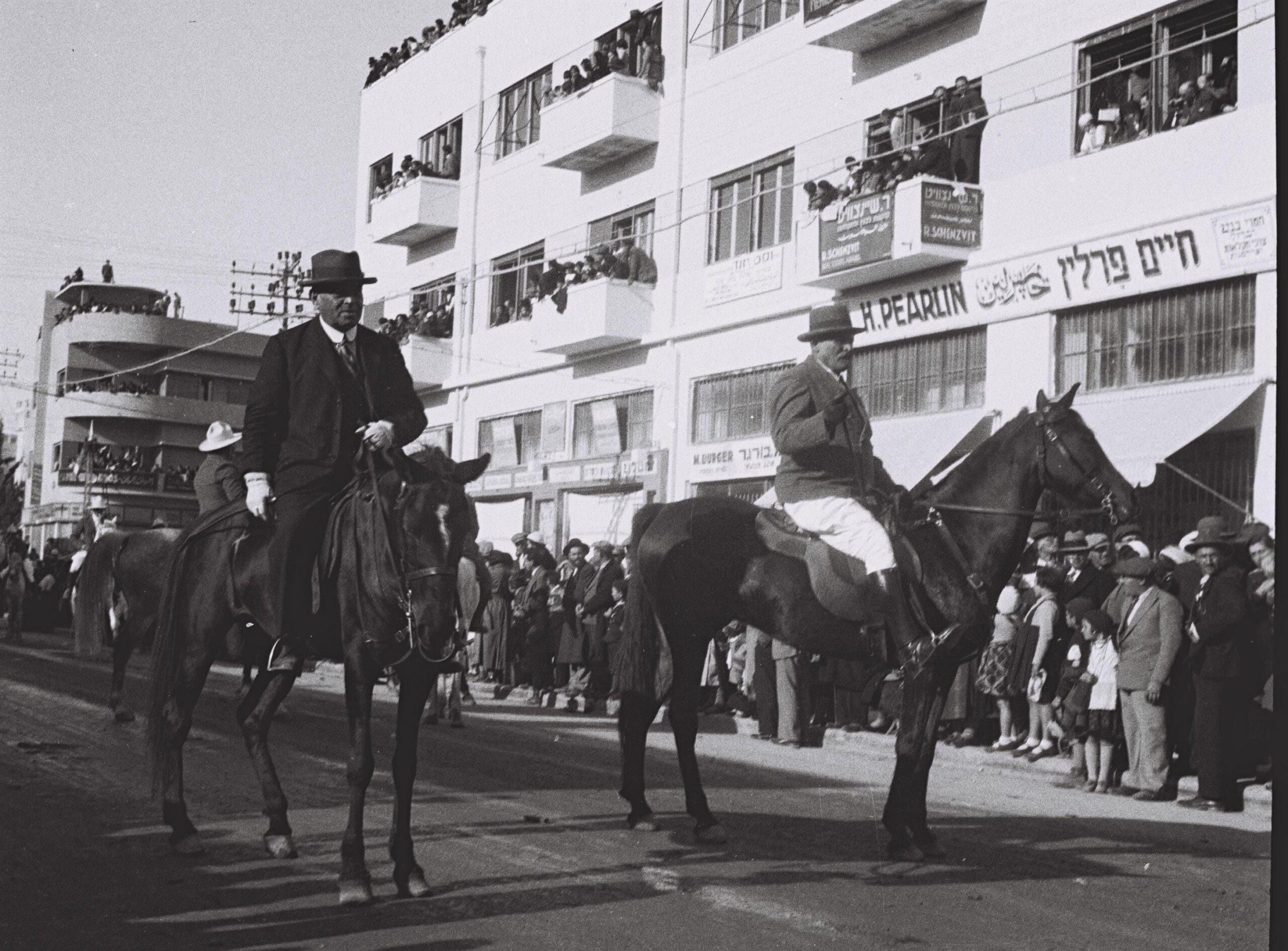
While pioneers enthused over each new furrow plowed, Meir Dizengoff put his heart and soul into building and running the first new Jewish city in millennia – inspired not by the patriarchs, but by the French Riviera

Though few even know his name, the true founder of Tel Aviv – the first Hebrew-speaking city in Ottoman Palestine – was watchmaker and silversmith Akiva Aryeh Weiss. This past Pesach marked 111 years since April 11, 1909, when sixty-six families gathered on a sand dune north of Jaffa for a lottery to determine which plots of land in the new garden suburb would be distributed to which members of the Ahuzat Bayit Building Society. Nevertheless, the figure primarily associated with the city’s early years is not Weiss but Meir Dizengoff, Tel Aviv’s first mayor, who was in fact among the town’s founding fathers on that April day. Dizengoff headed the residents’ committee for its first decade and served as mayor until shortly before his death in 1936.
Tel Aviv had only a few dozen inhabitants at first; by the time the neighborhood became a town in its own right, it boasted a population of three thousand. At the end of Dizengoff’s tenure, the city numbered a hundred and fifty thousand, having multiplied fiftyfold in less than a quarter-century.
Some of Tel Aviv’s biggest projects, which gave it national importance and placed it firmly on the map, were Dizengoff’s initiatives: the Levant Fair, the Maccabiah Games, and the commercial port. He oversaw the integration of two waves of immigration, the largely Polish Fourth Aliya of the 1920s and the Fifth Aliya, sparked by Hitler’s rise to power in the 1930s. The city had Dizengoff to thank for a large American development loan, and he worked unremittingly toward the construction of the port, which finally opened not long before his death (see “Building in Blue and White,” Segula 42).
A born rebel, Dizengoff took on Chaim Weizmann and the entire Zionist leadership when necessary. While institutions like the Jewish National Fund promoted the socialist efforts of the kibbutz and moshav movements to make the desert bloom, Dizengoff unabashedly preached urban capitalism. Though regarded as the Zionist Organization’s ugly duckling during the 1920s, he was soon vindicated when his White City proved a swan.
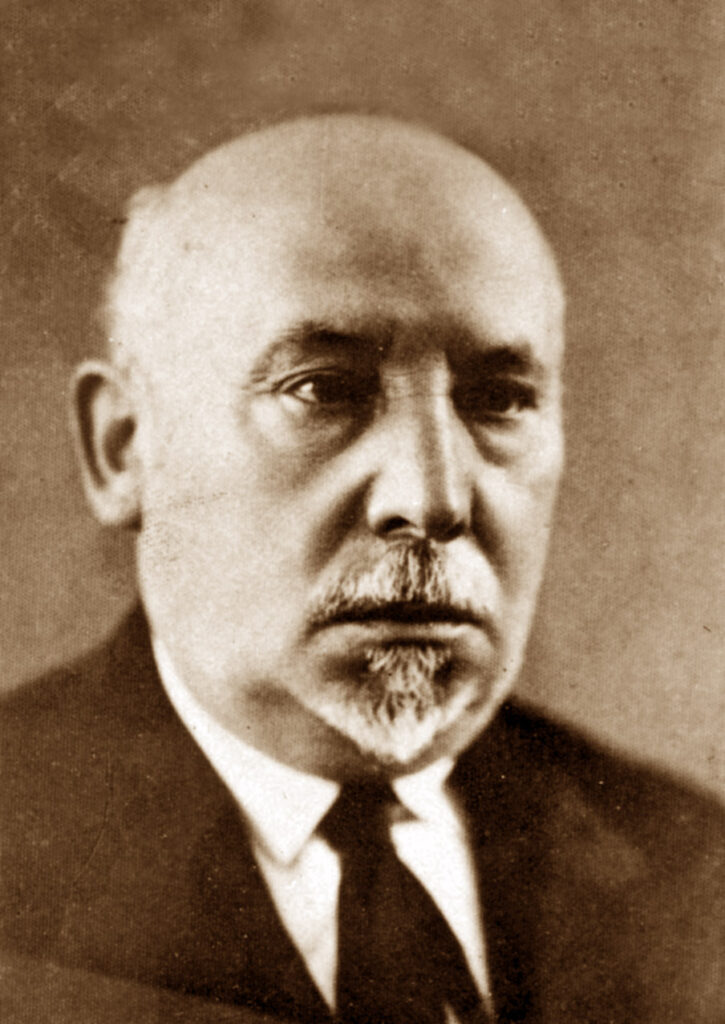
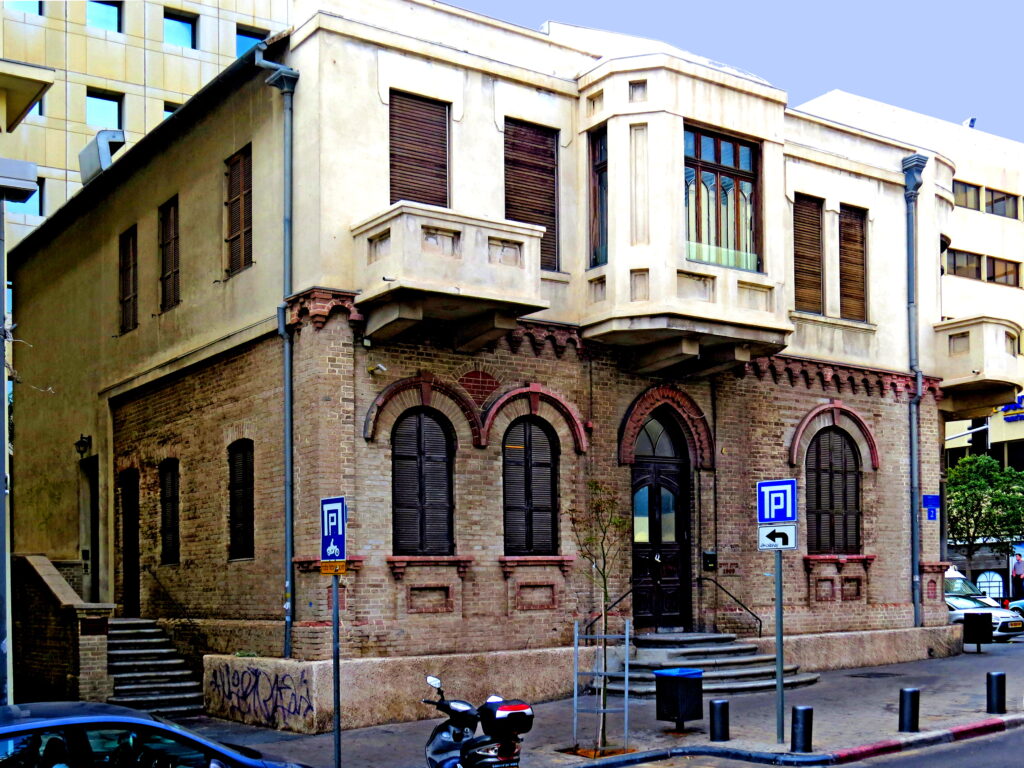
Overshadowed by Dizengoff’s fame. Akiva Aryeh Weiss and his house in Ahuzat Bayit, a.k.a. Tel Aviv, the town he founded | Photo: Gidon Shapira, courtesy of the Weiss family
Inauspicious Beginnings
Meir Dizengoff was born on Shushan Purim, February 25, 1861. His birthplace, the sleepy hamlet of Echimăuți, then in Bessarabia (now in Moldova), produced few other notables. On his mother’s side, Dizengoff hailed from a rabbinic dynasty; his father, a follower of the Hasidic master of Sadigura, ran various agricultural holdings.
After a traditional heder education, Dizengoff volunteered for the Russian army at age twenty-one, editing a military newspaper in Zhytomyr. The town had its own Jewish intelligentsia (Hebrew poet laureate Hayyim Nahman Bialik spent much of his youth here), and Dizengoff lost himself in books and pamphlets before their mutilation or suppression by the imperial censor.
Drawn into Zhytomyr’s revolutionary circles, Dizengoff was arrested for subversion in 1885 and spent eight months in jail. Barred by his criminal record from pursuing higher education in Russia, he moved to Paris in 1888 and studied chemical engineering at the Sorbonne. There he met Elie Scheid, point man for Baron Edmond de Rothschild’s colonies in Ottoman Palestine.
At Scheid’s recommendation, Dizengoff added petrochemical analysis to his curriculum, thereby qualifying him for the position of setting up a bottle manufacturing plant that would supply the baron’s wineries in Zikhron Yaakov and Rishon Lezion. Somewhat hesitantly, Dizengoff accepted the job and set up shop in sandy Tantura, near Zikhron.
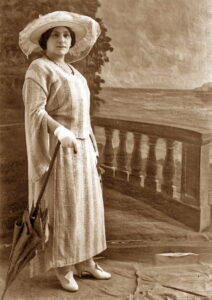
Traveling on the baron’s behalf in search of suitable staff, Dizengoff included a trip home, ostensibly to tour a nearby glass factory. While in Zhytomyr, he renewed his acquaintance with a young woman he’d met just before his arrest. Zina Haya Brenner had presented herself at the police station as his fiancée, entitling her to visit Dizengoff periodically and supply him with Hebrew newspapers and contact with the outside world. She now agreed to join him in his mission, and the pair set out for the land of Israel, celebrating their wedding en route in Alexandria.
On arrival in Tantura, Zina contracted malaria. As she was pregnant, her doctors sent her to Paris, where she gave birth to a daughter. Tragically, the infant died shortly afterward, and the couple had no other children.
Dizengoff’s first venture in Zion was a disaster. The local sand proved unsuitable for glass manufacture, and the facility closed in less than three years. In 1896, he moved to Belgium to work in a glass factory producing mirrors. A year later, the company sent him to Odessa to open another bottle plant, but instead he joined the city’s famed circle of Zionist intellectuals.
Rubbing shoulders with Yehuda Leib Pinsker, Shimon Dubnow, Rabbi Chaim Tchernowitz, Vladimir Ze’ev Jabotinsky, and Bialik, Dizengoff helped found the Geula Company, purchasing land for Jewish settlement in Palestine. By now a seasoned Zionist, he left Russia again in September 1905, making his home in Jaffa. Among his business deals was Ahuzat Bayit.
Not yet a Segula subscriber?
Access our full archive online, have print issues delivered to your door, and moreFeel free to share