Though scholars argue bitterly over the historicity of the Davidic kingdom, new archaeological discoveries are shedding surprising light on King David’s allies. The remains of a northern Philistine kingdom ruled by Toi of Hamath hint at some unexpected regional ties dating back three millennia

Who hasn’t heard of the Philistines, probably the most famous of the many Aegean Sea Peoples? The prophet Amos (9:7) recalls the Philistine departure from Caphtor (today’s Crete), comparing this event with the exodus from Egypt. These invaders spread out over the eastern shores of the Mediterranean.
We automatically identify the Philistines with their footholds on Israel’s southern coastal plain – Gath, Ekron, Ashdod, Ashkelon, and Gaza – stretching north to Tel Qasile, by Tel Aviv’s Yarkon River. But a lesser-known Philistine kingdom, “Palistin,” has been discovered in Syria, shedding light on King David’s rise.
Palistin extended from the Euphrates to the Mediterranean and from the area of the Syrian town of Hama to Cilicia, in modern-day Turkey. It survived from the 11th century BCE until its conquest by Assyria in 738 BCE. Palistin was actually a mini-empire comparable to the kingdom of Aram Damascus in the days of King Hazael and his son, Ben-Hadad III, and to the kingdom of Carchemish, which controlled the Upper Euphrates Valley and the region of Melid (Malatya) in the 12th century BCE.
Inscriptions and other artifacts excavated lately – mainly in Israel, southern Turkey, and Syria – connect with both David’s rule and the Philistine realm of Palistin. These finds reveal political developments that could explain the rise of the Israelite kingdom and David’s diplomatic relations with such neighbors as the king of Palistin as well as the more familiar southern Philistines, so prominent in the Bible.
Written in Stone
A hieroglyphic inscription written in the Luwian language and unearthed in the storm god temple in Aleppo, Syria, refers to a king named Taita as “the Palistinean.” Two further inscriptions, found in the Orontes Valley – at Tell Ta’yinat (biblical Calneh), in southern Turkey, and in Meharde, twenty-five kilometers northwest of Hama, in Syria – describe him as “Walistinean.” “The hero of the land of Walistin” appears on another artifact from nearby Shaizar, confirming that the term Walistinean (or Palistinean) links Taita to a specific place and people. In addition, two basalt steles inscribed with the name of the kingdom of (northern) Palistin were recently discovered in Arsuz, a southern Turkish city on the Mediterranean.
Two kings of Palistin were called Shuppiluliuma. The first, son of Menana, ruled probably at the end of the 10th century BCE and conquered the region of Quwe (Cilicia). The second, in contrast, was Quwe’s ally but reigned only briefly in 858 BCE.
A new inscription from Tel Ta’yinat presents Shuppiluliuma II as a “Palistinean,” but in several Assyrian inscriptions he appears as “king of Patin,” so “Patin” was an abbreviation of Pa(lis) tin.
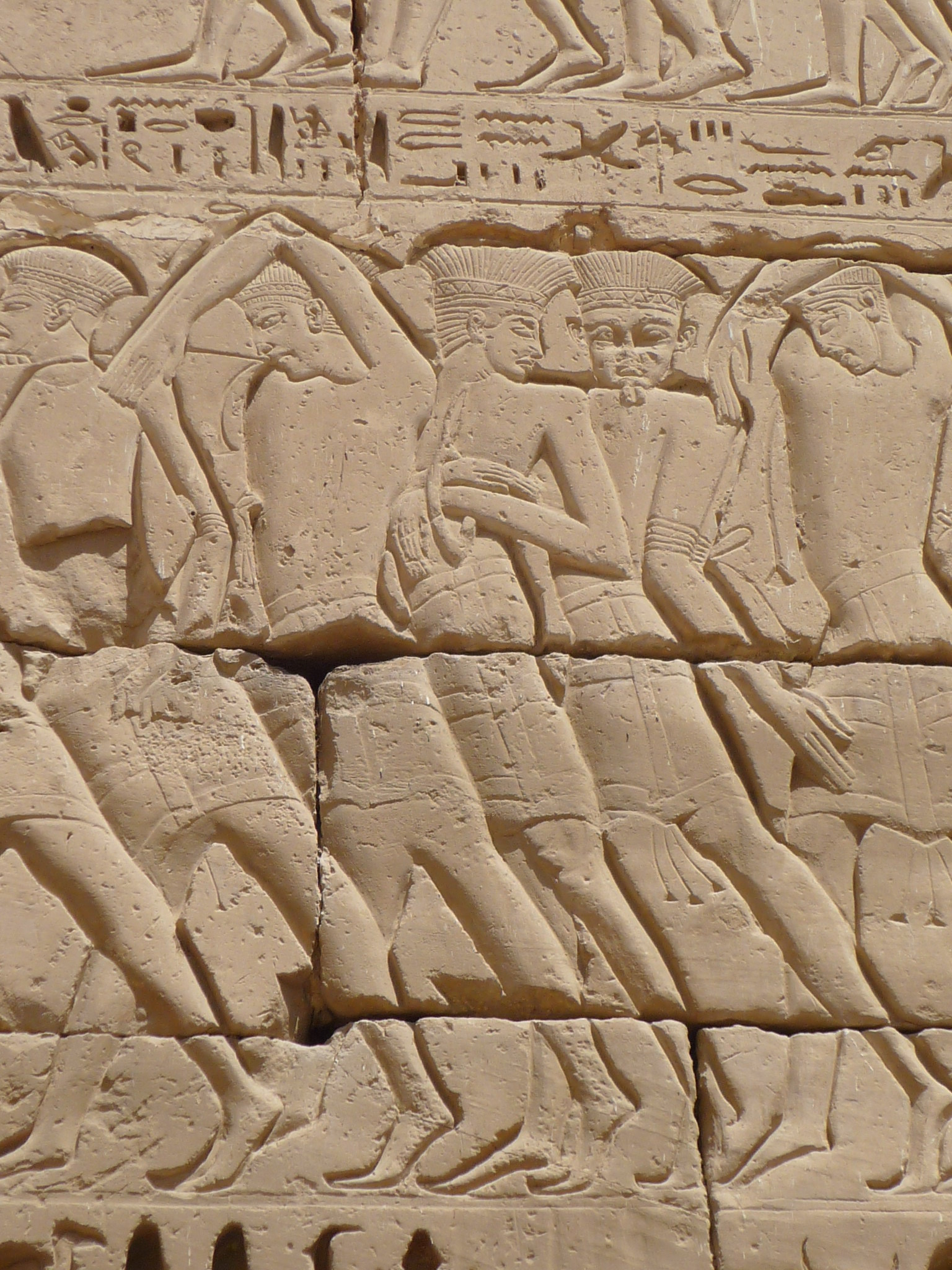
The existence of a major kingdom with a name so reminiscent of the Philistines reinforces Egyptian records describing the conquest of northern Syria by Sea Peoples. They were part of an ongoing struggle, from the twelfth to tenth centuries BCE, for possession of the provinces of the crumbling Egyptian and Hittite empires. A crucial engagement in this conflict was the well-documented land battle waged by Ramesses III of Egypt, depicted in exquisite detail on the walls of his monumental Temple of Amun near Luxor, in Upper Egypt (the site is known today as Medinet Habu). The fighting apparently took place in northern Syria, judging by the places mentioned in Ramesses’ inscriptions and by his reference to the lands of “Plst.”
Artifacts from sites ruled by this kingdom suggest that it belonged to an Aegean civilization. Excavations in Tell Ta’yinat (in the Amuq Valley) and in Tell Afis have yielded Mycenaeanstyle ceramics dated to the 12th and 11th centuries BCE and typical of the Sea Peoples’ vessels.
A treaty between King Esarhaddon of Assyria and his vassal, the governor of Kullania (Calneh), was also found at Tell Ta’yinat. The recently published document, dated to 672 BCE, includes a curse missing from the other eight versions of Esarhaddon’s succession pact: “May the queen of Ekron make worms drop from your innards” (Jacob Lauinger, “Esarhaddon’s Succession Treaty at Tell Tayinat: Text and Commentary,” JCS 64 [2012], p. 102). This royal goddess is assumed to be Ptygia, the “lady” of the Philistine city of Ekron, who is mentioned in a royal inscription unearthed in the temple of Tell Miqne–Ekron, next to Kibbutz Revadim, in the Ashdod area. Now on display in the Israel Museum, Jerusalem, the inscription dates from the seventh century BCE.
So we have evidence of a cultural link between the northern Philistines in Syria and their southern brethren on Israel’s coastal plain.
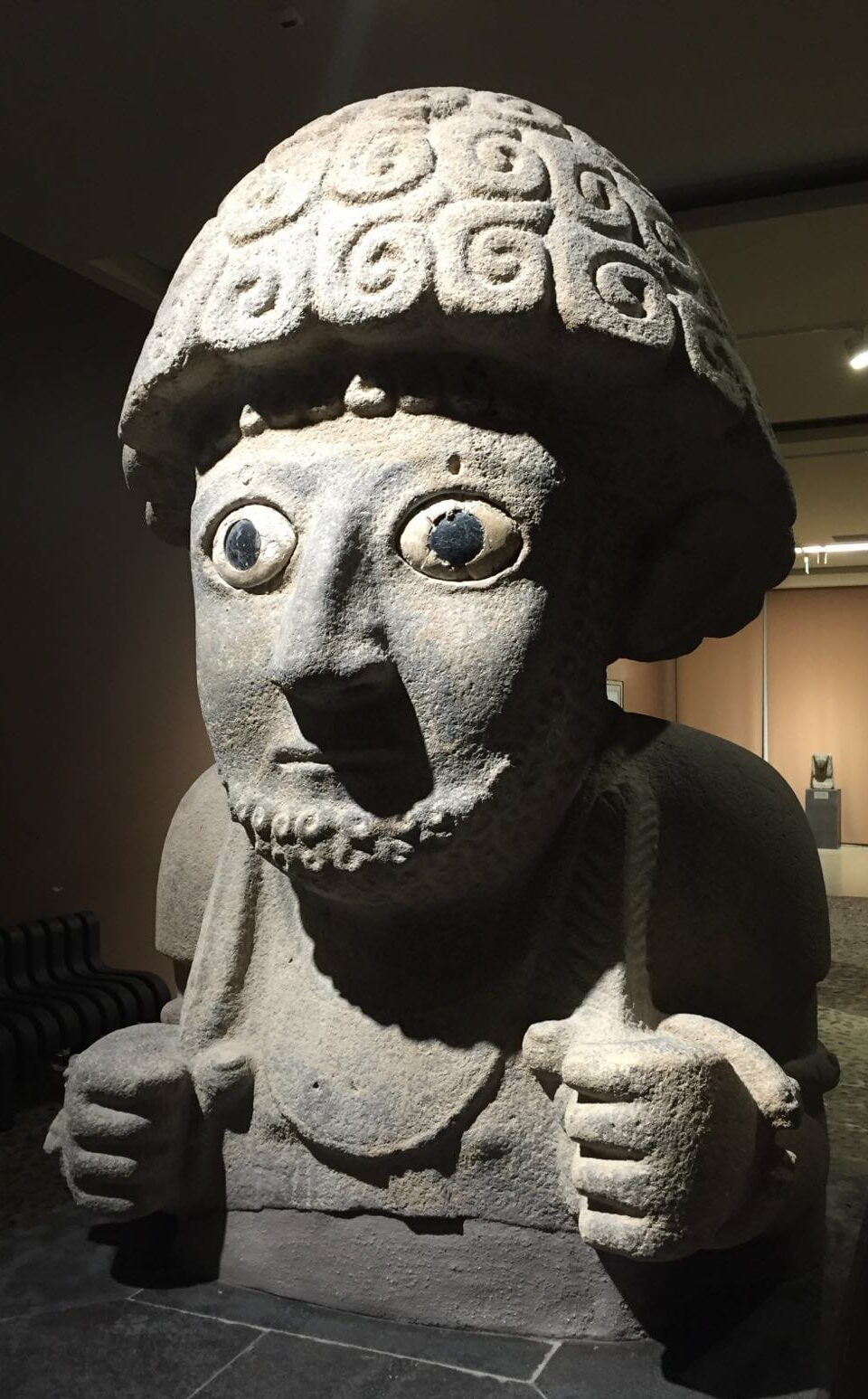
Statue of Shuppiluliuma II from the Hatay Archaeology Museum, in Antakya, Turkey | Photo: Nicoleon
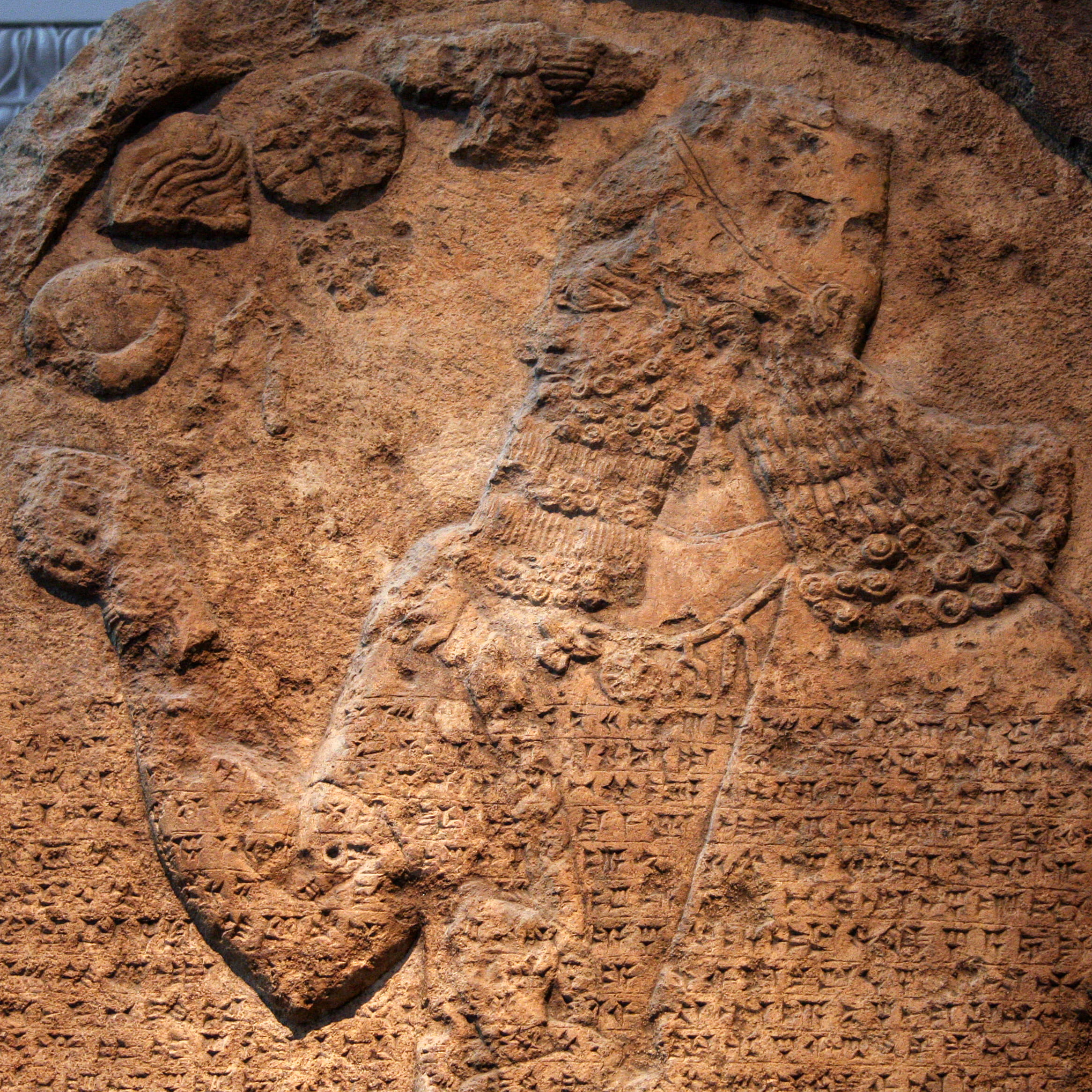
Shalmaneser also recovered territories lost to Assyria during the reign of King David | Photo: David Castor
Not yet a Segula subscriber?
Access our full archive online, have print issues delivered to your door, and moreFeel free to share