
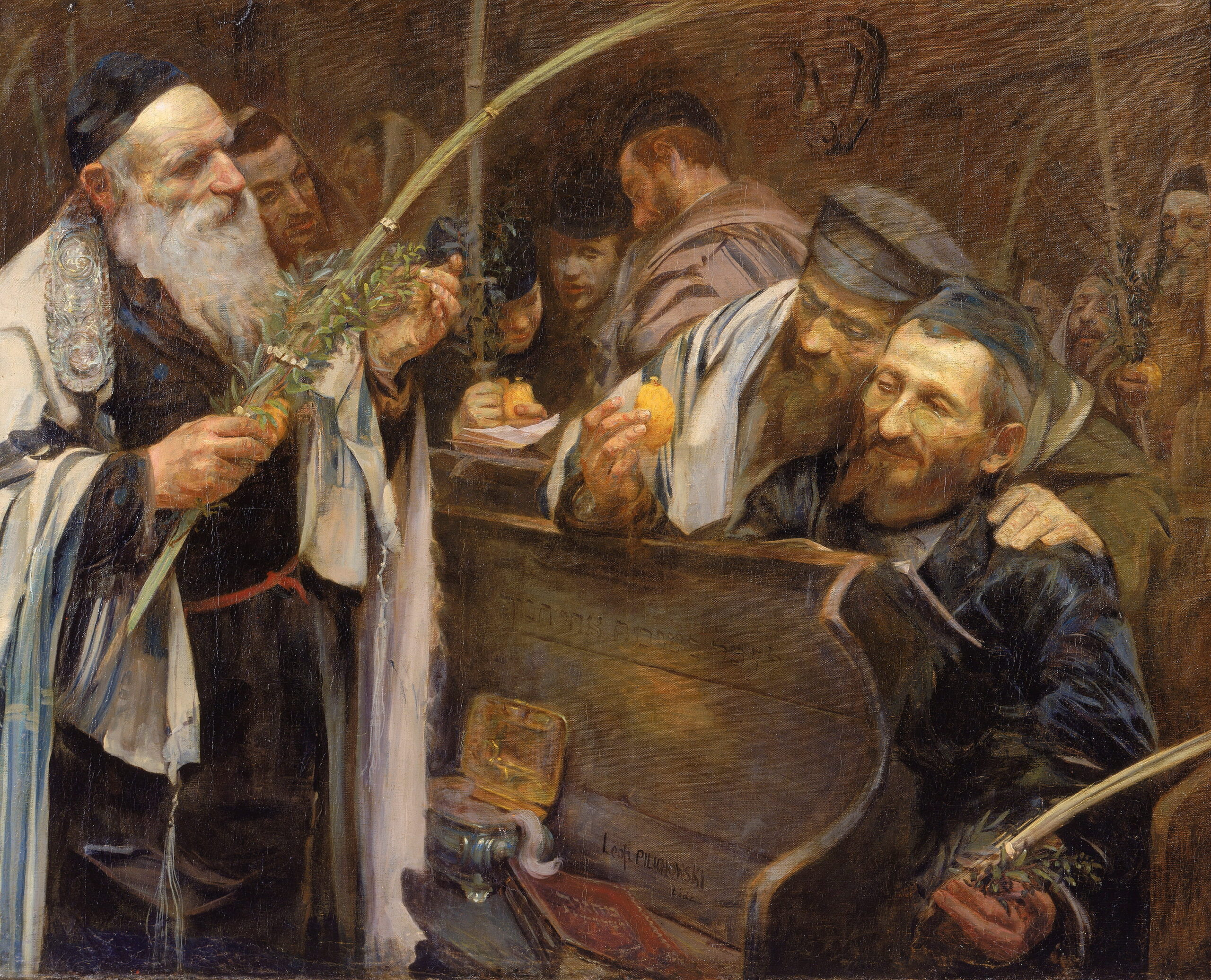
Given the choice of European, Caribbean, or Californian etrogim, American Jews opted for neither the most familiar option nor the most convenient nor even the cheapest. Their chosen etrog stood for an ideal

In 1882, etrogim in Los Angeles were a bargain: just twenty-five cents each. “They are beautiful to behold and will compare favorably […] with any that have ever been imported to this country,” reported “Maftir” (Isidore Choynski), West Coast correspondent for the American Israelite. These locally produced etrogim, grown in America’s new citrus capital, appeared to solve what had previously been a significant religious problem.
As Rabbi Moses Weinberger of New York explained in 1887:
Only a few years ago, a poor man in New York could not buy a lulav and esrog of his own [as part of the four species taken on the festival of Sukkot]; even the most highly Orthodox had to observe the commandments with esrogim circulated around every morning by poor peddlers. Now it is hard to find any kosher traditional home without an esrog of its own. In many synagogues, especially the small ones, there are as many esrogim as worshippers. (Jonathan D. Sarna, People Walk on Their Heads: Moses Weinberger’s Jews and Judaism in New York [Holmes & Meier, 1982], p. 73)
Within a few years, however, U.S. etrog production had almost completely ceased. Contrary to conventional economic wisdom, expensive, imported etrogim triumphed over the cheaper, domestic variety. To understand why, we’ll have to journey back into the early 19th century and the history of the etrog in the New World.
From Corsica to the Caribbean
During the first decades of the 1800s, American Jews had three sources of etrogim: Corsica, the U.S. itself, and the Caribbean.
The finest and most expensive came from Corsica, under French rule. These magnificent “diamante citrons” were known among Jews as “Calabrian,” after the region of Southern Italy where they are grown, or as “Yanaver,” a corruption of Genoa, the port from which they were shipped. Boasting a noble history dating back to the 12th century Tosafists, this species is still prized by Chabad and other Hasidic groups.
Two factors diminished the popularity of these etrogim, however. First, many turned out to be grafted (murkav), which made them much stronger and better able to grow and travel but violated the biblical ban on kilayim (mixing species). Judaism prefers reliable pedigrees for Jews as well as their etrogim. “Intermarried” etrogim are thus prohibited. Fear of grafting drove many Jews away from the Corsican variety; to this day, few of the island’s orchards are considered reliable. Second, trade with France and Italy was greatly disrupted by the Napoleonic Wars (1803–15). During this era, very few diamante etrogim made it to the New World; other sources had to be found.
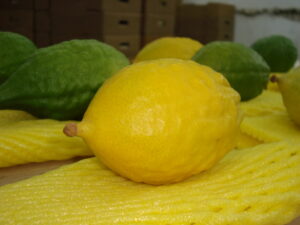
Fortunately, entrepreneurial American farmers responded eagerly to increased demand for citrons, which were used both for making candy and for medicinal purposes. Thomas Jefferson’s Garden Book records that he (meaning his slaves) grew the fruit in Monticello, his Virginia plantation – not to supply Jews, of course, but just to see if he could. Others cultivated etrogim elsewhere. Regrettably, citron trees proved extremely sensitive to cold, and almost all attempts to grow them commercially in the eastern United States ended in failure. A new solution was required.
As a result, the most common source of etrogim became the Caribbean. Much closer to America than the alternatives, Caribbean citrons were far cheaper and easier to access than those from the Ionian island of Corfu, which with the decline of the Corsican variety became the major provider of European etrogim. Caribbean citrons, principally from Jamaica (brought there by Columbus on his second voyage, in 1493), created a low-cost etrog market centered in the New World.
Yet Jamaican etrogim were yellowishwhite and smoother and rounder than the Corfu ones. So were they really kosher? This question led to a vituperative halachic dispute among both Old and New World luminaries.

Not yet a Segula subscriber?
Access our full archive online, have print issues delivered to your door, and moreFeel free to share