Thirteenth birthdays haven’t always been cause for Jewish celebration. When were the first bar and bat mitzva ceremonies, and why their enduring appeal even among otherwise unaffiliated Jews?

Why celebrate bar and bat mitzvas? Are they rites of passage? If so – passage to where? If not, why devote so much time and money to a birthday, hardly a life-altering event? Parents, teachers, and educators have all pondered these questions, as have the youngsters themselves.
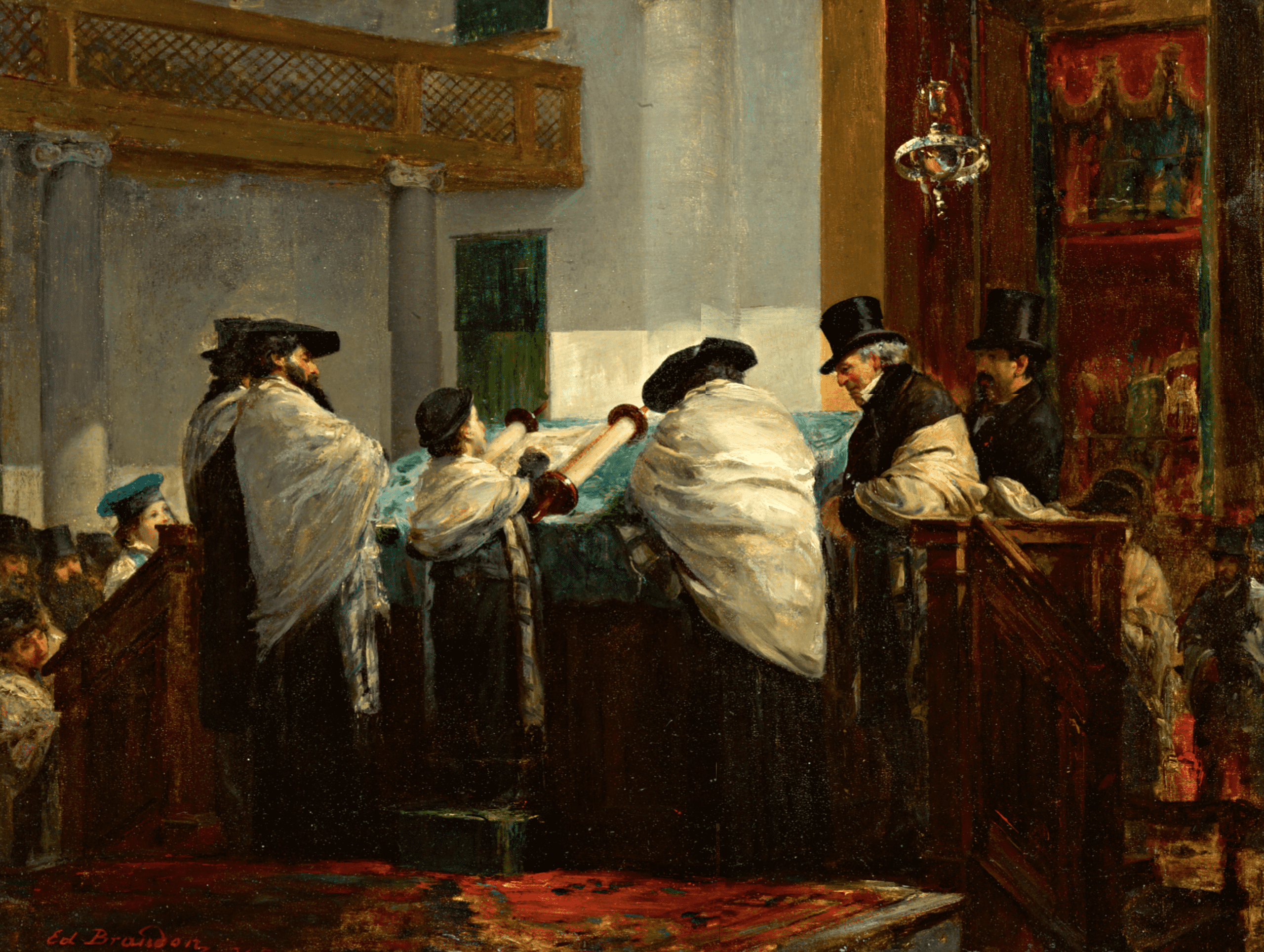
Historians too have written extensively on the development of the bar mitzva, once observed only in synagogue. By calling on a thirteen-year-old to pronounce blessings over the Torah scroll prior to chanting part of the weekly Torah reading, the community acknowledged that he now qualified to help form a prayer quorum.
How did that procedure evolve into an extravaganza?
Many Jewish customs were abandoned and forgotten during the tumultuous 20th century. Why has the bar mitzva instead become more popular, generating increasing emotional and financial investment? Could the rise of the bat mitzva be connected?
In a Word – Birthdays | Amit Assis
Though birthday celebrations didn’t become common until the 19th century, the practice actually appears in the Bible, in which Pharaoh famously reconsiders the fate of his butler and baker on his birthday (Genesis 40:20). Yet some see this biblical episode as proof that birthday parties originated not with the Hebrews but with their enemies.
Age vs. Ability
In Talmudic times, there was no such thing as a bar mitzva. Research by Prof. Yitzhak Dov Gilat of Bar-Ilan University has shown that there was no standard age at which Jewish boys entered adulthood and became obligated to fulfill the commandments. Rather, age requirements varied. As the Tosefta put it, in a tannaitic variant not included in the Mishna:
A young child no longer dependent on his mother must [observe the commandment to dwell in] a sukka. When he’s capable of shaking [a palm branch], he must [hold the four species]. When he can wrap himself [in a four-cornered garment], he must wear fringes [tzitzit]. When he knows how to take care of tefillin, his father should buy him tefillin. When he can speak, his father should teach him [to recite the] Shema and the holy tongue [Hebrew]. If not, better he never have come into this world. When he can competently slaughter an animal, his slaughter is considered kosher. […]
When he can eat […] an olive’s volume of roast meat, he must be numbered among those eating the Paschal lamb. Rabbi Yehuda said: He should never be numbered among those eating the Paschal lamb unless he knows how to identify food. What is meant by “identifying food”? Anyone to whom we give an egg and he keeps it [to eat], and [when we give him] a stone, he throws it. (Tosefta, Hagiga 1:2)
Whereas certain cognitive and even physical signs of maturity are prerequisites for fulfilling Jewish obligations, age rarely matters. The well-known statement that “Thirteen [is the age] for the commandments” (Ethics of the Fathers 5:21) appears neither in early Mishnaic manuscripts nor in the Talmud’s discussion of the appropriate age for beginning Jewish education. During the Talmudic period, a child could be counted for a prayer quorum under certain conditions and could even read the weekly Torah portion.
Ashkenazic Innovation
The bar mitzva ceremony began in medieval Ashkenaz (Germany and eastern Europe). Presumably, the significance of the first time a boy was called to the readers’ platform to recite a blessing over the Torah derived from the fact that he was previously forbidden to do so in these communities. The custom of his father’s reciting a blessing – “Blessed be He who has freed me from responsibility for this [boy]” – is first described in the 11th century. The idea that Jewish rituals become obligatory at age thirteen also seemingly developed around this time. In the Middle Ages, bar mitzva ceremonies were limited to Ashkenaz and northern France, and even there they evidently attracted little notice.
To mark the first Sabbath after a boy’s thirteenth birthday, someone had to recall the youngster’s birthdate. Most medievals didn’t even know their own age or date of birth, as it made little or no difference to them. Furthermore, Jews weren’t necessarily aware of the Hebrew date, as evinced by the custom of announcing the approaching new moon in synagogue on the Sabbath before the beginning of every Hebrew month. (Scholars alone truly understood the calendar).
Thus, the bar mitzva ceremony developed only in the 16th century, when the invention of printing brought calendars into widespread use. Specific elements soon coalesced around the proceedings: being called to read from or recite a blessing over the Torah, leading prayers, and giving a speech or sermon.
Like the printing press, the bar mitzva originated in Germany, then spread east, west, and south. From Italy, the practice reached North Africa, extending by the 19th century to most Islamic countries. Each locality added its own twist. In Sephardic communities, for example, where boys read from the Torah from an early age, the emphasis was placed on their beginning to lay tefillin. Accordingly, since tefillin aren’t worn on the Sabbath, the Sephardic bar mitzva celebration took place on a weekday rather than a weekend, and not necessarily on the child’s birthday.
In Yemen, Afghanistan, and Morocco’s Atlas Mountains – i.e., in unindustrialized Jewish communities – the bar mitzva was unheard of.
Sermon or Celebration?
According to British Jewish scholar Michael Hilton’s authoritative history of the subject, as bar mitzva celebrations spread, their focus shifted to the meal accompanying the ceremony. Some decried this repast as insignificant. Rabbi Shlomo Luria (acronym Maharshal, 16th-century Poland) discussed it in the context of meals prescribed to mark religious occasions (such as weddings and circumcisions) but recommended moderation:
Ostensibly there is no greater obligatory meal than the bar mitzva banquet, as its name implies [a boy’s very obligation to fulfill the commandments]. Ashkenazic Jews hold a celebration, offering praise and thanks to God that the lad has become obligated in the commandments (for one who is commanded and performs a mitzva is greater [than one who does so without being commanded]) and that the father has merited to complete his upbringing and bring him into the general covenant of the Law […]. In any case, it would seem that where the youth has been trained to give a speech at the meal […], it’s certainly no less consequential than a meal celebrating a housewarming, and all such feasts we license. Nevertheless, one shouldn’t frequent these events, lest he heaven forfend neglect his regular study altogether. (Yam shel Shlomo, Bava Kamma 7:37)
By the end of the 17th century, Rabbi Yair Hayim Bachrach of Germany (author of the Havot Yair responsum work), was sitting out bar mitzvas. His description of an invitation to one such makes it clear that he objected to the exploitation of said occasions to glorify the host and his reputation:
One of my close followers, an educated man, […] invited me to come to the holy congregation where he resides […] for the bar mitzva of his only son […]. Though he begged me, even obliquely promising a reward, I ignored his words. He wrote to me again, boasting of the great feast he had made, that all the great sages of the community had been there, […] and that he was [therefore] justifiably angry at me for keeping my distance. (Havat Yair 124)
The more central the food became, the less demanding the actual ceremony, so boys unable to read correctly from the unpunctuated Torah scroll or preach to the guests could still celebrate like their more educated peers. In 1769, the French Jewish community of Metz responded by outlawing bar mitzva banquets for unruly youngsters who failed to study and wasted their time on the streets.
Not yet a Segula subscriber?
Access our full archive online, have print issues delivered to your door, and moreFeel free to share