Home > Issues > Issues 51-100

    Issues 51-100

    Issues 51-100

    Articles

  • The Soviets’ solution to the “Jewish problem” was to send Jewish masses to develop the Russian Far East. Sign at the entrance to Birobidzhan, capital of the Jewish Autonomous Region | Photo: Anna Yerushenko/AFP/Getty Images

    Designing a New Jew – Birobidzhan

    Ber Kotlerman

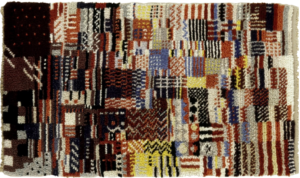
    In 1928, the Soviets chose to establish an autonomous Jewish region east of Chinese Manchuria, with the city of Birobidzhan as its capital. As in the other Jewish homeland under construction at much the same time, Bauhaus architects played

  • Uri Zvi Greenberg had the stormy temperament of a stereotypical redhead, a quality that dominates this portrait by Siona Tagger, who captured the likenesses of many leading Zionists in Mandate Palestine. Oil on canvas, 1925

    Rivers of Poetry – Uri Zvi Greenberg

    Akiva Goldstein

    Few have been as versatile or lived lives as varied as Uri Zvi Greenberg. A revolutionary, anarchist poet who foresaw both the Arab massacre of Jews in 1929 and the Holocaust, Greenberg wandered between past, present, and future yet remaine

  • Dura-Europos predates synagogues in Israel and is the earliest known example of a Jewish house of worship (as opposed to a sacrificial temple) | Photo retouching: Marsyas

    Rabbinic But Different – Dura-Europos Synagogue

    Haggai Misgav

    The people and animals in the Dura-Europos murals might reflect a community’s disregard for rabbinic strictures but can’t be seen as evidence of non-rabbinic Judaism in third-century Syria Haggai Misgav Since its discovery in 19

  • Though faded and unavailable to the public in their hidden corner of Damascus’ National Syrian Museum, the murals of Dura-Europos are the most detailed surviving examples of ancient Jewish art. Aaron the high priest and the Tabernacle, from the synagogue walls

    Imperial Synagogue – Dura-Europos Synagogue

    Haggai Olshanetsky

    Once upon a time in southeastern Syria, the Roman and Sassanid-Persian empires battled over a city nestled among the dunes. Its ruins revealed a synagogue with some of the most exquisite murals ever seen. Who were the Jews who gathered ther

  • Why did Jews forsake the Temple Mount in favor of the Western Wall? Praying by the wall, 1894 | Photo: Felix Bonfil

    Uphill Battle – Temple Mount: Modern Jewish Attitudes

    Dotan Goren

    Today most Jews visiting the Temple Mount are religious and of a certain stripe, but when the site opened to non-Muslims in the mid-19th century, it was generally secular Jewish tourists who seized the opportunity to connect with their nati

  • Egypt’s Exodus – Egyptian Rule in Canaan

    Assaf Avraham

    Though there’s no evidence outside the Bible for the Jewish people’s sojourn in Egypt, historical and archaeological finds from the end of the late Bronze Age in the land of Israel indicate that Egyptian domination of Canaan ended around th

  • Columns

  • From the Archives | From Morocco to Amsterdam

    Yochai Ben-Ghedalia

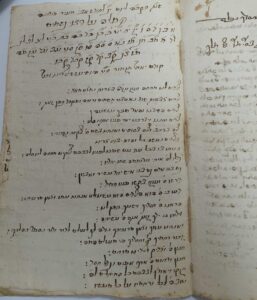
    The memoir of an anonymous scholar features miracles, mishaps, and multiple wives as his thirst for Jewish learning drives him from home  Yochai Ben-Ghedalia Highly Respected Professor, This copy, which I made in my student day

  • Portrait of a People | A Fleeting Guest

    Naomi Samuel

    Naomi Samuel Jewish Wedding in MoroccoOil on canvas140 x 105 cmParis, 1839Louvres Museum, Paris Eugène

  • Quick Looks at Books

    Sara Jo Ben-Zvi

    Medicine: From Biblical Canaan to Modern Israel | Cities of Splendour in the Shaping of Sephardi History | Memorable Sephardi Voices | Contextualizing Jewish Temples Sara Jo Ben-Zvi

  • Tale of a Trail | Khirbet Bak, Mount Meron

    Tamar HaYardeni

    Israel Bak wasn’t one to give up. The first printer in Ottoman Palestine, he also established an agricultural village on Mount Meron in a series of none-too-successful pioneering endeavors  Tamar HaYardeni Where To? Khirbet Bak,

  • Seal attributed to Nahmanides, discovered in Tel Kisson in 1972 | Courtesy of the Museum of Jewish History, Girona

    Voices of the Past | Rabbi Moses Son of Nahman

    Rabbi Moses Son of Nahman

    Two letters sent by Nahmanides to his sons provide a glimpse of his personal life Nahmanides’ scant surviving personal correspondence includes the following two letters to his sons, Nahman and Shlomo (Solomon).  Writing to Nahman in 1267, h

Feel free to share

You may also be interested in

Accessibility