Fifty years after the war whose losses tarnished her legacy forever, Golda Meir is the subject of a new film and biography. Surprisingly, both the Israeli and American perspectives – zooming in on the war and out on a career spanning five decades, respectively – reach similar conclusions

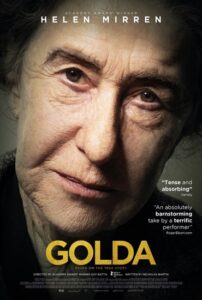
Golda
Screenplay: Nicholas Martin
Director: Guy Nattiv
USA, 2023, 100 minutes
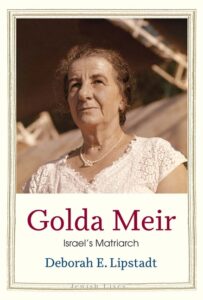
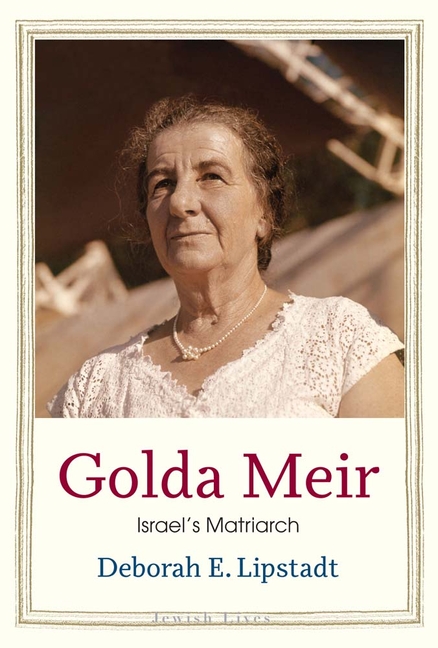
Golda Meir: Israel’s Matriarch
Deborah E. Lipstadt
Jewish Lives, Yale University Press
2023, 288 pages
Absurd as the comparison may seem, both the atmosphere in Israel on the holiest day in the Jewish year and the reputation of the country’s only female prime minister to date were altered forever by the Yom Kippur War. Fifty years on, Israeli newspapers still lament that generation’s sin of hubris in the buildup to the High Holy Days every year. Along with the recurrent trauma of another day of reckoning, the terrible price paid by the Jewish state has been blamed more often on Golda Meir than on any of her colleagues.
The war’s iconic images of soldiers mobilizing – still wrapped in their prayer shawls as they poured out of synagogues to man their tanks – have come to symbolize Yom Kippur’s atonement and affliction, especially in view of the massive casualties in the horrendous first days of battle. Revisiting the events of fifty years ago – when sirens shattered the silence of empty streets and shook crowded synagogues – invites a new perspective, and perhaps a renewed evaluation of the leaders involved. Two new works, Guy Nattiv’s film Golda and Deborah Lipstadt’s Golda Meir: Israel’s Matriarch, offer just that.
War or Remembrance?
Golda is framed by the Agranat Commission’s investigation into the failure of Israeli intelligence to anticipate the Arab attack, and the military decisions behind the severe losses of the war’s first weeks. Golda Meir testified extensively and was cleared of culpability. However, both the media and the public viewed this exoneration as a whitewash, and although the prime minister’s Labor Party won the next election, she resigned a few months later and retired.
The film powerfully depicts its protagonist as a model leader, overriding public perceptions that her rebuffing of Egyptian peace overtures precipitated the war. Yet the film documents only those weeks of her career directly affected by the conflict. Golda and the Yom Kippur War would have been a much more accurate title, albeit a less commercial one. As it is, the movie’s reception has been tepid – probably reflecting the combined admiration and abhorrence aroused by its subject.
While both Golda and Israel’s Matriarch reach essentially the same positive conclusion about their subject, they have little else in common. Despite spanning its subject’s entire life, from her childhood in tsarist Russian Pinsk to the end of her political career, the biography devotes scant space to the three weeks of the war. In Israel at least, that period determined Meir’s legacy – mostly for the worse.
Oceans Apart
This difference is one of the clearest between Lipstadt’s work and Nattiv’s film. Though produced in New York, Golda has an Israeli director, features many Israeli actors, and thus contends with – and upends – the Israeli myth of Golda as a party apparatchik who climbed the ranks more through connections (some romantic) than in her own right. From this patriarchal perspective, her failure to lead when tested by war was entirely expected. Yet much of Israeli society has refused to recognize the enormous extent to which the Jewish state snatched victory from the jaws of defeat in 1973. The film sees Meir’s mature leadership – despite the enormous personal and political pressure on her – as responsible for that triumph.
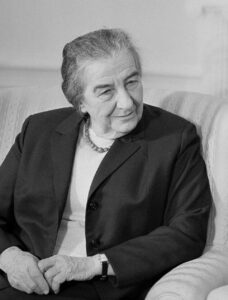
Lipstadt’s book, by contrast, has no such axe to grind. Her perspective is the American one, that of a generation of Jews wooed by Golda Meir as Israel’s most effective emissary at fundraiser after fundraiser throughout decades of state building. Her contemporaries – especially women – were raised on Golda as a role model: a woman who succeeded in a man’s world; who let nothing – not family, emotional attachments, or hardship – stand in her way yet managed to be the ultimate Jewish mother figure, guilt-ridden about her long absences from her children, baking challah, and doling out chicken soup at every opportunity.
Not yet a Segula subscriber?
Access our full archive online, have print issues delivered to your door, and moreFeel free to share