Mesopotamian kingdoms rose and fell, but cultic laments of doom remained a constant ritual. What was their purpose, and what can we learn from their echoes in the biblical book of Lamentations?

Keening – singing praises of the dead – has long been a part of mourning. We automatically associate such laments with commemoration and remembrance. For instance, the book of Lamentations – the biblical lament for the destruction of Jerusalem – is read every year in public on the ninth of Av, when both the First and Second Temples went up in flames. The entire day is set aside for mourning the tragedy and its enduring effect on the Jewish people.
In ancient Mesopotamia, however, cultic laments for ruined cities and temples didn’t commemorate particular events. Yet they were an integral part of daily, monthly, and yearly ritual. Laments were sung by a designated priest, to musical accompaniment, in conjunction with sacrifices and libations on particular days.
Our knowledge of such lamentations is based on approximately two thousand clay tablets inscribed in cuneiform between the beginning of the second millennium BCE and the first century BCE and discovered in various cities of Mesopotamia, such as Babylon, Assur, Nineveh, Uruk, and Ur. These dirges may well have figured in temple rituals many centuries earlier and, in certain places in Mesopotamia, may even have continued into the first century CE. They were written in a dialect of Sumerian, although that language was no longer the regional vernacular when they were recorded. Most of the laments dating from the first millennium BCE onward are accompanied by translations into Akkadian (the language of Babylonia), which were apparently studied by priests rather than sung.
Other Mesopotamian laments did describe cities’ and temples’ actual destruction, such as the “Lament over the Destruction of Ur” (probably to be identified with the biblical Ur of the Chaldeans). Though very similar to their cultic counterparts, these laments are richer and at times more poignant. They may also have been recited as part of a religious ceremony, but their main purpose seems to have been historiographic and literary. Researchers had thought these odes predated and even shaped those sung in temples, but today it appears that the influences may have been mutual, with elements of each genre appearing in the other.
The cultic psalms of destruction recount how the wrath of the gods wreaks havoc and ruin, which are then bemoaned – sometimes by the goddesses. Whether the damage is caused by an enemy or by natural disasters such as flooding, divine anger is behind it all. These temple laments were intended to assuage that anger and restore harmony to mankind.
Imagined Loss
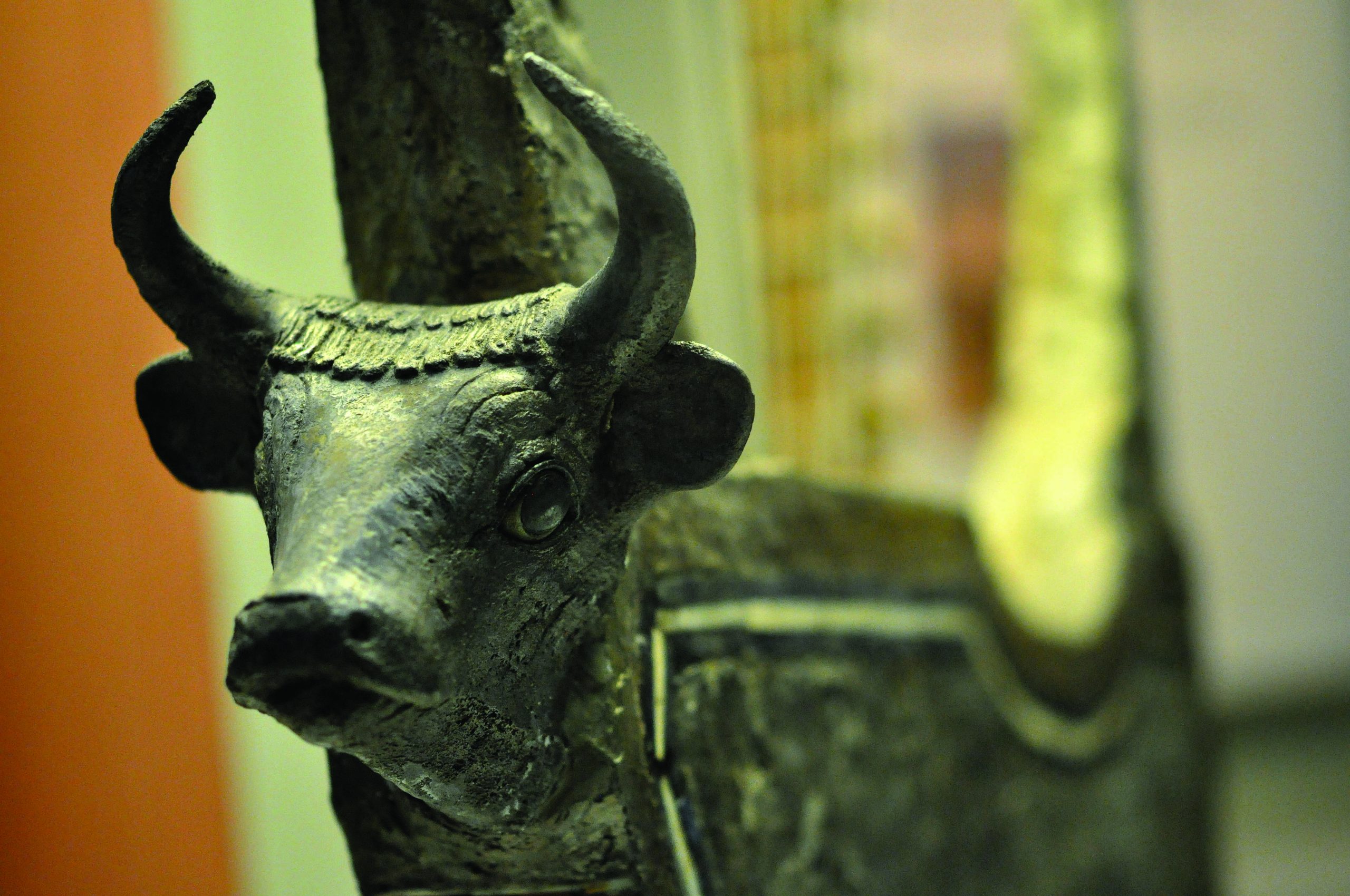
The following excerpt is from a lament known by its first line, “That City Which Had Been Pillaged!” Copies have been found on clay tablets dating from the beginning of the second millennium BCE to the end of the first. Here the goddess Inana (the Sumerian equivalent of the Akkadian deity Ishtar) bewails the fall of her city. Portrayed as a cow, the goddess lows and weeps: for her home, i.e., her temple; for her husband, the god Tammuz; and for her children, the city’s dead inhabitants. Beyond the death and destruction wrought by the enemy, now dwelling in the city and its temple, Inana mourns the loss of the traditional social hierarchy and customs:
She who cries out, it’s a cry for her city! The cow, she who cries out, The mistress of heaven, the goddess Inana […], she who cries out! For her city, for her house, for her spouse, for her child.
She looks […] the storm-day in the face, and […] immediately recognizes [its] heart […], Bent, she wanders and the storm-day smites her in (her) holy house. How can she dwell in her holy house? [Oh] holy woman! Why has the holy house, the pure house, been destroyed?
“Lament! Why has this happened? I am the mistress of heaven – why has the awesome splendor turned away from (the temple’s) glory? I am the lady of the Eana-temple, […] I cry bitter tears! I shed tears, these tears are bitter. I wail, this wail is stifled! Let me learn of a place to cry! Let me learn of a place to wail!”
The cow, she who cries out, it’s a cry for her city: “My speech is ‘Alas!’ – why was (the city) taken […] from me? My speech, my moan is ‘Alas!’ My cry is for my city which is [no more]! My cry is for my house which is [no more]!! Before my very eyes was my house sacked, Before my very eyes was my city scattered, Like (plundered) property was I divided! As for me, when I entered the house like a swallow, The hostile and deceitful rush at me, Coming suddenly and swiftly at me!
“I am the mistress of heaven, how did this befall me? (My city) has become a place where the potter breaks (his own pots), Where the wet-nurse hushes her singing in the street. Whenever I […] clothe myself, I am stripped of (my) garments, A branch scrapes my foot whenever I bend it (to walk). In my canals, the canal inspector smashes the vessels, In my fields, the farmer returns the basket (empty) to me. On my roads, hostile bandits commit murder, In my streets night-thieves break into (the homes). They broke into my house, to take it for their brothers, The enemy has approached my treasure house, and driven me out!
“Alas! Let me say Woe to my city!” […]. But now a foreigner speaks to it, “Let me say Woe to my house!” […] But now a foreigner speaks to it, “Let me say Woe to my sanctuary!” But now a foreigner speaks to it, “Let me say Woe to my treasure house!”
But now a foreigner speaks to it, “Let me say Woe to my spouse!” But now a foreigner speaks to him, “Let me say Woe to my son!” But now a foreigner speaks to him. (Mark E. Cohen, The Canonical Lamentations of Ancient Mesopotamia [Capital Decisions Publishing, 1988], vol. 2, pp. 544, 561–3, 589–90)

When reading laments of this type, we instinctively look for a historical event to match the catastrophe. The biblical book of Lamentations, for example, mourns Nebuchadnezzar’s conquest of Jerusalem, an event corroborated by Babylonian annals and inscriptions. But the Mesopotamian cultic laments – as opposed to Lamentations (and the Mesopotamian “Lament over the Destruction of Ur”) – aren’t focused on historic conquests. Though Mesopotamians clearly experienced war, whose aftermath provided the background for the dirges sung in the temples, these songs relate to no particular cataclysm. The ravage of the city depicted above may well never have happened.
Nor was the lament sung as part as any annual commemoration. “That City Which Had Been Pillaged!” was recited monthly in the temple of the city of Uruk. An Akkadian cuneiform calendar from the town specifies when and how this lament was to be recited:
On the second day of each month: “That City Which Had Been Pillaged!” at sunrise, over the stand (for the drum), to the goddess Ishtar. (Marc J. H. Linssen, The Cults of Uruk and Babylon: The Temple Ritual Texts as Evidence for Hellenistic Cult Practices [Brill, 2003], pp. 31–2)
Why did Mesopotamia mourn its towns and temples when they were perfectly, palpably intact?
Not yet a Segula subscriber?
Access our full archive online, have print issues delivered to your door, and moreFeel free to share