
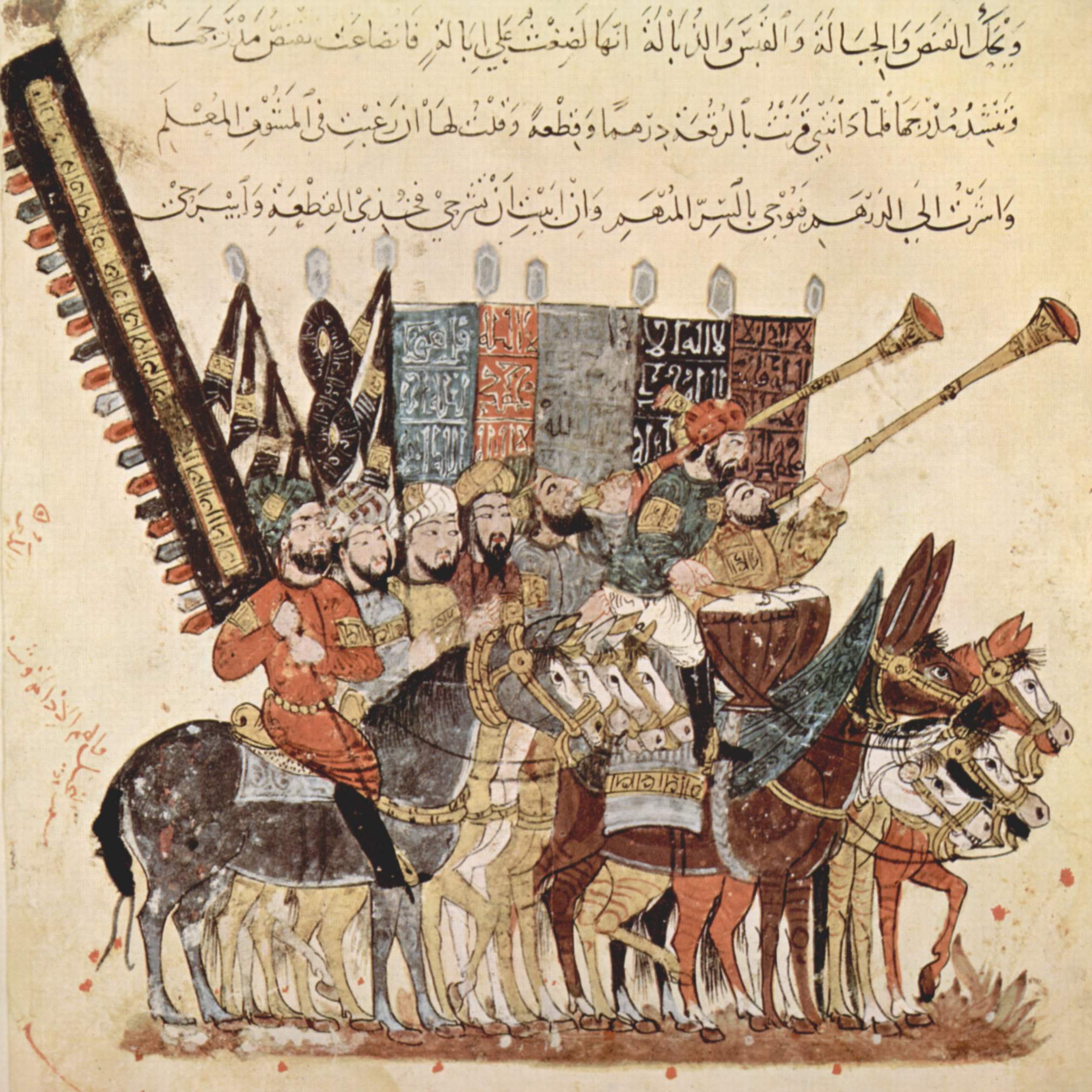
For Jews, declaring the new moon based on eyewitness testimony is ancient history. But the Muslim calendar still depends on this method, generating increasing controversy

Religious power struggles have frequently manifested themselves in arguments about the calendar. In Jewish history, these disputes were more or less limited to the Temple era, when the beginning of the month was determined by sightings of the new moon. In Islam, however, such eyewitness testimony is still required, leading to clashes over the exact date of festivals – altercations frequently impacted by Middle East politics.
New Calendar
The Quran states:
Truly your Lord is God, who created the heavens and the earth in six days […]. It is He who made the sun radiant, and the moon a light, and determined phases for it – that you may know the number of years and the calculation. (Yunus [Jonah] 10:3–5)
Against the backdrop of Arabian pagan culture, one of Islam’s most important innovations – obvious though it may seem – was the notion that the sun and moon were created and that their creator should be worshipped instead of them. It is He who determines the calendar, based on the moon’s phases. The Muslim calendar is thus lunar, ignoring the solar year and its seasons. Even today, the months of the Islamic year are almost always defined by the new moon, not by mathematical or astronomical calculations.
Early Muslims took inspiration from the calendars of surrounding cultures: the pre-Islamic calendar of Arabia; the solar calendar then used by Christians; and the Babylonian lunisolar calendar adopted by the Jewish people. The pre-Islamic calendar was also lunar and, like the Babylonian one, inserted an extra month every leap year to stay aligned with the seasons of the solar year.
The holy month of Zu al-Hijjah was marked by pilgrimage to the Kaaba in Mecca, a site already sacred to pagan Arabs. All the tribes of Arabia converged on the attendant trade fairs. To safeguard travel, trade routes, and the economy, war and raiding were forbidden during this month and three others, also holy: Rajab, Zu al-Qadah, and Muharram. All four were later added to the Muslim calendar complete with their restrictions.
Before Islam, Arabs didn’t number their years from any significant point in history. In contrast, Islamic time starts from the Hijra (or Hegira) – Muhammad’s departure from Mecca to Yathrib (which was soon renamed Medina), where he built his community of faithful. According to Islamic tradition, this “Hijri calendar” was instituted by Uthman ibn Affan (later the third caliph after Muhammad) seventeen years after the prophet’s journey.
Islamic tradition relates that in 632, ten years after the Hijra and toward the end of Muhammad’s life, he introduced the Islamic calendar’s most distinctive element relative to its predecessors – no leap years:
The number of months, according to God, is twelve months […], since the Day He created the heavens and the earth, of which four months are sacred. […] Postponement is an increase in disbelief – by which those who disbelieve are led astray. They allow it one year, and forbid it another year, in order to conform to the number made sacred by God, thus permitting what God has forbidden. (Quran, Repentance 9:36–7)
Thus, although Muhammad retained the four sacred months when fighting was traditionally forbidden, he broke with accepted practice – and with the Babylonian and Jewish calendars – by forbidding any additional months.
The calendar was firmly established only under Uthman ibn Affan, who placed Muharram at the beginning of the year and invested all twelve months with Islamic significance.
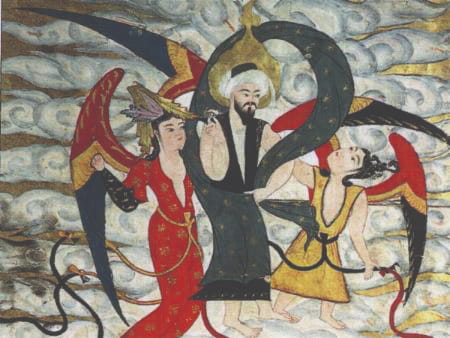
Muhammad wanted the Muslim calendar to diverge from the Babylonian one used in Arabia. Muhammad ascends to paradise, 18th-century Ottoman copy of a supposedly 8th-century original | Courtesy of the Topkapi Museum Library, Istanbul
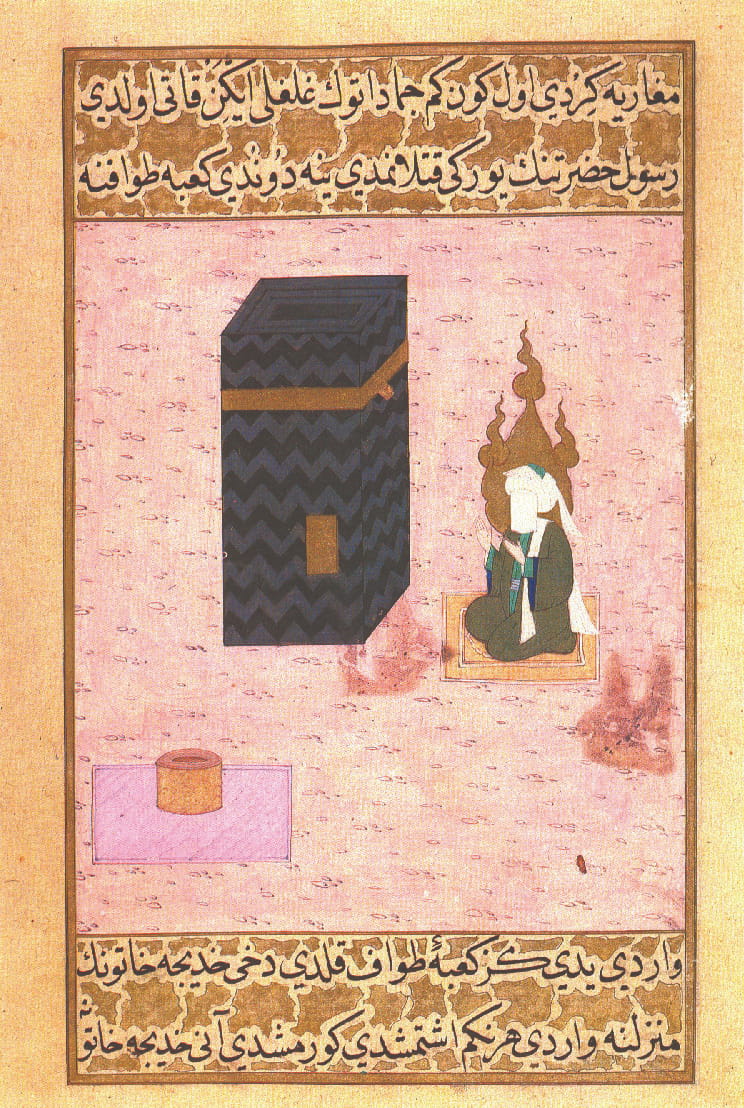
The Kaaba, a black, stone monument in Mecca, was considered holy even before Muhammad. The prophet at the Kaaba, from an illustrated Life of Muhammad, commissioned by Ottoman sultan Murad III and completed in 1595
Not yet a Segula subscriber?
Access our full archive online, have print issues delivered to your door, and moreFeel free to share