How did a rare gold coin end up in a hiker’s hand in the Western Galilee? Archaeologists have more theories than answers

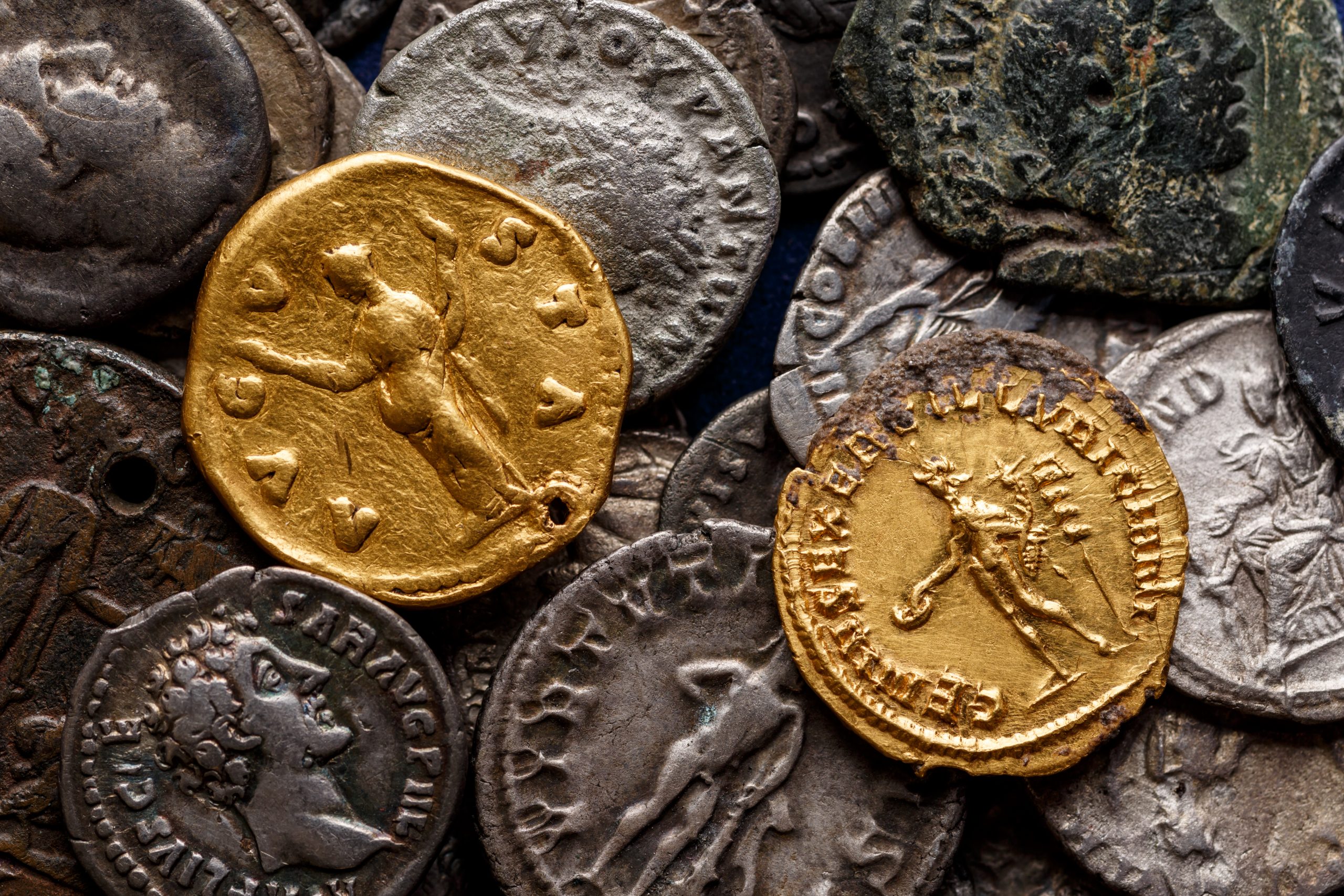
Thirty-nine gold coins from the Hellenistic and Roman periods are registered among Israel’s state treasures. That’s nothing compared with the tens of thousands of silver and bronze coins excavated from the same eras, and is probably a reflection of the poverty of the area’s population.
Given these statistics, it’s even more astounding that Lori Rimon of Kibbutz Kfar Blum just picked up another gold coin while hiking near her home. Israel Antiquities Authority inspectors who rushed to the scene declared the find extremely rare, its only counterpart being in the British Museum.
One side of the coin shows standards of the Roman legions, with the name and titles of Emperor Trajan, who ruled from 98 to 117, while the obverse bears the likeness of Augustus Caesar, who reigned from 43 BCE to 14 CE.
Hybrid Coins
It’s not unusual to find ancient coins incorporating two templates, as this one clearly does. Technical errors could easily be the cause; for example, mint workers might simply have used stamps from two different coins by mistake. Such occurrences were more likely in less professional, provincial mints, where there was less supervision – such as in the Roman province of Judea.
But in this case, there was no mistake. This coin was produced in one of Rome’s main mints. Trajan chose the symbols himself, replacing his own silhouette with an homage to Augustus. He was following a tradition – emperors from the first century onward stamped coins with images of their wives, heirs, or ruling ancestors, thereby presenting their families as semi-divine. Gods and scenes of worship were also common motifs, although historical figures typically appeared on silver and bronze coins rather than gold ones.

God and Caesar
The deification of the emperor began soon after the death of Julius Caesar in the first century and continued until the fourth, when Christianity replaced paganism as the religion of Rome. Augustus was the first to proclaim himself a god, and so he remained after his death, revered as the emperor who’d ended the threat of civil war and instituted the famed “Pax Romana.”
So Trajan’s coin celebrating Augustus, emphasizing his own connection with his adored predecessor, was part of an ongoing tradition. But why gold? Gold coins signified fame and worth, and relatively few were issued. Reserved for particularly expensive transactions, they were carefully designed and typically reflected an emperor’s greatest achievements. Why would Trajan “waste” his gold coins on the worship of Augustus? Perhaps to promote the cult of the emperor’s divinity, then still in its infancy.
Not yet a Segula subscriber?
Access our full archive online, have print issues delivered to your door, and moreFeel free to share