

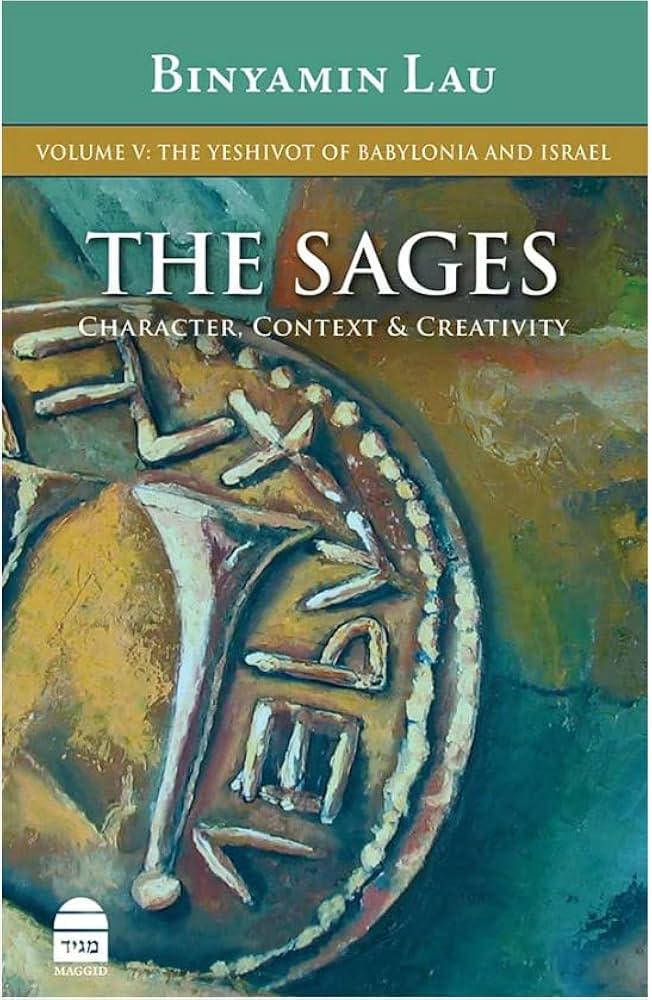
The Sages
Character, Context and Creativity – Yeshivot of Babylonia and Israel
by Binyamin Lau
Maggid Books, 2022
278 pages
Treating the immersive study of Talmud as a living encounter with the sages of Babylonia and the land of Israel, Rabbi Dr. Binyamin Lau draws mainly on the interactions between these scholars to illuminate their characters and concerns. This fifth and final book in Lau’s acclaimed series appeared five years after the previous installment’s translation from the Hebrew, but since volume 5 continues right where volume 4 left off, a brief consideration of the entire series is in order.
The Sages begins with the Second Temple sages featured in Pirkei Avot and follows Jewish Pharisaic leadership from the Great Revolt and the fall of Jerusalem to the Sanhedrin’s relocation to Yavne and the codification of the Mishna after the Bar Kokhba Revolt. Excerpts from Mishnaic and Talmudic sources provide the raw material for Lau’s profile of each leader.
Whereas the earlier volumes try to slot their protagonists into current scholarship on the history of Judea under the late Hasmoneans and Romans, the last two books – dealing largely with the Babylonian sages – must rely on the Talmud itself as their primary source. A short chapter in volume 4 describes the rise of the Sassanian-Persian Empire and its Zoroastrianism as the political backdrop to the great academies of Nehardea, Sura, and Pumbeditha; another interlude in this book introduces the rule of Diocletian as the context for developments in the land of Israel.
The Yeshivot of Babylonia and Israel contrasts the institutionalization of these schools with the more personalized study centers that coalesced around dynamic scholars of previous generations. Though the interchanges between colleagues on often obscure Jewish laws can be hard to follow, the tensions between the dynastic leadership of the exilarch and his influence on the selection of heads of the academies – particularly in Sura – are clear. Traditionalists and rationalists, pious idealists and realists – all interact here, reflecting and even shaping a Jewish society constantly striving for moral perfection.
Not yet a Segula subscriber?
Access our full archive online, have print issues delivered to your door, and moreFeel free to share