
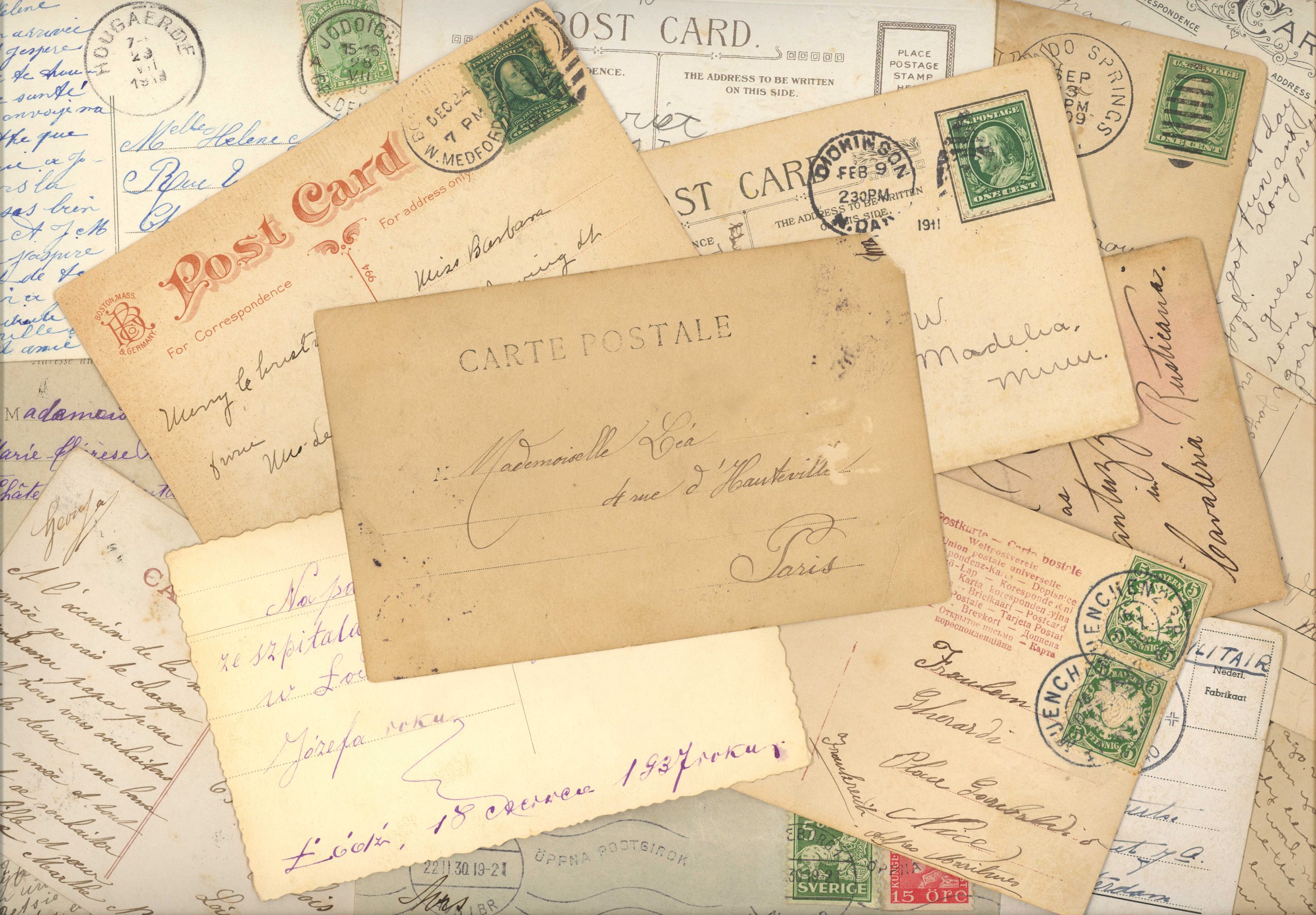
Despite the need for secrecy, and with production lines under fire, Israel’s first stamps were printed in time for independence

On 5 Iyar – the final day of the British Mandate – the Haaretz daily excitedly described the printing of the State of Israel’s first stamps.
Silence reigned between the walls of the small shack, punctuated by the monotonous staccato of the two printing presses. Alongside the two manual perforators, two men worked away…. An air of anxious secrecy prevailed: hushed footsteps, messages whispered behind cupped hands, the dull clickety-clack of machines, the shack’s somewhat remote location outside the city – all intensified the sense of stealth…. The weak light barely filtering through the solitary grimy window added to the furtive atmosphere. Something was indeed going on here, something special and uniquely important. (P. Azzai, “Hebrew Postage Stamps Printed Here”)
Amid the weighty issues of the days leading up to Israel’s independence, the look of the first Israeli stamps was relatively minor. Yet the stamps were a token of long-awaited autonomy, so their design required significant thought and effort. Coins, flags, and a national anthem could wait, but letters had to be posted, and the first stamps – issued by the new state on its first day – were received with great emotion.

Turning Coins into Stamps
The British Mandate had imported its stamps from England, so there were no machines, materials, or experts to produce Israel’s own. The decision to issue stamps right away created a host of problems – and some highly inventive, even courageous solutions.
The Zionist leadership began building the infrastructure for the state in November 1947, after the UN vote on partition. A five-man committee headed by David Remez (later transport and postage minister) was secretly established to deal with postage, but security issues quickly took precedence, and the committee reconvened only in March 1948, when the Mandate government announced that postal services would be discontinued and began destroying stamps. With the British still in command, printing stamps was illegal, so the entire project had to be a cloak and dagger operation.
Four designers were approached in early April and given just one day to sketch their vision. Otte Wallish’s, based on ancient Jewish coins – which, to his mind, symbolized war and independence and therefore captured the spirit of the times – was chosen.
The coins that would appear on the stamps were selected in consultation with experts, including archaeologist Eliezer Lipa Sukenik (Yadin) and numismatist Leo Kadman. They chose coins from the Great Revolt and the Bar Kochba rebellion. Although no coins were issued during the Hasmonean revolt, the stamps featured coinage mistakenly dated to that period and captioned as such. Thus, three attempts to restore Jewish independence two millennia earlier were perpetuated in the State of Israel’s first stamps.
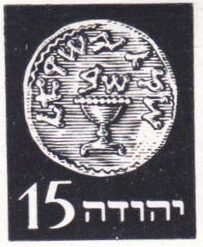
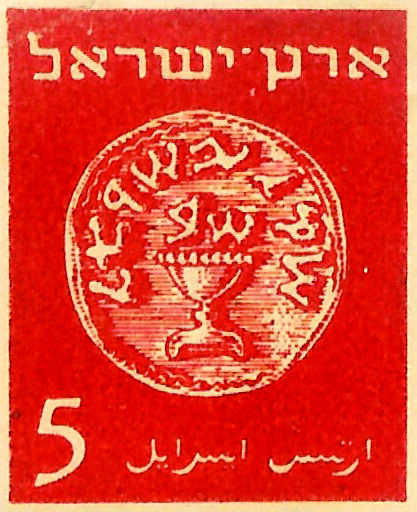
Never circulated. Experimental prints for stamps bearing alternative names for the Jewish state: “Judea” and “Eretz Yisrael” | Courtesy of Moshe Rimmer
Not yet a Segula subscriber?
Access our full archive online, have print issues delivered to your door, and moreFeel free to share