Fact and fiction intertwine in the tale of Jerusalem’s historic Tiferet Israel Synagogue, which tipped its hat to Austria’s Kaiser Franz Joseph

For the Middle East, 1869 was a critical year: after much planning and unstinting effort, the digging of the Suez Canal was finally completed. At last a shorter route connected Europe and the Far East. Among the world leaders attending the canal’s dedication ceremony was Franz Joseph, emperor of Austria-Hungary. When the kaiser decided to visit Jerusalem as well, roads were paved and flags were hung amid raised Ottoman hopes of stronger ties between the world’s two largest empires.
Franz Joseph walked the ancient streets of the Holy City, paying his respects to all its major sites and even strolling through the Jewish Quarter. The kaiser’s appearance in the quarter was described at length in the Hebrew journal Ha-havatzelet ’s round-up of the Hebrew year just ended, 5630. Gushed editor Israel Dov Frumkin:
On 6 Kislev 5630 (November 10, 1869), the country was lit up by the splendor of His Glorious Majesty, His Honor, the mighty emperor, the merciful Franz Joseph I. […] After touring the site of the Temple, the worthy emperor paid [the Jews] the honor […] of heading toward Jews’ Street to visit the Jewish sights. He graced the great Sephardic synagogue with his illustrious presence. (Ha-havatzelet, 12 Tishrei 5631/October 7, 1870)

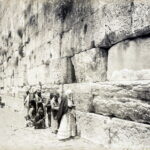
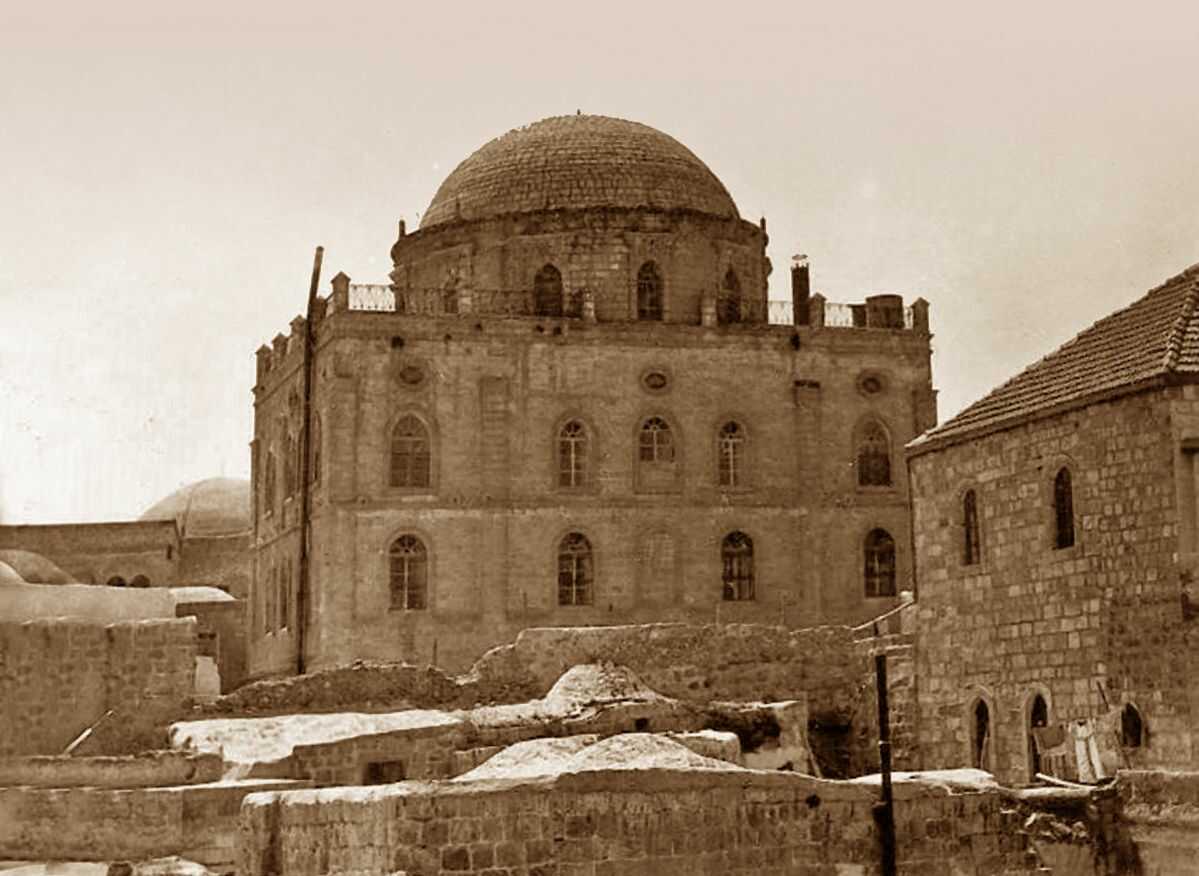
Aside from Mayer Rothschild Hospital, the kaiser visited the Lemel School (the first in Jerusalem to teach secular subjects, and the first to provide vocational training) and the Tiferet Israel (“Glory of Israel”) Synagogue, both established by his Austro-Hungarian subjects. The synagogue was built between 1857 and 1872 by Jerusalem’s Vohlin Hasidic community (so called because the majority of its members originated in the Ukrainian region of Vohlin), with funds from the Ruzhyn and Sadigor Hasidic dynasties in Russia and Austria, and was named after Rabbi Israel Friedman of Ruzhyn. The Hasidic master purportedly instigated its construction after his disciple Nisan Beck, who had emigrated to Ottoman Palestine, returned to visit his mentor in Sadigor. Beck informed the rabbi that Czar Nicholas I of Russia was about to purchase land close to the “Wailing Wall” and build a church and monastery there. Beck came back to Jerusalem with a mission – to buy the site from its Arab owners, whatever the cost, before the czar made his move. Rabbi Israel raised the capital to acquire the property, despite its exorbitant price, and built a synagogue there.
A famous Jerusalem anecdote recounts that Tiferet Israel was almost completed before the kaiser’s visit, apart from the dome on its roof. Construction of this last, inessential feature had been delayed, as the money had run out. Wondering at the missing dome, Franz Joseph was informed by the quick-witted Beck (who also served as the synagogue beadle) that Tiferet Israel had tipped its hat in his honor. Amused by Beck’s reply, Franz Joseph granted him the funds to complete the structure.
Not yet a Segula subscriber?
Access our full archive online, have print issues delivered to your door, and moreFeel free to share