The Second Temple was begun with a building permit from the Persian empire, but when it was rescinded the exiles found creative ways to continue construction. The “illegal” building they erected inspired later generations in their heroic struggle to build, rebuild and build again.

In the first year of King Cyrus of Persia, when the word of the Lord spoken by Jeremiah was fulfilled, the Lord roused the spirit of King Cyrus of Persia to issue a proclamation throughout his realm by word of mouth and in writing as follows: “Thus said King Cyrus of Persia: The Lord God of Heaven has given me all the kingdoms of the earth and has charged me with building Him a house in Jerusalem, which is in Judah. Anyone of you of all His people —may his God be with him, and let him go up to Jerusalem that is in Judah and build the House of the Lord God of Israel, the God that is in Jerusalem.” (Ezra 1:1-4)
This was the edict of Cyrus, issued in 539 BCE, that began the process of the return to Zion fifty-two years after the destruction of the First Temple.
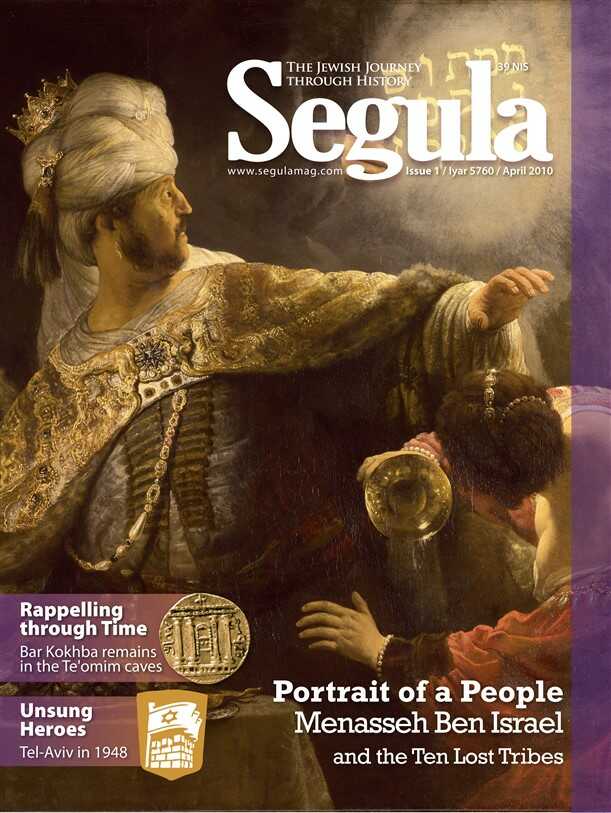
What did Cyrus mean when he said that “The Lord … has charged me with building Him a house?” If Cyrus had experienced a Divine revelation, there is nothing about it in the Biblical text. It may be that the Persian emperor was influenced by the fate of Belshazzar, whom he had defeated on the very night he brought the Temple vessels out of storage and drunk from them at his feast. That night, as the Babylonian nobles toasted one another with goblets taken as spoils from the destruction of Jerusalem, the famous writing on the wall appeared. (see Daniel chapter 5)
Cyrus, according to the description in Ezra, immediately took out all of the vessels of the Temple of God that had fallen into his hands when he conquered Babylon and ordered them to be taken to Jerusalem, to the Temple that was to be built, before he suffered the same fate as Belshazzar. He saw the return of the vessels to God’s house as a Divine command:
King Cyrus of Persia released the vessels of the Lord’s house which Nebuchadnezzar had taken away from Jerusalem and had put in the house of his god. These King Cyrus of Persia released through the office of Mithredath the treasurer, who gave an inventory of them to Sheshbazzar the prince of Judah… Sheshbazzar brought all these back when the exiles returned from Babylon to Jerusalem. (Ezra 1:7-8, 11)
Nonetheless, Cyrus had said nothing about Jewish independence or a new national home for his exiled Jewish subjects. The Jews were commanded to go up and build the Temple, so as to release Cyrus from his obligation toward the Temple vessels, but not to set up an independent Jewish kingdom. Perhaps for this reason no one was particularly enthused by the announcement, which the prophet Zechariah referred to as the “day of small beginnings” (Zechariah 4:10). The Jews did not respond to the call, preferring to remain in exile near the Persian fleshpots, unaware that they would soon be threatened by Haman’s decree.

Cyrus II, also known as Cyrus the Great or Cyrus of Persia, founded the Persian Empire. He ascended the throne of Persia in the winter of 559/560 and died in 530 BCE in a battle in Central Asia. Cyrus’s decree allowing the Jews to return to their land and rebuild the Temple was a reflection of his general policy of conciliation. The restoration of temple vessels and the provision of funding from imperial subjects were among the Emperor Cyrus’s innovations and were contrary to the usual imperial custom of transferring money from the periphery to the center | Getty Images
Not yet a Segula subscriber?
Access our full archive online, have print issues delivered to your door, and moreFeel free to share