The waves of Jewish immigration to land of Israel in the 19th and early 20th centuries are known as the First Aliya, the Second, and so on. But did these numbers always mean what they do today?

Modern Zionist settlement of the land of Israel is typically divided into five waves of immigration. Israeli academics take this terminology largely for granted, high school students are grilled on it in matriculation exams, and the First Aliya (literally, “ascent”) has its own Wikipedia entry, as do its successors. The progression toward a Jewish state is measured not by Zionist Congresses, wars, or political agreements, but by influxes of Jews to Zion from 1882 until the Holocaust.
Each wave of immigration colored the decade or so in which it occurred, even if the bulk of its immigrants arrived within a much shorter time. Thus, 1903–14 is known as the Second Aliya – even though most of the period’s pioneers came before 1910, and almost no one arrived during World War I, during which international travel was practically impossible.
Obviously, these aliyot were defined and numbered after the fact. But when? And by whom? It seems to have been a combination of accident and idealism – which tells us more about how history is shaped by awareness than about history itself.
Aliya or Immigratziya?
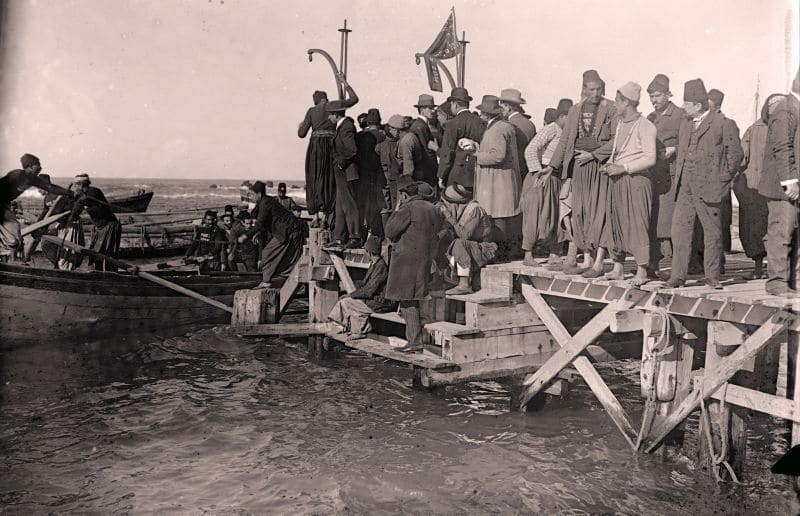
It’s quite incredible how lightly we use the term “Third Aliya” today. Personally, I have to say it took me a good few years to get used to these terms: “Second Aliya,” “Third Aliya.” Truth to tell, for the longest time, we didn’t even know we were part of the Third Aliya. The waves of immigration weren’t numbered at first. Each felt as if it were the first. Not only that, but when we first arrived here, we didn’t even know we were “ascending.” Jews didn’t “ascend” to the land of Israel in our day, they just went there. We realized we were “ascending” only when we arrived at the port in Jaffa, when those who’d come to meet us told us they were taking us to the “Ascenders’ House.” (Yehuda Ya’ari, The Book of the Third Aliya, vol. 2, p. 882 [Hebrew])
The use of the word “aliya” to signify immigration to Zion is deeply rooted in the concept that the land of Israel is holy. Indeed, the Mishna comments that “Everyone may compel [his or her spouse] to go up to the land of Israel, but none may compel [a spouse] to leave” (Ketubbot 13:11). At the turn of the 20th century, it was mostly the ultraOrthodox Jews who spoke of aliya, while Zionists referred simply to immigration (or immigratziya in Russian). Gradually they too adopted the term aliya, emphasizing the ideological aspect of their choice of destination. A HebrewRussian-Yiddish dictionary published by Yehuda Gur around 1900 didn’t define aliya as immigration until its second edition came out in 1947.
Zionists applied the term olim (literally, “ascenders”) only to highly motivated immigrants prepared to shoulder the burden of national objectives; the term was often used nostalgically, alluding to the challenges of the previous generation. “Immigrants” connoted the opposite: arrivals who seemed less desirable and more needy.
Second-Class Olim
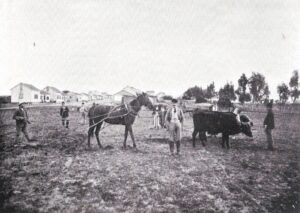
After an abortive Russian revolution in 1905, young Jewish socialists turned to the land of Israel, hoping to create a new “proletariat” there – and a new Jew. Seeking agricultural work, they presented the Jewish farming colonies of Gedera, Rosh Pina, Zikhron Yaakov, etc., with a dilemma – whether to hire fellow Jews, inexperienced and expensive as they might be, or cheap Arab laborers who’d tilled the local soil for generations.
The socialists agonized over their relationship with the farming communities as well. Both sides were part of the Zionist settlement plan and sharply distinguished themselves from the ultraOrthodox, who depended on donations from abroad. But the socialists were also worlds apart from the farmers, mostly traditional Jews perceived as bourgeois landowners. Few of them identified with socialism. The division of the Jewish community in the Holy Land into “modern” and “traditional” wasn’t enough for the socialists; they needed a subgroup unto themselves.
In “The First and Second Aliya,” an article published in the Jewish Enlightenment periodical Hed Ha-zeman (Epoch’s Echo) in Vilna in 1908, the writer described two distinct camps among the Holy Land’s new settlers – the farmers, who aimed to assimilate into the local culture and favored Arab labor over Jewish, and the young workers:
We should sympathize with and respect these new olim of recent years, these immigrants to the land of Israel who have much of the idealism and purity of the early BILU movement. These are no ordinary migrants swept to other climes by fate. These young people, who have come to the underpopulated, undeveloped land of Israel, have come in pursuit of their hearts’ desire, their longing for a national goal. (“The First and Second Aliya,” Hed Ha-zeman, 28 Adar II 5668/March 31, 1908, pp. 1–2 [Hebrew])
This unknown author’s use of the term “First and Second Aliya” is evidently more sociological than historical. Far from delineating different phases of immigration, he sought to distinguish between two types of immigrants, some more admirable than others, much as the Jews of Ottoman Palestine identified with either the Old Yishuv (the ultra-Orthodox) or the New (the Zionist settlers).
Numbering the waves of immigration chronologically would begin only with the Third Aliya. By then, those numbers would mean something else altogether.

Not yet a Segula subscriber?
Access our full archive online, have print issues delivered to your door, and moreFeel free to share