
Though physical help was largely beyond their power, Jewish religious leaders in the Holocaust sought to ease their followers’ spiritual pain, saving Judaism as well as Jews

The Holocaust challenged the humanity of its victims. Difficult as it was to survive physically, spiritual and emotional survival was virtually impossible. Many Jews abandoned their moral values in order to stay alive, although many others credited their survival to altruism and faith.
Courageous Jewish leaders offered crucial coping mechanisms during those terrible times. This article focuses on four such figures, each representing a different approach to spiritual survival.
God Hides His Face
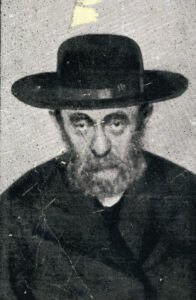
Rabbi Aharon Rokeach (1880–1957), the Belzer Rebbe, succeeded his father as leader of the Belz Hasidic dynasty in 1926. Rabbi Aharon’s anguished personality represents one of the most powerful expressions of the human tragedy of the Holocaust. All six of his children perished in Nazi Europe; his followers claimed that he never mentioned them publicly, but their deaths undoubtedly weighed heavily on his soul. The Belzer Rebbe became renowned but controversial, largely due to his flight from Hungary to Palestine in January 1944 and the famous sermon given by his brother, Rabbi Mordechai of Bilgoray, just before their departure. In this address, a censored version of which was later published by his disciples, Rabbi Mordechai promised in his brother’s name that Hungarian Jewry would survive the war unscathed, for the righteous rabbi would pray for his flock once he reached the land of Israel. Several months later, the destruction of Hungarian Jewry moved into high gear. Nearly 500,000 Jews, including refugees from Poland and Slovakia, were exterminated in the Nazi death camps.
Some blame the Belzer Rebbe for the death of his followers, since he instructed them not to immigrate to Palestine. The current rebbe, Rabbi Mordechai’s son Yissachar Dov, addressed this criticism in a sermon published in January 2003:
There are two ways in which the Almighty can hide His face. One is to simply conceal from the spiritual leader, the tzaddik, what the future holds. But there can also be something worse – when the Almighty shows the tzaddik a good outcome, the opposite of what will happen. That is what we call concealment within concealment. (Aharon Perlov, The Sanctity of Aharon, p. 363 [Hebrew])
In short, it was the hidden face of God that had deluded the Belzer Rebbe regarding Hungarian Jewry’s fate.
Rabbi Aharon’s flight actually began when Germany invaded Poland in 1939. He was constantly on the move in search of a safe haven, occasionally assuming a false identity. Traveling from Belz through Peremyshliany (Galicia), Nowy Wiśnicz, and Kraków before settling in the Bochnia ghetto, he encountered horrific sights at every turn, which worsened his failing health. A dangerous rescue operation succeeded in smuggling him over the Polish/Hungarian border via treacherous routes from Bochnia to Budapest, where he eventually boarded the Orient Express for Istanbul.
Hope in the Darkness
Despite the controversy surrounding the Belzer Rebbe’s leadership, he tended to his flock even as he fled. Rabbi Moshe Halevi Steinberg, rabbi of Peremyshliany (and later of Kiryat Yam, Haifa), described Rabbi Aharon’s concern for his welfare and that of his elderly grandfather Rabbi Shemaya when they met in 1941. Rabbi Steinberg also recalled how the Jews of Peremyshliany flocked to the Rebbe’s court in times of distress.
The Jews of the town gravitated toward the synagogue opposite the rebbe’s home, hoping the great rabbi’s merit would protect them. From every street and alleyway, people ran to the synagogue for “shelter,” bundles on their shoulders….
As soon as we got there, we were invited into the rebbe’s study. He was tense and very serious, lost in thought, sighing deeply every so often. Unable to sit still, he paced the room, gartel in hand. Time flew by, and it was already half past noon. I was asked to urge the rebbe to begin the daily prayers, as it was extremely late in the day. “It is time to pray,” I said in a trembling voice.
“The heavens do not heed my prayers” declared the Rebbe. He stood up and faced me. “You must leave Peremyshliany immediately….”
The rebbe’s words convinced me, and I agreed to follow his advice. He took both my hands in his and we stood there, face to face, for another quarter of an hour or more. He spoke to me, but I was too distraught to absorb what he was saying. Just one sentence stayed with me, although I couldn’t understand why those were his parting words: “If rain should fall, know that it is blessed rain.” (Mishberei Yam [Jerusalem, 5752/1992], For Your Miracles That Are with Us Each Day, pp. 127–8)
Similar stories have been collected from each stop along the rebbe’s escape route. Thousands hung on his every word, seeking his counsel, blessing, and salvation. His sense of having disappointed his followers haunted him until his dying day, sending him into seclusion after the war. At the same time, a burning sense of responsibility drove him to rebuild Belz from scratch.
Not yet a Segula subscriber?
Access our full archive online, have print issues delivered to your door, and moreFeel free to share