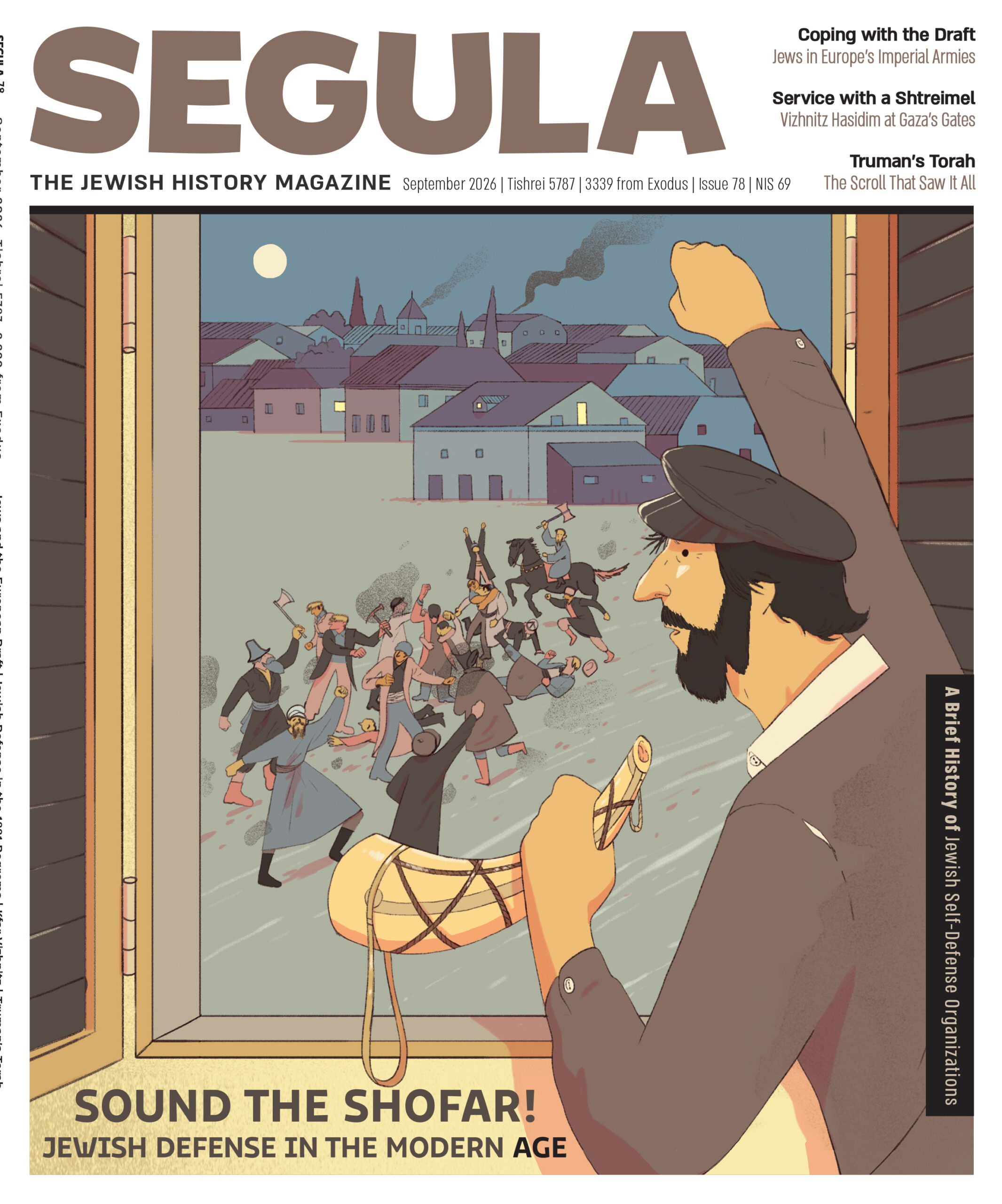
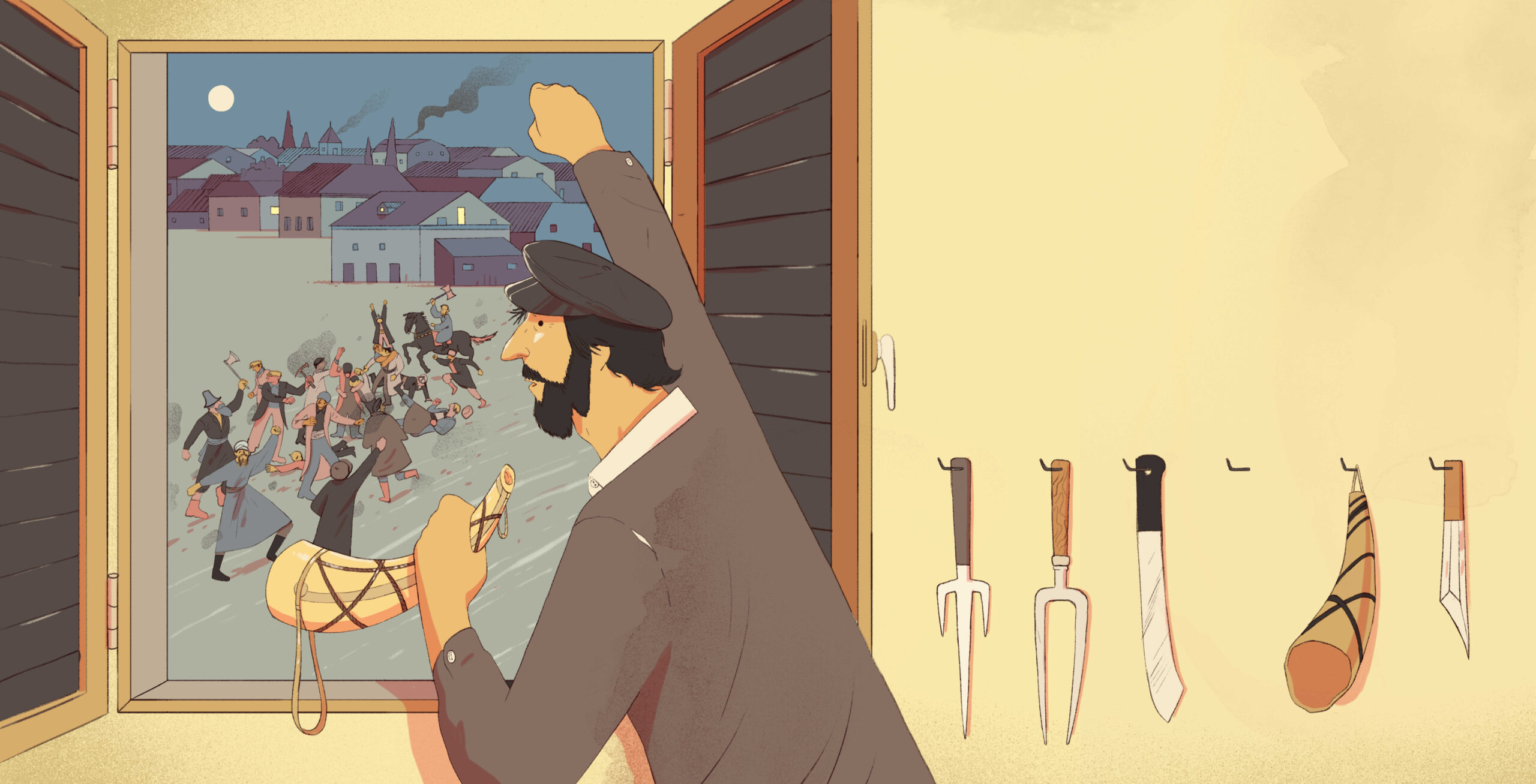
Not all Jewish communities attacked in the Russian pogroms of 1881 conformed to the stereotype of easy prey. Pockets of resistance spawned self-defense organizations to contend with the ongoing threat

The Russian pogroms that erupted in 1881 – known euphemistically in the local Hebrew press as the “Southern Storms” (see “Ill Winds,” below) – were a turning point for eastern European Jewry, shattering expectations that progress would end anti-Semitism. Although these attacks are indelibly etched into Jewish consciousness, few of us realize their true proportions.
Research has long focused on the circumstances leading to the pogroms and their consequences for Jewish communities in the Pale of Settlement (in which the vast majority of Russia’s Jewish subjects were concentrated until the revolution, because they were legally forbidden to live virtually anywhere else). Precious little attention has been paid to the actual course of events and the dynamic among Jews resulting from the widespread, recurrent violence. Their immediate responses have been neglected, especially in the realm of self-defense. Jewish reactions to the riots reflect a far-reaching shift from tradition-based, passive acceptance to activism and resistance. Concurrently, Jewish national identity began developing beyond mere religious solidarity, breaking down barriers between classes and marking the rise of Zionism.
The Bear Awakens
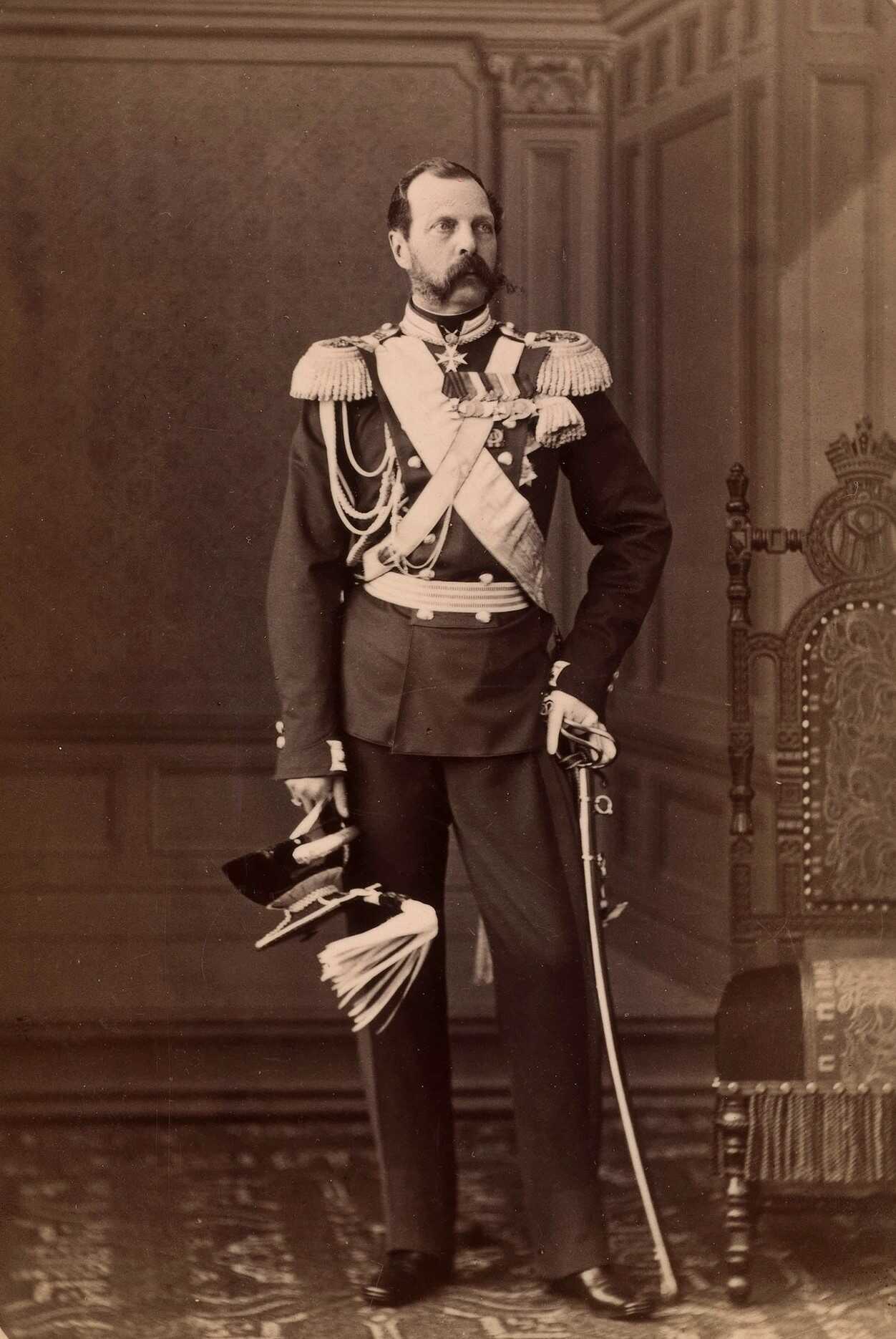
On March 1, 1881, revolutionaries assassinated Alexander II of Russia as his carriage drove through the streets of St. Petersburg. His assassins were members of an underground revolutionary socialist movement – Narodnaya Volya (The People’s Will) – which saw Alexander and his monarchy as the main obstacle to reform and revolution. As victims of discrimination, Narodnaya Volya attracted a number of radical young Jews, and one of those arrested for the tsar’s murder was a Jewish woman, Hesya Helfman.
Inasmuch as Alexander II also headed the Russian Orthodox Church, Helfman’s imprisonment was a perfect excuse for both the authorities and the revolutionaries to blame his demise on the Jews. New Testament associations of Jewish guilt for the death of Jesus only fueled the fire as Easter approached. Overnight, Jew hatred boiled over.
Fifty years later, Baruch Schwartz recalled the tension in his native Balta. Despite the Talmudic adage that when the Hebrew month of Adar commences, joy increases, Schwartz noted that
Adar began but joy abated […]. Eyes, ears, and noses were all alert […]. Everyone was careful – and warned all others, great and small – to in no way provoke even the most unimportant gentile, whether in business, labor, or craftmanship, lest one tempt fate, causing strife and damage to the entire town. (Baruch Schwartz, “The First Pogrom in the Town of Balta,” Haaretz, August 7, 1932, p. 3)
This excessive caution notwithstanding, when Easter arrived a few weeks later – shortly after Pesach – a wave of pogroms swept the Jewish townships of southwestern Imperial Russia (today’s Ukraine). Forty to fifty Jews were murdered outright; two hundred thousand were injured or robbed, and twenty thousand were left homeless. Hundreds of communities were targeted, with women raped and homes and businesses sacked. Russia’s Jews were left to lick their wounds and absorb the trauma and devastating disappointment of a seemingly progressive society turning viciously against its own.
Though limited, evidence indicates that Jews organized to defend themselves in about twenty towns, including Kiev, Kovel, Warsaw, Minsk, Vilna, and Kovno (today’s Kaunas). Despite the lack of exact figures, there are known to have been dozens of fighters in some places and hundreds – even thousands – elsewhere; chances are that Jewish defense was underreported rather than the opposite.
The sudden pogroms left communities little time to prepare any type of resistance. Furthermore, political organization was illegal in Russia, so there was no communal infrastructure to support self-defense. To make matters worse, very few Jews owned firearms, and their military experience was minuscule. Under these circumstances, it’s a wonder any resistance was mounted, especially since all involved knew they could be arrested and jailed.
| Sergei Lvovich Levitsky, Di Rocco Wieler Private Collection, Canada
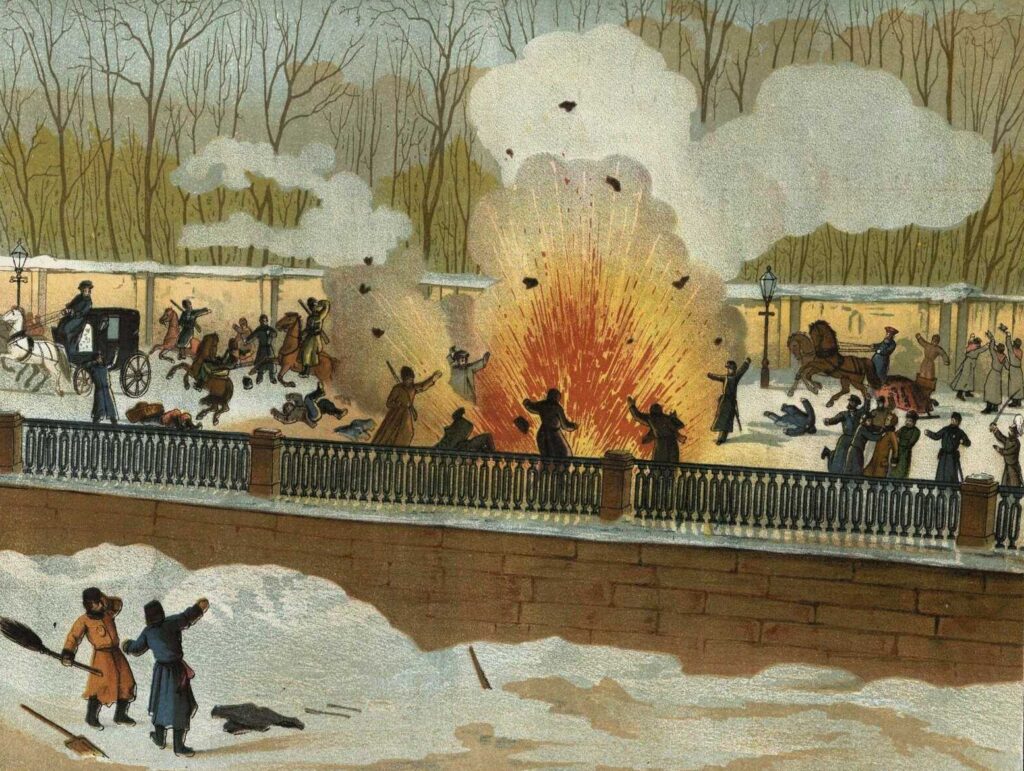
Pogroms erupted in southwest Russia, where Jews were concentrated, just weeks after his assassination. Tsar Alexander II and an illustration of the attack, 1881
Not yet a Segula subscriber?
Access our full archive online, have print issues delivered to your door, and moreFeel free to share